 Tech


Huawei has launched Signals of Change, a four-part documentary series that charts more than 30 years of its wireless communications technology. The company produced it with Create, the brand studio of CNN International, and said it will be broadcast worldwide.
Huawei described it as the first time it has presented its wireless innovations to a global audience in this form. The series draws on interviews with telecom operators, industry analysts, Huawei executives and R&D experts. It covers Distributed Base Stations, SingleRAN, Massive MIMO, Polar Code, MetaAAU and “0 Bit 0 Watt”.
From a 1994 start to European breakthroughs
Huawei said its wireless business began in 1994 and started to enter international markets in the early 2000s. The documentary follows how it moved from newcomer to major vendor, using scenarios such as high-speed rail, extreme environments and large sporting events.
The opening episodes show a surgeon on a train travelling at close to 350 km/h downloading hundreds of CT images for a remote consultation. They also show researchers in the Mount Everest region, above 6,000 metres, holding live video links with colleagues far away.
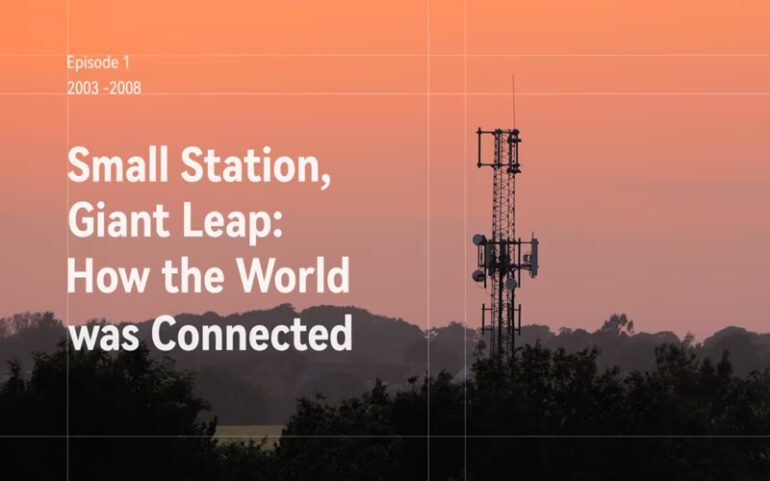
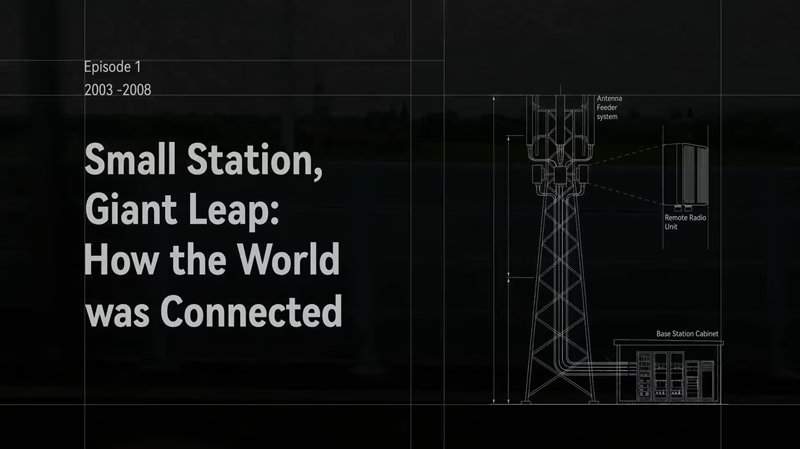
Episode one looks back at early 3G rollouts in Europe. Huawei said operators then struggled with site acquisition, slow deployment and high costs. In 2004, its engineers developed a distributed base station design that split a compact baseband unit from remote radio units. According to Huawei, the first deployment was in the Netherlands in 2005, followed by large-scale commercial rollout in Spain in 2006.
Huawei then introduced SingleRAN, which combines several radio technologies on one hardware platform so operators can run and upgrade different network generations together. A German operator was the first in Germany to deploy Huawei’s multi-mode base station solution, in 2008, the company said.
Massive MIMO and Polar Codes
The third episode centres on network capacity. It features the Su Super League final at Nanjing Olympic Sports Center, where 62,356 fans were connected at once.
Huawei said it validated Massive MIMO in a commercial network with an operator partner in Shanghai in 2015. It now counts the technology among the key foundations of 5G.
The series also covers Polar Codes, a channel coding theory introduced in 2008 by Turkish scientist Erdal Arıkan. Huawei said it invested in encoding and decoding algorithms and system-level validation. In 2016, 3GPP selected Polar Codes as the coding scheme for 5G enhanced Mobile Broadband control channels.
Energy efficiency in the final episode
The fourth episode looks at lowering energy use in mobile networks. Huawei launched MetaAAU, its next-generation Massive MIMO product, in 2021. The company said it improves coverage while cutting energy consumption by about 30%.
Also in 2021, Huawei and its European customers introduced the “0 Bit 0 Watt” concept. Huawei said it lets radio equipment drop into deep sleep during low traffic and wake on demand, through coordinated work on hardware, materials, software and intelligent network management. The solution won the GSMA GLOMO Award for Best Mobile Technology Breakthrough in 2024.
Where to watch
Huawei said viewers can watch through the links of media partners or follow its official social media channels.
The company said it plans to keep raising investment in fundamental research, protect intellectual property and work with partners worldwide as the industry moves toward next-generation mobile networks.
Source: Huawei