 Tech


ElevenLabs has detailed how its ElevenAgents platform handles communication between AI agents: it supports the Model Context Protocol (MCP) as both a hosted server and a client, but manages handoffs between agents with its own native tools rather than the Agent2Agent (A2A) protocol.
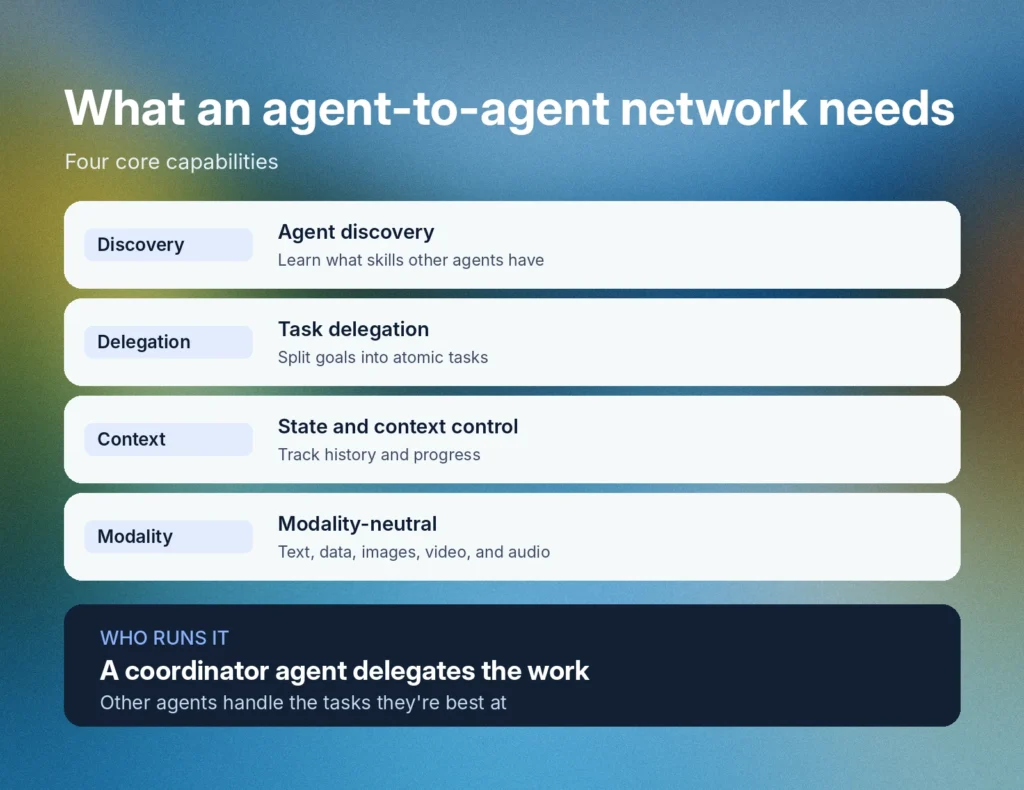
The company framed the update around a broader point. Agent-to-agent communication, it said, is a standardised way for AI agents to discover each other’s capabilities, delegate tasks and share context on multi-step jobs, without a human passing work between them.
A2A and MCP solve different problems
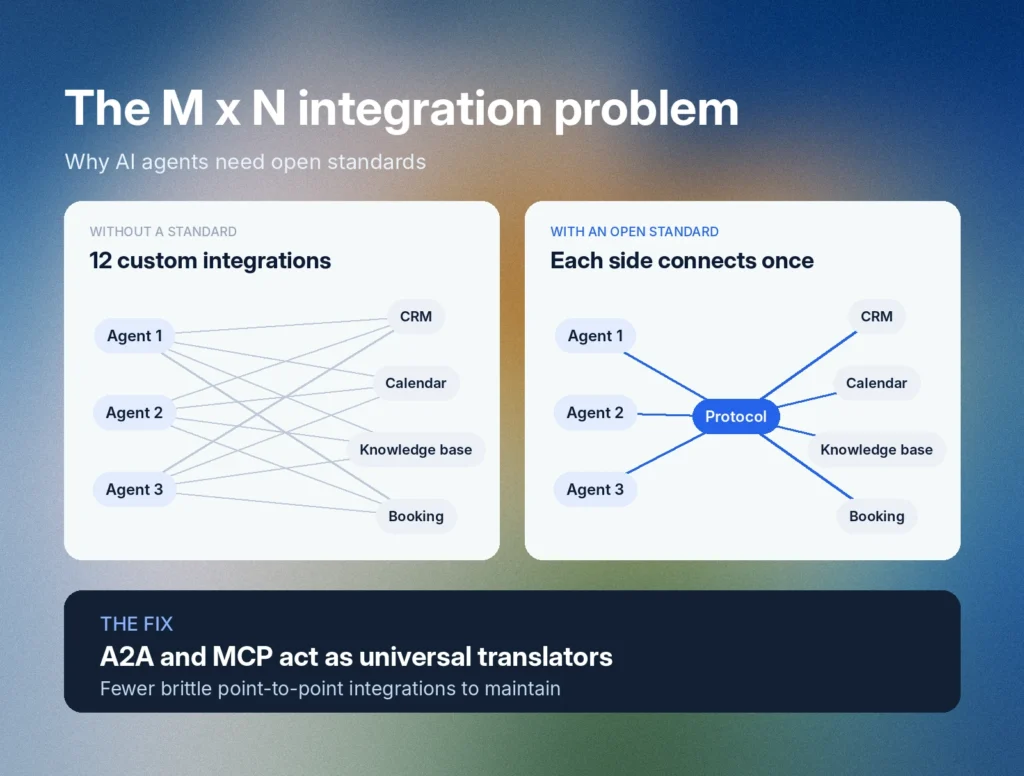
ElevenLabs describes A2A and MCP as complementary open standards. A2A, originally developed by Google, connects agents to other agents. MCP, developed by Anthropic, connects agents to external tools and data such as CRM systems, knowledge bases and calendars.
Both aim to avoid what the company calls the M x N problem, where M agents each need custom point-to-point integrations with N tools. Open standards, ElevenLabs argued, also reduce vendor lock-in and make cross-framework workflows possible. It noted that other protocols exist, including IBM’s Agent Communication Protocol, and that the field is still evolving.
Under A2A, a client agent reads “agent cards” published by remote agents, which list their identity, skills, hosting URL and supported modalities. It then sends structured tasks made up of messages, parts and artifacts, and the remote agent returns results over an HTTP endpoint.
What ElevenAgents supports
ElevenLabs said ElevenAgents works with MCP in two ways:
- Hosted MCP server: lets users manage their ElevenAgents workspace in natural language from Claude, Cursor or ChatGPT. One example is asking Claude to duplicate a production customer service agent with a new voice model and deploy it to a test environment.
- MCP client: lets voice agents connect to external MCP servers, such as a CRM to look up customer details during a live call or a calendar system to book service visits.
MCP is one of several ways to link ElevenAgents to a company’s systems, alongside webhook, client, code and system tools, the company said.
Native handoffs instead of A2A
For multi-agent setups, ElevenAgents does not use A2A. Instead it offers two features. The first is agent transfer, where a transfer_to_agent system tool applies natural-language rules, such as sending billing questions to a billing agent, and passes conversation context to the next agent.
The second is Workflows, which lets developers build multi-agent routing visually in the dashboard or in code with the SDK. Steps can include starting a subagent conversation, calling a tool or transferring a call.
Latency matters for voice
ElevenLabs pointed out that MCP tool calls add some latency. That is usually tolerable in text chat, but even a short pause can disrupt a spoken conversation, so running conversational agents at enterprise scale requires backend MCP integrations that work in near real time.
The company illustrated the approach with a contact-centre example. A front-line agent verifies a caller’s identity through an MCP connection to a CRM, then determines the caller wants routine servicing and warm-transfers them to a specialist scheduling agent, passing along chat history and verified details. The specialist books the technician visit via MCP, confirms the request is resolved and ends the call. It then sends a summary and completed status back to the front-line agent, which updates the customer record.
ElevenLabs said keeping agents focused on narrow tasks keeps their context windows manageable, which reduces the risk of hallucination and can improve operational performance.
The company also distinguished agentic AI, an approach that gives AI autonomy to decide and act over time, from conversational AI, which mainly generates text or speech responses. In ElevenAgents, it said, voice agents are built with tool access so they can take actions such as scheduling appointments or running database queries.
Source: ElevenLabs