 Tech


Home Assistant integrations, reusable desiccant, glue sticks and a simple riser can fix common 3D printing headaches, according to How-To Geek senior editor Tim Brookes. He says manufacturers rarely promote these tricks, and owners often find them only on forums or through trial and error.
Connect the printer to your smart home
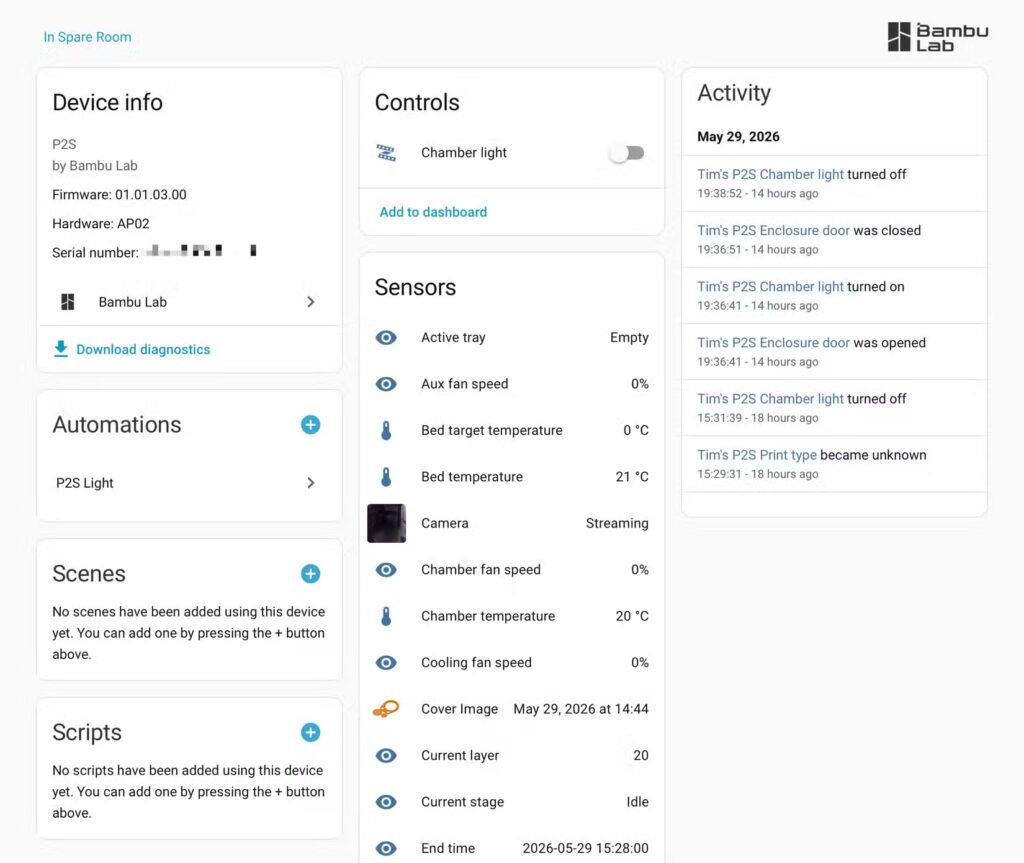
Brookes recommends adding a 3D printer to Home Assistant. Manufacturers don’t advertise this because it relies on third-party integrations. He says an integration exists for almost every brand.
The Bambu Lab integration he uses for his P2S exposes sensors for everything from the printer’s current state to hot end temperature. He uses that data to trigger other devices, such as ceiling fans and lights. It can also drive a custom extraction rig or a “now printing” sign.
Users can also build a dashboard showing the printer camera, projected finish time and percentage complete. Home Assistant can send notifications based on printer state too. Brookes calls it a far more capable backbone than the manufacturer’s own system.
Reset desiccant instead of replacing it
Moisture is bad for filament, and some types suffer more than others. Silica gel packs lose effectiveness over time, but the clay-based kind can be regenerated.
Brookes points to a CNC Kitchen video that tested several methods. They were an oven at 230ºF (110ºC) for four hours, a filament dryer, a heated print bed, and a microwave on its defrost setting for five minutes. The microwave was the fastest and came close to the oven in moisture removed.
He adds a safety warning about indicating silica gel, which has a dye that changes color as it saturates. Blue-to-pink gel contains cobalt chloride, which may cause cancer. Orange-to-green gel contains methyl violet. He advises against drying either type in an oven or microwave used for food.
Use a glue stick for adhesion
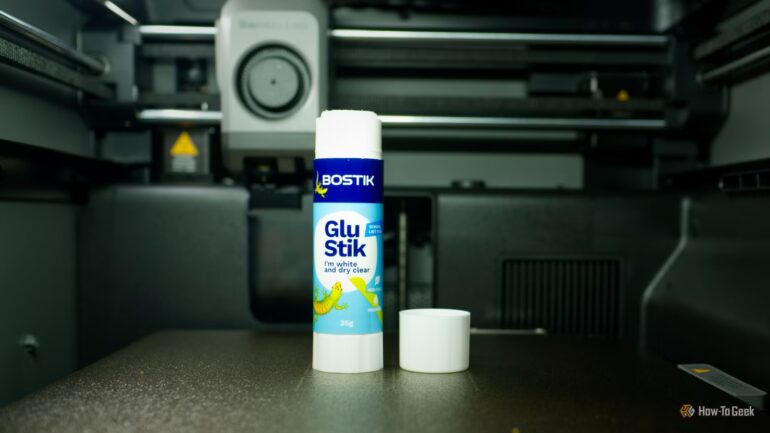
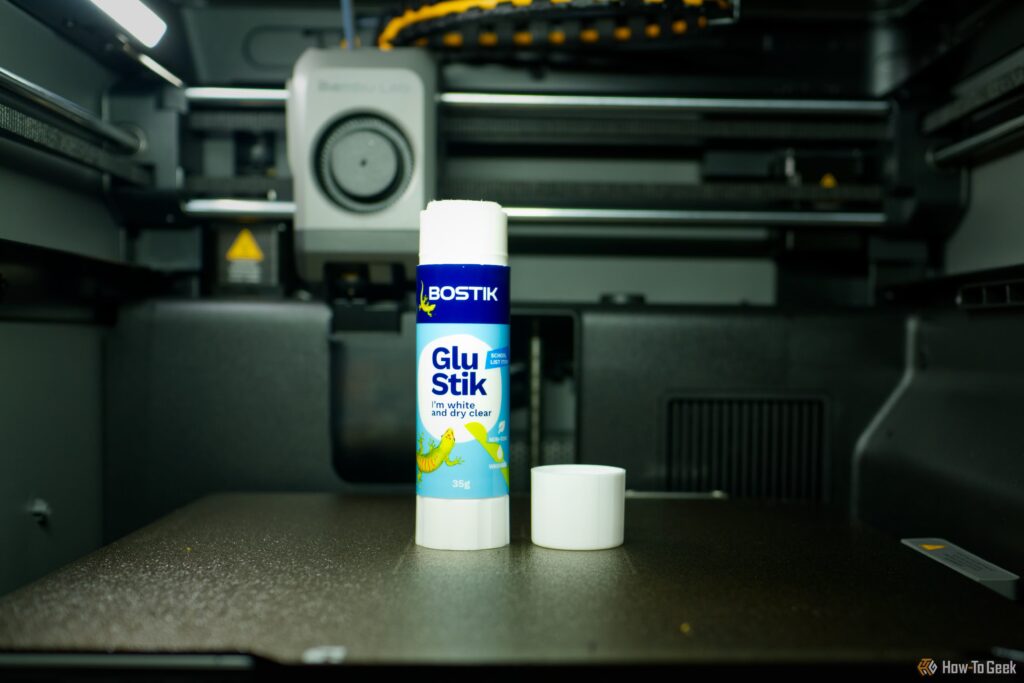
A PVA glue stick can help filament stick to the bed. Brookes describes this as a holdover from the days before heated beds became standard, and says it is less necessary now.
It still has a use at the other extreme. Some filaments, such as PCTG, can bond so well that removing a print damages the bed. A layer of PVA glue acts as a barrier so the print releases easily. The bed will need frequent washing, which Brookes says owners should be doing anyway.
Add a riser to protect the PTFE tube
Most printers feed filament from the spool to the print head through a Bowden tube, also called a PTFE tube. The material is chosen for its low friction, but it wears.
On many enclosed printers, the outside of the tube rubs against the top of the enclosure during use. Eventually it can wear a hole, and the printer is out of action until the tube is replaced. Brookes suggests printing a riser to prevent this. Owners need to find a design made for their specific model.
Look at open-source tools
Brookes also notes that makers such as Bambu Lab don’t promote compatibility with open-source management software. Bambuddy works with Bambu Lab printers, while tools like OctoPrint support other brands.
Source: How-To Geek