 Tech


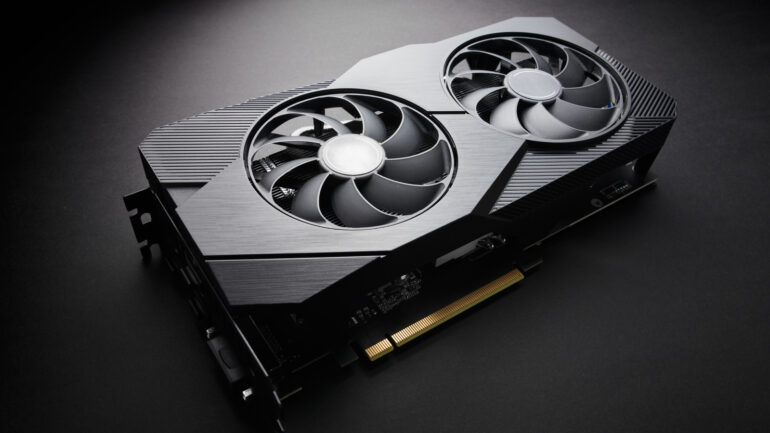
GPU overclocking world record: AMD has set a new GPU frequency record by pushing a Radeon RX 9060 XT to 4,837 MHz. The card is an entry-level model that launched in 2025 at $299, not one of the company’s flagship parts.. See our hardware section.
AMD’s Jack Huynh announced the result in a LinkedIn post. He described the attempt as part of the festivities around the opening of a new Micro Center store in Austin, Texas. He worked with professional overclocker Bill Alverson and other members of AMD’s overclocking team. The group filmed the run, including the moment they passed the previous record of 4,789 MHz.
GPU overclocking world record: Second record for the same card
The RX 9060 XT had already held the title. Alverson and another overclocker, known as SoonHo, set the earlier mark on the same GPU in June 2026. Both attempts are listed in the OC World Record Museum. Neither has been formally validated by a third party yet.
Liquid nitrogen cooling
Heat is the main obstacle in extreme overclocking, and AMD’s team took the usual route. They removed the card’s normal cooler and fitted a container designed to hold liquid nitrogen in its place.
A screenshot from the attempt shows a GPU temperature of minus 49 degrees Celsius at 4,837 MHz. The chip itself may have been colder than the card’s sensors could report.
The same screenshot shows the GPU at 0% load. Records like this measure how high the clock can briefly climb, not how long a card can hold that speed or whether it can run a game at it. Sustained stability matters far more to anyone buying a factory-overclocked card.
Why the cheaper card
The more powerful RX 9070 XT might seem the obvious candidate. The RX 9060 XT, however, has a higher rated boost clock out of the box. AMD lists it at up to 3,130 MHz, against 2,970 MHz for the RX 9070 XT.
The gap comes down largely to the size of the chips. The RX 9060 XT’s Navi 44 GPU has 32 compute units, half the 64 in the RX 9070 XT. Its typical board power is 160 watts, compared with 304 watts for the bigger card. A smaller, less power-hungry chip generates less heat to manage when it is pushed past factory limits.
What it means for gamers
The record clock is more than 54% above the card’s advertised boost speed. That does not translate into a similar jump in frame rates. Game performance also depends on other factors, including memory bandwidth.
For AMD, the result is mainly a showcase. It shows that the company’s current mid-range silicon can reach very high frequencies under extreme cooling, even if those speeds are out of reach for everyday use.
Source: BGR
GPU overclocking world record: What It Means for PC Enthusiasts
This GPU overclocking world record achievement is particularly notable because it was set using a budget graphics card rather than a flagship model. The fact that AMD’s Radeon RX 9060 XT can reach such extreme clock speeds suggests the underlying RDNA architecture has significant headroom beyond its stock specifications. For PC enthusiasts, this is encouraging news, as it implies that even affordable GPUs could deliver impressive performance gains through careful overclocking.
The GPU overclocking world record also highlights the ongoing competition between AMD and NVIDIA in the enthusiast overclocking community. While NVIDIA has dominated the high-end GPU market in recent generations, AMD’s ability to set records with a mid-range card demonstrates that raw clock speed potential is not exclusively the domain of premium silicon. Overclockers typically use extreme cooling methods like liquid nitrogen to achieve these results, so the temperatures are not sustainable for daily use, but the records still indicate the theoretical limits of the hardware.