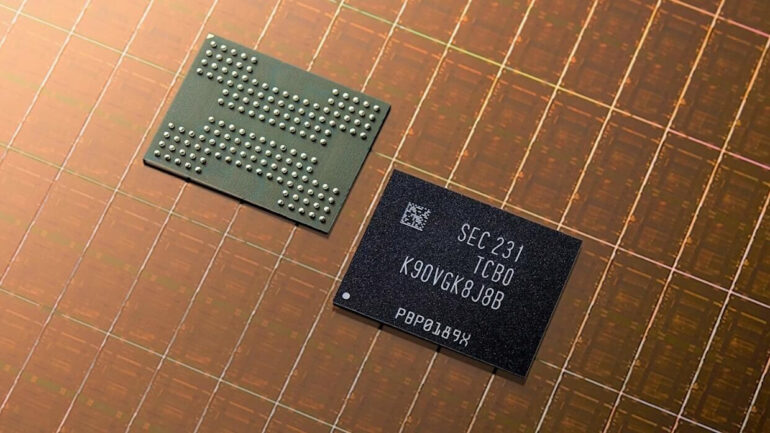

There is a quiet revolution happening in the world of data storage, and it is about to change how the biggest names in tech build their hardware. For years, the way your computer or a massive data center server talked to its storage was pretty standard. But the explosion of artificial intelligence has pushed those old methods to their breaking point. Now, we are seeing a rare moment where rivals like Samsung and SanDisk are moving toward the same solution: HBF technology.
If you have not heard the term yet, HBF stands for Host-Based Flash. It is essentially a way to let the main processor of a computer take more direct control over how data is written to and read from flash memory. By removing the middleman, companies can unlock speeds and efficiencies that were previously impossible.
The end of the storage middleman
To understand why HBF technology is such a big deal, you have to look at how traditional SSDs work. Usually, every drive has its own little controller that manages where data goes. This works fine for a laptop, but when you have thousands of drives working together to train an AI model, those little controllers start getting in each other’s way.
Samsung and SanDisk are betting that the future belongs to Host-Based Flash because it allows the “host” or the main system brain to orchestrate everything. This reduces latency and helps the hardware last longer because the system is not constantly moving data around unnecessarily. It is a more streamlined approach that is specifically designed for the massive, non-stop workloads that AI products require.
It is not often you see Samsung and SanDisk moving in the same direction with such intensity. Usually, storage companies try to lock customers into their own proprietary “secret sauce.” However, the demands of the AI market are so huge that even these competitors realize that a common standard for HBF technology is necessary for the industry to move forward.
This alignment means that developers and hardware engineers can build their systems knowing that the storage will behave the same way whether it comes from a Samsung factory or a SanDisk facility. It removes a massive headache for the people building the next generation of AI products and ensures that the hardware can keep up with the software’s rapid evolution.
While this technology is currently aimed at the high end enterprise market, it always trickles down eventually. Within the next two years, the “brain” of the data center will change, and that will eventually influence how consumer devices handle heavy AI tasks like local image generation or real-time voice processing.
In terms of tangible updates, Samsung has already begun sampling its HBF-compatible chips to major partners, while SanDisk is expected to showcase its integrated solutions at upcoming industry trade shows later this year. We are looking at 2027 as the year when this becomes the standard for any high-performance AI server. Pricing for these enterprise-grade drives is currently negotiated at the contract level, but expect them to command a premium over standard NVMe drives due to the specialized nature of the HBF technology controllers.