 Tech


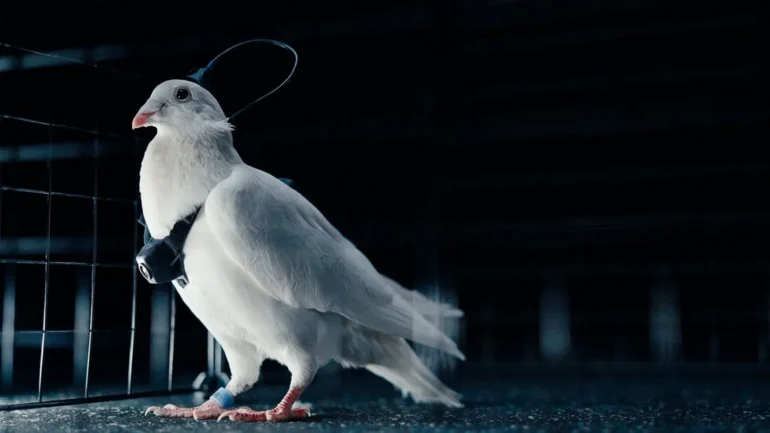
Russian startup Neiry has started accepting commercial orders for pigeons fitted with brain implants, cameras and GPS equipment, which it markets as “biodrones” for aerial photography and infrastructure inspection.
The company said operators can influence a bird’s flight direction from more than 62 miles away. The pigeons can also follow routes uploaded before takeoff, so they don’t need continuous manual control.
How the biodrones work
Each bird carries biocompatible electrodes implanted in specific brain regions. A backpack-like unit links the electrodes to an electronic control system. Operators send electrical signals that nudge the pigeon to change course.
Neiry said the birds need no conventional flight training and can perform basic maneuvers on command. A camera mounted on the chest captures images of the ground. Because the pigeons keep their natural ability to avoid obstacles, the startup argues they could work in cluttered environments where mechanical drones struggle.
According to Neiry, the birds have completed more than 100 outdoor test flights and collected over 1,000 images. Its longest flight lasted more than 10 hours.
Pricing and target uses
The commercial service is currently in beta and operates within Russia. Prices start at 300,000 rubles per square kilometer, roughly $3,800. Neiry said customers who repeat flights along established routes should get lower prices.
The company sees demand in inspecting power lines, pipelines and gas distribution networks. It also points to environmental observation and aerial surveys. Neiry suggests the birds’ ability to fly through restricted areas could appeal to customers looking for alternatives to conventional drones. That claim about fewer flight restrictions has not been independently verified.
Image quality is modest for now. The current camera system delivers ground resolution of under 20 centimeters per pixel, and Neiry wants to bring that down to between one and two centimeters.
Privacy and welfare questions
Neiry said its software blurs faces and strips identifying information from collected data to protect people who appear in the photographs.
Implanting electrodes in living animals raises welfare questions. Neiry said it follows an approved ethical protocol. Researchers reportedly aim for a 100 percent survival rate during implantation, but that is a goal rather than independently verified outcome data. Outside assessments of the birds’ long-term health would be needed to settle the issue.
Surveillance is another concern. Pigeons may draw less attention than aircraft near sensitive sites, which raises the prospect of military or covert use. Independent evidence of how well the system works in practice has not been published.
Beyond pigeons
Neiry reportedly wants to expand to other species. Ravens could carry heavier equipment, while seabirds could support marine research. The startup has also identified Brazil and China as potential markets.
The company has taken its first commercial steps, but demand will depend on whether the birds can deliver reliable imagery at a competitive cost.
Source: Interesting Engineering