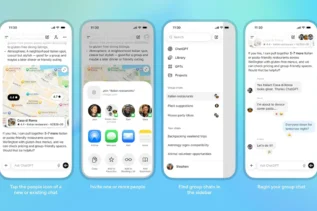
OpenAI has rolled out ChatGPT group chats worldwide, allowing up to twenty people to collaborate with the AI in a shared conversation while keeping personal data and memories separate.
X experienced its second outage in three days, with thousands of users unable to load feeds on mobile and desktop. The issue resolved within an hour, but questions remain about the platform’s stability.
Linus Torvalds has shared his view on AI assisted coding, saying it is useful for learning and experimentation but should not be used for core systems like the Linux kernel.
Perplexity has launched its Comet AI browser on Android, bringing voice interaction, summarization tools and an assistant driven workflow to phones at a time when mobile browsing habits dominate daily use.
Target is launching a new ChatGPT integration that lets shoppers search, build carts, and check out using their Target account directly within the chatbot, with support for shipping, pickup, and upcoming same-day delivery.
Nvidia's Q3 2026 revenue hit 35.1 billion dollars, with data center sales at 30.8 billion dollars. The company forecasts Q4 revenue of 32.5 billion dollars amid strong AI demand.
Navigating during holiday travel exposes gaps in traditional maps and GPS tools. New features in Google Maps address wait times at key points, vehicle arrival tracking, route clarity, and precise parking zones. Each feature responds to a specific user problem rather than being cosmetic.