
The Indian Department of Telecommunications issued a confidential order recently, directing all smartphone manufacturers to pre-install the Sanchar Saathi app on new mobile handsets sold in India. The order applies to companies including Apple, Samsung, Xiaomi, Vivo, and Oppo. It requires completion within 90 days and submission of a compliance report within 120 days. For devices already manufactured or in sales channels, manufacturers must push the app through software updates.
Sanchar Saathi, developed by the Department of Telecommunications, lets users check if a mobile handset is genuine using its IMEI number. The app also supports reporting lost or stolen devices for blocking, reporting suspected fraudulent communications, checking mobile connections linked to a user’s name, and accessing trusted contact details for banks and financial institutions. The app is currently available for voluntary download on the Apple App Store and Google Play Store.
The government order specifies that the app must be readily visible and accessible at first use or device setup. It also states that manufacturers must ensure the app’s functionalities cannot be disabled or restricted by users. This means iPhone and Android users would not be able to uninstall or turn off Sanchar Saathi once installed. The directive aims to curb misuse of telecom resources for cyber fraud and improve telecom cybersecurity under the Sanchar Saathi initiative.
Apple has decided not to follow the order and plans to inform Indian authorities of its position. The company objects due to privacy and security risks for its iOS ecosystem. Apple holds about nine percent market share in India’s smartphone market, where competitors like Vivo, Oppo, and Samsung lead. Apple does not plan to take legal action or challenge the order publicly at this stage.
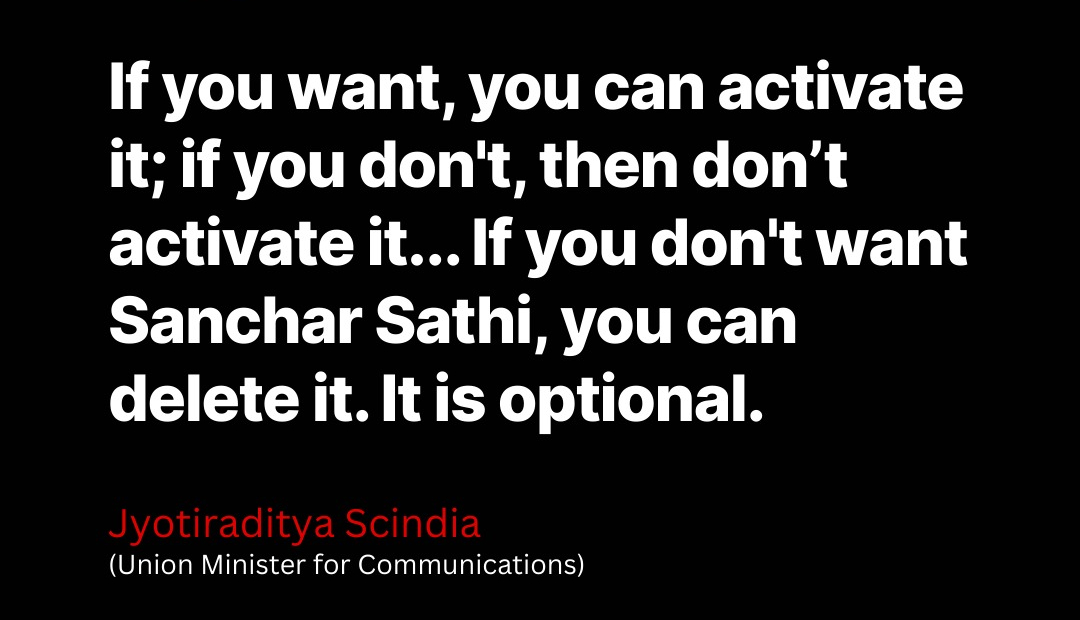
Although, the minister of telecommunication, has since clarified, that the app is an optional install, and if an individual does not wish to use it, they can choose not to install it or even register on the same, putting an end to all the meaningless uproar. Apple has faced similar requests from India in the past. In 2018, the company resolved a dispute over the TRAI DND anti-spam app after two years by allowing installation with modifications. India’s smartphone market sees growing local production by Apple, which reported $9 billion in sales in September 2025. Google also started direct online sales of Pixel phones in India this year.