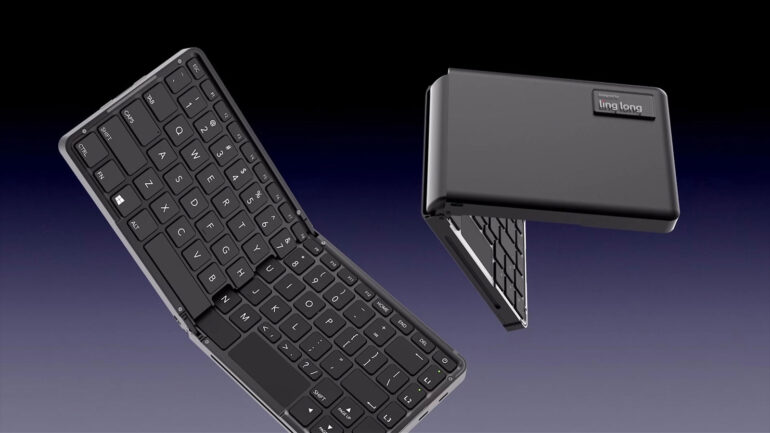

Miniature computers usually force you to choose between a small size and actual gaming power. Most tiny PCs rely on integrated graphics that struggle with heavy tasks, but a new model appearing in Chinese markets is changing that. The device, known as the Linglong M1, manages to cram a full Nvidia RTX 4060 laptop GPU into a case that is significantly smaller than a standard desktop. It is designed for people who need a powerful workstation or gaming rig that can literally fit into a large pocket or a small bag.
The clever part of this machine is how the developers handled the heat. To make a dedicated graphics card work in such a small space, the creators used a custom cooling system that pulls air through the sides and vents it out the back. While it uses laptop grade components to save space, the performance is comparable to much larger gaming laptops. It also features a unique fold-out design in some configurations that includes a built in keyboard or trackpad, essentially turning the PC itself into a remote control for whatever monitor you plug it into. This makes it a strange but capable hybrid between a desktop and a handheld console.
One of the biggest hurdles for this specific PC is its power requirement. Because the internal parts are so thirsty for energy, it cannot run off a standard phone charger. It requires a high wattage power brick, though it does include a small internal battery that acts as a backup. This battery is not meant for hours of gaming away from a wall outlet, but rather to keep the system running if the power cable gets bumped or if you need to move from one room to another without shutting down your work.
Currently, the Linglong M1 is only officially available through Chinese retailers like JD.com. If you want to get your hands on one in other parts of the world, you will likely have to use an import service or wait for third-party sellers to list them on global marketplaces. The starting price in China is roughly the equivalent of five hundred dollars, though that cost can go up depending on how much memory and storage you choose to add.