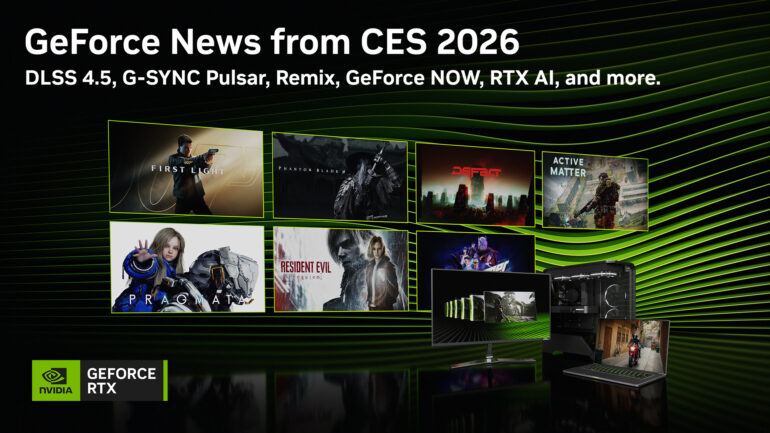

I have been watching the push for “path tracing” in games for a few years now, and while it looks amazing, it usually kills your frame rate. NVIDIA’s latest answer, announced at CES 2026, is DLSS 4.5. This matters because it is a direct attempt to bridge the gap between high-end visual realism and the smooth performance that gamers actually need. Instead of just making a game run faster by cutting corners, NVIDIA is using a new “Super Resolution Transformer” to make the AI smarter about how it cleans up the image. It is about making sure that when you buy an expensive graphics card, the games actually look as sharp as the box promised.
Table of Contents
How will help clean up the current ‘AI Mess’
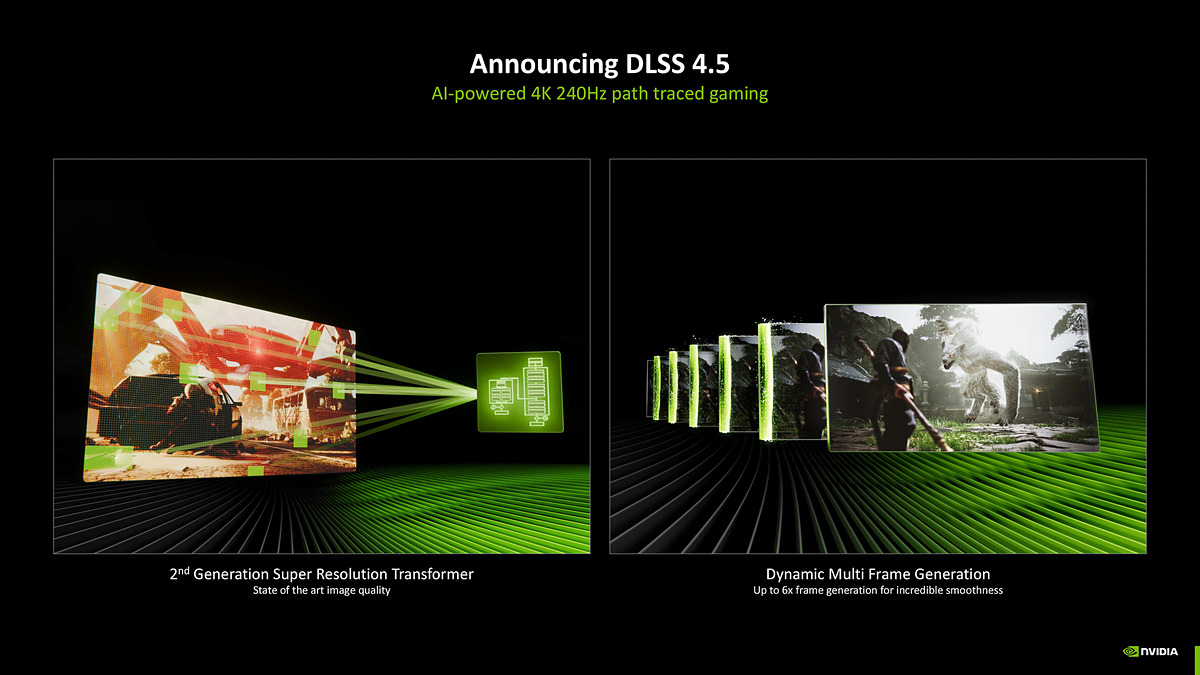
If you have used AI upscaling before, you know it is not perfect. You often see “ghosting” where a trail follows a moving object, or a weird shimmering on thin lines like power cables or fences. DLSS 4.5 introduces the 2nd Generation Super Resolution Transformer to tackle these specific issues. It is designed to be more stable over time, meaning the image stays clear even when there is a lot of fast movement on screen.
For the average player, this means you can finally stop choosing between “Performance” mode and “Quality” mode. The goal here is for the AI to handle the heavy lifting so well that you cannot tell it is working. The best part of this specific update is that it is available for all RTX owners right now. You do not need to buy a brand new card to see the benefits of the sharper image and improved anti-aliasing. It makes your existing hardware feel like it just got an upgrade for free.
Why the push for 240 Hz path tracing?
The headline feature for the new RTX 50 series cards is something called Dynamic Multi Frame Generation. This takes the “fake frames” idea from the last generation and pushes it to the extreme. NVIDIA is claiming that this tech can now deliver 4K resolution at a staggering 240Hz, even with path tracing turned on. Path tracing is basically the “holy grail” of lighting, where every ray of light is calculated in real time.
Why does this matter for your life? Most people do not have 240Hz monitors yet, but this technology ensures that as screens get faster, the hardware can keep up. It also means that even if you have a mid-range card, you might finally be able to play the most demanding games at a smooth 60 or 120 frames per second without the game looking like a blurry mess. It is about future-proofing your setup so you do not have to upgrade every single year just to play the latest hits.
What else was showed off?
One of the most “next gen” features they showed off is called RTX Remix Logic. This is not about frames per second; it is about how the game world reacts to you. This tech can detect over 30 common in-game events, like opening a door or a weather change, and adjust the lighting and particles automatically.
Imagine opening a door to a dark room and seeing the light spill in naturally, or the fog in a forest reacting to your character running through it. Usually, developers have to program these things manually for every single object. RTX Remix Logic does it automatically using AI. This matters for the business of making games because it cuts down on development time and cost. For the player, it means more immersive worlds where everything feels connected and reactive rather than static and fake.
Nvidia is expanding the ecosystem
NVIDIA is also moving beyond just the Windows PC. They announced native clients for both Linux and Fire TV. This is a huge win for people who want to game on different devices without needing a massive tower under their desk. By bringing DLSS and RTX features to more platforms, they are making high-end gaming much more accessible. You might soon be able to get a “PC quality” experience through a simple streaming stick or a handheld Linux device.
The company is also integrating these features into the NVIDIA app, covering more than 400 games at launch. This means you do not have to wait for a developer to release a patch for your favorite old game; the NVIDIA software can help improve the visuals and performance on its own. It puts the power back into the hands of the user to decide how their games should look and perform.
Release date and pricing information
NVIDIA’s DLSS 4.5 is a rolling release with different parts arriving at different times:
- 2nd Gen Super Resolution Transformer: Available now for all RTX GPU owners (RTX 20, 30, 40, and 50 series) via the latest driver update.
- Dynamic Multi Frame Generation: Coming in Spring 2026. This feature is exclusive to the RTX 50 series “Blackwell” GPUs.
- RTX Remix Logic: Currently in beta for developers, with the first compatible games and mods expected by mid-2026.
- NVIDIA App Update: The updated app with support for over 400 titles is available for download now.
The RTX 50 series cards, which are required for the full 6x Frame Generation features, have started hitting shelves with prices ranging from $599 for the 5070 to $1,599 for the flagship 5090. If you already own an RTX 40 series card, you will still get the image quality improvements, but you will be limited to the standard 2x or 3x frame generation speeds.