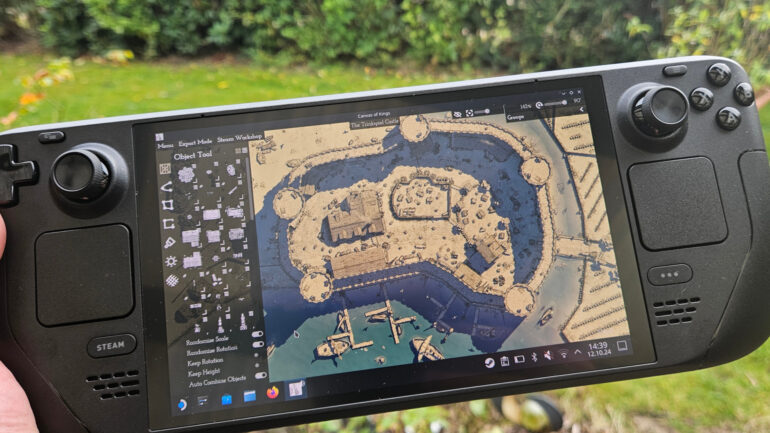

Meta owns Facebook, Instagram, and WhatsApp, and to keep these apps working, Meta uses thousands of very large computers. These computers have to do many jobs at once, like sending a message to your friend or showing you a new photo. Sometimes the computers get very busy and things start to slow down. To fix this, Meta’s engineers found a solution from a surprising place: a handheld gaming machine called the Steam Deck. They are now using a tool from that game machine to help their giant computers stay fast.
This tool is called a “scheduler.” You can think of a scheduler like a teacher in a classroom. If every student tries to talk at the exact same time, no one can hear anything. The teacher picks one student to speak first so the class stays organized. In a computer, the scheduler picks which job gets to happen first. Meta found that the scheduler from the Steam Deck is very good at picking the most important jobs so that users do not have to wait for their apps to load.
How does a gaming tool help operate large Facebook servers?
The Steam Deck is a small computer made for playing video games. When you play a game, the computer must work very fast. If the computer stops to do a small background task, the game will stutter or lag. This makes the game difficult to play. The Steam Deck uses a special scheduler to make sure the game always has the power it needs. It treats the game like the most important task and ignores distractions that are not urgent.
Meta realized that their apps have the same problem as video games. When you open Instagram, you want to see photos right away. If the server is busy doing other background work, the app feels slow. By using the game tool, Meta’s servers can now identify which jobs are sensitive to time. This means they pick the jobs that a human is waiting for and finish them before doing anything else. It helps the whole system feel much more responsive for people around the world.
How does this tool work on big computers?
A game machine is small, but the data centers at Meta are huge. One of Meta’s computers can have over one hundred brains inside it. At first, the game tool was not used to working with so many brains at once. Meta’s engineers had to make some changes to the tool so it could stay organized on such a large scale. They added new rules to help the tool share the work evenly across all parts of the big computer so that no single part becomes too tired or overwhelmed.
These changes were helpful because they allowed the servers to handle more work with less energy. When the work is balanced correctly, the computer does not get as hot and can finish tasks more efficiently. This is important for a company as big as Meta because it helps them run their global network without needing to build as many new data centers. The tool is now so reliable that Meta has made it the default setting for almost all of their servers.
Old problems, modern solutions
Usually, big companies like Meta build their own tools from scratch. But the game tool was so effective that they decided to use it instead. This shows that the technology used to play games is becoming just as powerful as the technology used to run the internet. It also proves that smart ideas can come from anywhere, even from a device that people use for fun in their spare time.
Meta is using this new system to manage its global fleet of computers. For most people, this change is invisible. You will not see any new buttons or menus in your apps. Instead, the apps will simply stay fast and reliable, even when millions of people are using them at the same time. It is a way of using game logic to make the whole internet work better for everyone while keeping the costs of running these giant machines much lower.