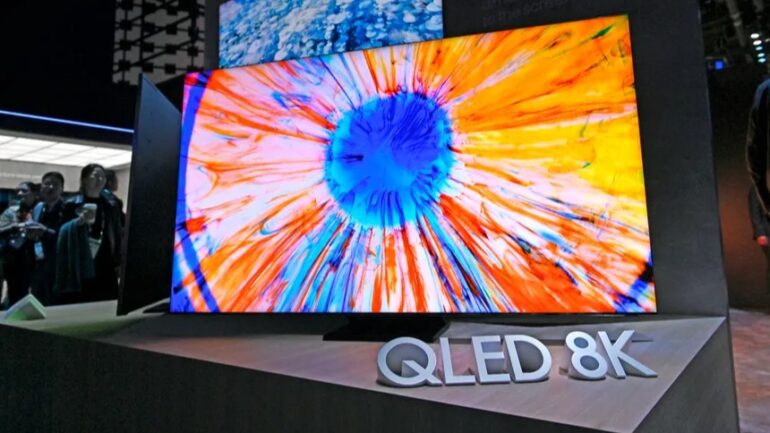

The news that LG stops making 8k oled panels might come as a shock to those who keep a close eye on the spec sheets, but for the rest of the world, it is a bit like hearing that a restaurant has stopped serving a dish you never actually ordered. For the last several years, 8K has been touted as the next big frontier in home entertainment. We were told that four times the pixels of 4K would lead to a level of immersion that would make our current screens look like ancient relics. However, as it turns out, the consumer appetite for that many pixels just never materialized.
This recent development is not just a minor production tweak; it is a signal that the era of chasing resolution for the sake of resolution might finally be over. LG Display has confirmed that development of these panels is on hold indefinitely. While they have left the door open to return if the market suddenly changes, the current landscape suggests that 8K is following in the footsteps of 3D TVs and curved screens into the “nice idea, but no thanks” category of home tech.
Why 8K failed to capture the living room
The primary reason LG stops making 8k oled panels boils down to a classic chicken and egg problem. To appreciate an 8K screen, you need native 8K content. Currently, that content is almost non-existent. There are no 8K Blu-rays, no major streaming services offer an 8K tier, and broadcast television is still struggling to make 4K a standard. Aside from a few stunning nature documentaries on YouTube, there is simply nothing for an 8K owner to watch that actually utilizes the full resolution of their expensive panel.
Furthermore, the physical limitations of the human eye play a massive role here. Scientists and tech experts have pointed out for years that at a standard viewing distance, most people cannot tell the difference between 4K and 8K on a screen smaller than 88 inches. Unless you are sitting two feet away from a massive wall-sized display, those extra pixels are essentially invisible. When consumers realized they were being asked to pay a massive premium for a difference they could not see, the 8K TV market trends started to look very bleak.
The high cost of chasing pixels
Manufacturing these displays is an incredibly expensive and difficult process. When LG stops making 8k oled panels, it is likely looking at the “brutal unit economics” of the situation. Producing an 8K OLED panel requires much higher precision and results in more defects during the manufacturing process compared to 4K. These costs are then passed on to the consumer, resulting in price tags that can reach five figures.
On the LCD side, the situation is not much better. 8K LCDs require incredibly complex backlighting and more power to push light through a much denser pixel grid. In an era where energy efficiency regulations are becoming stricter, particularly in Europe, 8K TVs have struggled to meet the necessary brightness levels while staying within legal power limits. It became a choice between a dim 8K screen or an incredibly bright, vibrant 4K screen. Most buyers chose the latter every single time.
A lonely road for the remaining players
With LG stepping back, the industry landscape has changed overnight. Sony and TCL had already moved away from the format in previous years, and now Samsung stands as the lone major brand still flying the 8K flag. However, even Samsung seems to be tempering its enthusiasm. At recent trade shows like CES 2026, the focus has shifted almost entirely toward QD-OLED and high-brightness Mini-LED 4K sets rather than 8K resolution.
This exodus suggests that the industry has collectively decided that “better pixels” are more important than “more pixels.” Instead of trying to cram 33 million pixels into a screen, manufacturers are now focused on making the 8 million pixels in a 4K set look as good as possible. This involves improving peak brightness, widening the color gamut, and refining AI upscaling so that even old 1080p content looks crisp and modern.
If you were worried that your 4K TV was about to become obsolete, the fact that LG stops making 8k oled panels should actually put your mind at ease. It confirms that 4K is going to remain the gold standard for a long time. The focus for the future of television technology is now on things that actually impact your viewing experience every day.
We are seeing a massive push into technologies like Micro-Lens Array (MLA) which boosts OLED brightness to levels that were once thought impossible. We are also seeing AI processors that can recognize objects on the screen and adjust the contrast in real-time to create a more three-dimensional look. These are improvements you can see from your sofa, regardless of how many pixels are on the screen. The industry is doubling down on what works, and that is great news for the average consumer who just wants a beautiful picture without the technical headaches.