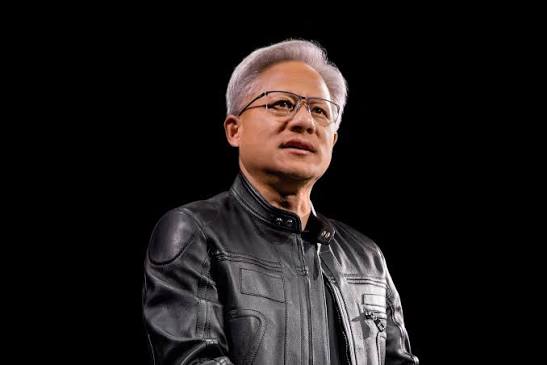

Nvidia CEO Jensen Huang has never been shy about calling things as he sees them. His latest claim, that China is going to win the AI race, has sent a ripple through the industry. Huang said China is only nanoseconds behind the United States in AI capability, and that the US risks hurting itself by assuming long term dominance will simply continue. He added that a little less cynicism toward China’s developer community would serve both nations better.
Speaking on X, Huang explained that America must win by outpacing competitors, not by walling them off. He said the strength of the US comes from getting developers around the world to adopt American tools, frameworks, and hardware.
Table of Contents
Restrictive chip policies could backfire
The US government has placed increasing limits on Nvidia’s ability to sell advanced processors to China. These chips are the backbone of modern AI research. Without them, training large models becomes difficult, costly or both. Huang acknowledged the national security arguments behind these rules, but he questioned whether the broader impact has been fully understood. If China is forced to build its own ecosystem, the US could lose the influence it currently holds through its hardware and software stack.
Hardware leadership is still central to AI dominance. Powerful accelerators give data centers the ability to train and run models at scale. Huang said the US must maintain this lead, but it also needs developers across Asia, Europe and emerging markets to stay within the American orbit. Locking out China risks pushing the world’s largest developer population into alternative platforms that the US cannot guide.
China’s ecosystem keeps advancing even with limits
Despite heavy export restrictions, China has not slowed its pace. Local chipmakers are pushing ahead with their own accelerators. Developers are building competitive large language models. Tech companies are scaling their own cloud infrastructure. The gap between the US and China remains narrow. Huang suggested that ignoring this reality could undermine long term US interests.
He warned that restrictive policies may feel protective in the short term but could push China toward creating parallel systems that no longer depend on American hardware or frameworks. Once that shift happens, US influence declines sharply.
The US still leads, but the field is tightening
Huang made it clear that he wants the US to stay in front. Nvidia’s success depends on an open global market where American technologies remain central. But he said winning by isolation is not a strategy. Winning by innovation is.
At a recent developer event, Huang explained it plainly. If America loses access to half of the world’s AI developers, it loses its edge, no matter how strong its chips are. The US tech stack only remains dominant if developers want it and can use it. Cutting out China risks shrinking that base at a scale no country can afford.
A message aimed at policymakers as much as engineers
Huang’s comments push a deeper point. The AI race is no longer about two countries sprinting down separate tracks. The speed of progress depends on shared tools, open research, and global developer networks. If policy decisions fracture that network, the US may weaken its own position.
The United States still holds a clear lead in chip design, cloud infrastructure, and model training. But China’s rapid growth makes this race more competitive than ever. Huang’s call for less cynicism is not about trust. It is about strategy. If the US wants to stay in front, it cannot afford to close the door on the world’s largest pool of developers.