 Tech


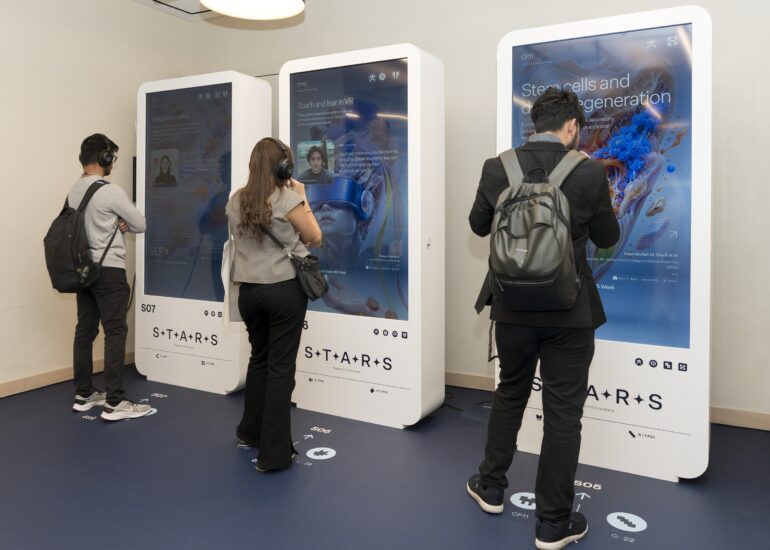
Visitors to Dubai Future Week 2026 can currently quiz AI-powered characters about peer-reviewed science, as the Science, Technology, Arts and Research Summit (STARS) turns 30 research papers into interactive exhibits. The event, organised by the Dubai Future Foundation (DFF), runs from 18 to 21 November and is open to registered attendees.
Instead of reading research summaries on boards, visitors pick a project and talk to its on-screen virtual character. Each project comes as a digital artwork, a 3D-printed sculpture and the character itself, shown on an interactive screen. Visitors can ask how a technology works, what problem the research tackles or how the findings might affect daily life.
The characters answer with charts, images and data from the paper. They adjust their explanations to the visitor’s level of knowledge, from specialist researchers to newcomers. Follow-up questions are supported for those who want to go deeper.
What is on show
There are 15 stations, each covering two projects, spread across themed halls named the body, meaning, trust and action. Topics span artificial intelligence, robotics, biotechnology and neuroscience.
- Two robotics projects, both co-authored by AI researcher Yann LeCun, look at how robots can learn to handle objects by watching videos of people, and how they can pick up a new task from a single visual example.
- Other exhibits cover wearable robotic fingers designed to help people who struggle to grasp objects, and human-robot teamwork on jobs such as picking products from shelves.
- One study looks at generative AI and creativity. It finds the tools can help people write more creative stories, while potentially narrowing the range of ideas across users.
- A study on older adults examines whether they see assistive robots as tools, companions, caregivers or a form of surveillance.
- Roboticists Hiroshi Ishiguro and Paolo Dario co-authored research on public acceptance of cyber-virtual characters in the service sector.
- DFF contributes its own study, co-authored by researchers Tarek Taha and Rajkumar Muthusamy, on human-robot collaboration.
A wider programme
STARS is making its Dubai debut, with a programme that mixes scientific and artistic sessions, technology-driven artworks and immersive experiences. It also includes the annual open meeting of the MIT Senseable City Lab, which is being held in Dubai for the first time.
Researchers who want to take part in the next edition can submit projects by scanning a QR code at the exhibition.
STARS sits within the broader Dubai Future Week programme of keynotes, panels, workshops, debates, competitions, pitch platforms, exhibitions and closed-door meetings. DFF expects more than 10,000 participants, including inventors, investors, policymakers, entrepreneurs and technologists. More information is available at dubaifutureweek.com.