
Another corporate showdown is playing out on millions of screens across the United States. Disney has pulled its channels from YouTube TV after both companies failed to reach an agreement before their October 30 deadline. This means subscribers suddenly lost access to ESPN, local ABC stations, ABC News, FX, NatGeo, Disney Channel and Freeform.
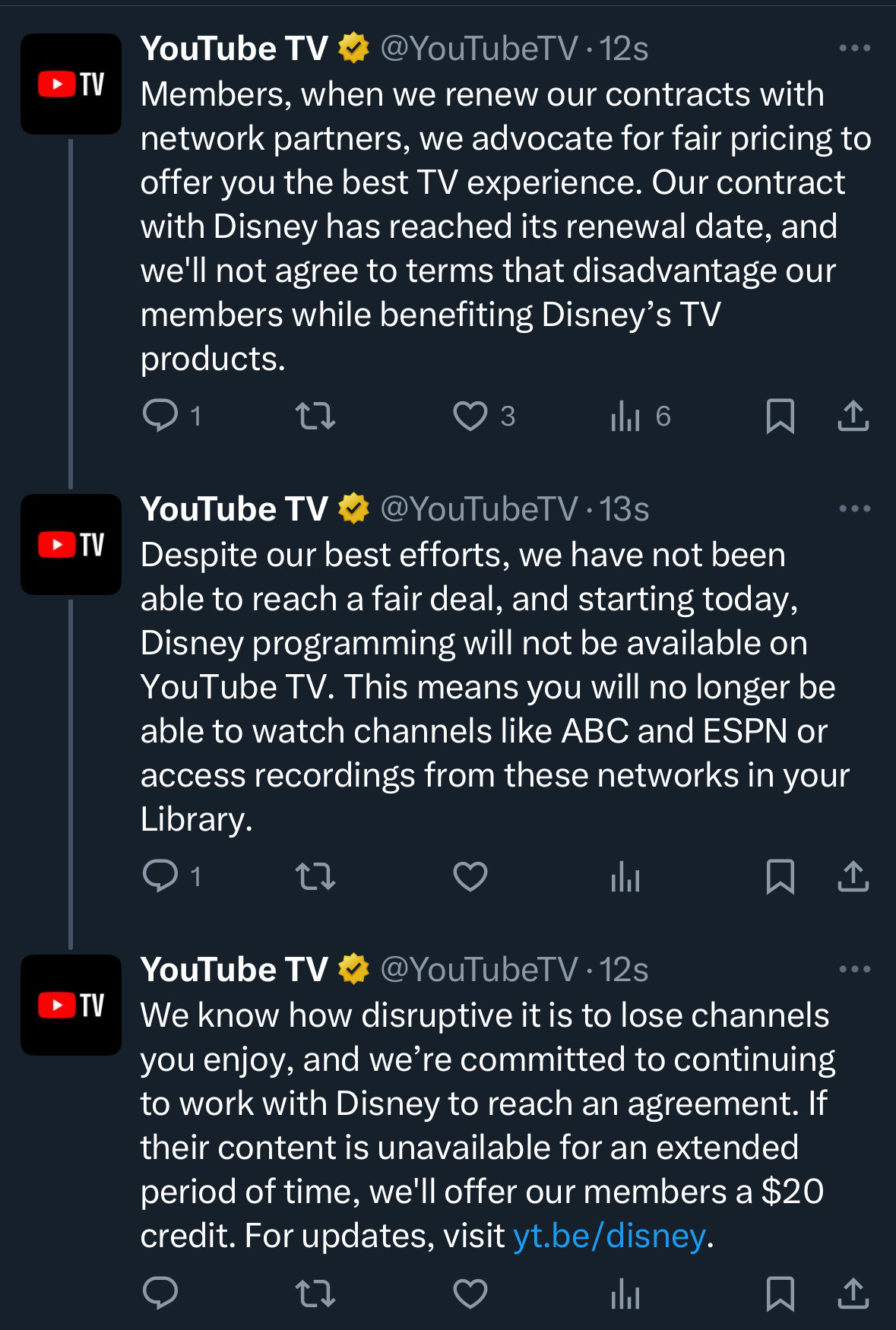
The fight, like many before it, boils down to money and leverage. YouTube TV says Disney is demanding higher carriage fees, which would force Google to raise prices for customers. Disney, on the other hand, claims YouTube TV is refusing to pay “fair rates” for its content and is using its market dominance to squeeze competitors.
Both statements tell the same old story with new players. Cable TV used to be notorious for these disputes, where networks and distributors would lock horns over licensing costs, leaving viewers staring at blank screens. The difference now is that it’s happening in the streaming era, and that makes it more personal. Subscribers don’t expect these disruptions in 2025. They’ve cut the cord to escape cable drama, not relive it in a shinier interface.
It is worth noting that this isn’t the first blackout between Disney and YouTube TV. In 2021, a similar standoff left viewers without Disney content, but the channels returned within a day after both sides struck a quick deal. This time, though, the tone feels more aggressive. YouTube TV has already announced it will issue a $20 credit to subscribers if the blackout continues, a clear attempt to maintain goodwill while shifting the blame back to Disney.
What’s interesting is how both sides are playing this for perception. Disney has long used its dominance in sports and entertainment to command premium pricing from distributors. ESPN alone has been the cornerstone of traditional cable bundles for decades. Without it, sports fans are left stranded, and that gives Disney leverage. YouTube TV, meanwhile, is one of the few live TV streaming platforms big enough to push back. With over eight million subscribers, it doesn’t want to set a precedent of paying inflated rates, especially when it competes directly with Disney’s own streaming products like Hulu + Live TV.
That’s where the irony lies. Disney isn’t just fighting to protect its channel fees; it’s also fighting for its streaming ecosystem. Every blackout pushes viewers closer to signing up for Disney’s own services. So while it claims to be fighting for “fair value,” it’s also using the blackout as a strategic reminder that it controls the most-watched sports and entertainment channels in the country.
Google, on its part, has been here before. Earlier this year, YouTube TV nearly lost Paramount’s CBS and Nickelodeon content. In August, the same thing happened with Fox. Each time, the story followed the same pattern: a public standoff, a countdown to blackout, and a last-minute resolution. But this time, Disney is a much tougher opponent. It’s not just another media house — it’s one of the last true giants that can still dictate terms in a streaming-dominated landscape.
From a viewer’s perspective, it’s hard to pick a side. Disney is protecting its content value, which makes sense given the cost of producing and maintaining marquee brands like ESPN and FX. But YouTube TV’s argument about protecting consumers from price hikes is equally valid. The average monthly subscription cost for live TV streaming has been creeping upward, and disputes like this only make that worse.
This tug of war is a symptom of a larger problem in the streaming economy. Every major player wants to be both a content creator and distributor, which creates conflicts of interest. Disney wants higher licensing fees for its shows while selling the same content directly on its own apps. Google wants to keep subscription costs low while maintaining access to the same high-value networks. Neither side wants to give an inch, and subscribers end up caught in the middle.
If history is any guide, both companies will eventually reach an agreement. The money at stake is too big to walk away from. But these recurring fights expose how fragile the streaming industry’s version of “cord-cutting freedom” really is. Viewers thought they were escaping the monopoly of cable operators, only to realize they’ve traded one set of corporate standoffs for another.