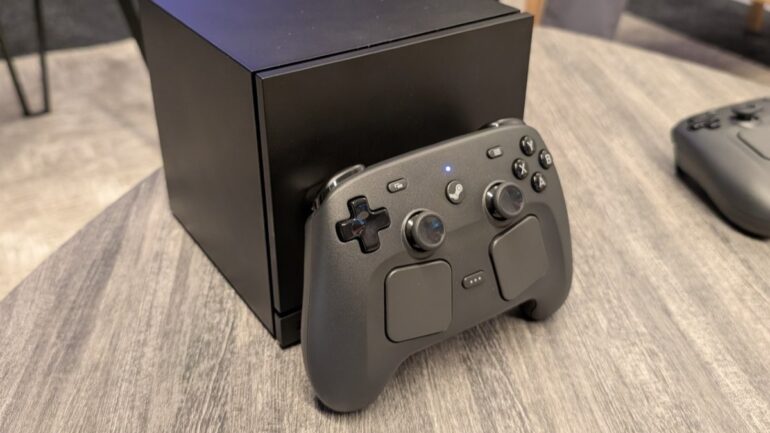

A senior executive behind Baldur’s Gate 3 has stated that there is little practical value in building a high spec Steam Machine today. The comments address a recurring idea within the PC gaming space that a powerful, console style PC designed for the living room could bridge the gap between consoles and traditional desktops.
According to the executive, the problem is not performance. High end PC hardware already exists in many forms, from custom desktops to compact gaming systems. Players who want top tier performance typically already own or are willing to build a full PC setup. Packaging similar hardware into a console shaped box does not change how those users interact with games.
The argument also touches on user expectations. Console buyers generally value simplicity, predictable pricing, and a fixed hardware target that lasts for years. High spec PCs operate on the opposite model, with frequent upgrades, variable configurations, and higher costs. Combining these two approaches into a single product creates friction rather than solving it.

Steam Machines have faced this challenge before. Earlier attempts struggled to define a clear audience, sitting awkwardly between consoles and PCs without fully satisfying either group. While software support and controller based interfaces have improved since then, the fundamental market tension remains unchanged.
From a developer perspective, a high spec Steam Machine does not simplify development. Studios already target a wide range of PC hardware profiles, scaling performance up or down depending on the user’s system. Introducing another premium hardware category does not reduce complexity or open meaningful new opportunities.
The executive also highlighted that modern PCs already fill the role some people imagine for a Steam Machine. Small form factor PCs, handheld gaming devices, and HDMI connected desktops can already deliver high quality gaming experiences in a living room environment without the need for a new platform.
Another factor is cost. High performance components are expensive, and pricing a Steam Machine competitively against consoles would be difficult without compromises. Once the price rises, the product begins competing directly with full PCs, where users expect greater flexibility and upgrade options.

The rise of handheld PC gaming devices further complicates the idea. These systems focus on portability and convenience rather than raw power, offering a clearer value proposition. They complement existing PCs instead of attempting to replace them with a fixed living room alternative.
The comments do not dismiss experimentation in PC hardware outright. Instead, they suggest that successful devices need a clear reason to exist. A powerful Steam Machine that mirrors what a PC already does, without offering meaningful advantages in cost or usability, fails to meet that requirement.
For now, the view from within one of the most successful PC game studios is that the market has already settled this question. High end PC gaming is well served by existing options, and reshaping it into a console like form does not address how players actually choose and use their hardware.