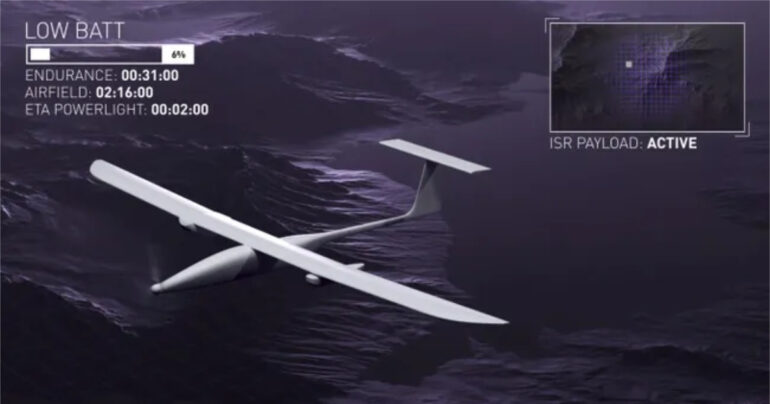

If you have ever operated a drone for more than twenty minutes, you know the inevitable frustration of the low-battery beep. It is the single biggest bottleneck in an industry that is trying to revolutionize everything from package delivery to border security. We have been stuck in a cycle of short flights followed by long waits at a charging dock. However, a team of engineers has just demonstrated something that feels like it belongs in a science fiction novel.
They managed to use a kilowatt-class laser to send power through the air to a receiver nearly two kilometers away. This is not just a laboratory trick; it is a proof of concept for wireless drone charging that could theoretically keep an aircraft in the sky forever.
The project is a collaboration involving PowerLight Technologies and some serious heavy hitters in the defense space. They are looking at the problem of energy density from a completely different angle. Instead of trying to pack more power into a chemical battery, they are turning the air itself into a power line.
Shooting down the battery problem
The current state of drone endurance is, frankly, a bit of a joke. Most commercial quadcopters are lucky to stay up for half an hour. Even expensive industrial fixed-wing drones eventually have to come home to roost. The weight of the batteries required to keep them aloft is the very thing that limits their range. It is a self-defeating loop.
Wireless drone charging via laser changes that math entirely. By mounting a specialized, lightweight receiver on the drone, the aircraft can “drink” energy from a ground-based laser beam while it is still in flight. As long as the laser has line-of-sight to the receiver, the drone stays powered. This demonstration showed that we can now do this at distances that actually matter for real-world applications. Two kilometers is a significant distance when you consider the precision required to keep a high-energy beam pinned to a moving target.
Precision at a distance
Sending a kilowatt of power through the air is not like pointing a flashlight at a wall. At two kilometers, atmospheric interference, wind, and the slight vibrations of the hardware can throw a beam off target by several meters. The breakthrough here is as much about the tracking and stabilization as it is about the laser itself.
The system uses advanced beam-forming optics to ensure that the energy stays concentrated on the photovoltaic receiver. If the beam wanders even slightly, the power drop is immediate. The fact that they achieved this with a kilowatt-class laser is a testament to how far adaptive optics have come in the last decade. It requires a level of synchronization between the ground station and the flight controller that was practically impossible five years ago. This is the first time we have seen this level of wattage delivered over such a long distance with this kind of efficiency.
Safety in the line of fire
Naturally, the first thing anyone thinks about when they hear “kilowatt-class laser” is the potential for disaster. We are talking about a beam of light that could easily cause severe damage if it hit something it wasn’t supposed to. This has always been the primary barrier to widespread wireless drone charging in public spaces.
To solve this, the engineers have built in what they call a safety curtain. The high-power beam is surrounded by a ring of low-power sensors. If anything—a bird, a stray aircraft, or even a piece of debris—breaks that outer ring, the main power beam shuts down in a fraction of a millisecond. It is a fail-safe that makes the technology viable for more than just empty desert test ranges. Without this level of safety, no regulator in the world would ever let a kilowatt-class laser operate in open air.
The weight of the receiver
Another impressive part of this demonstration is the hardware on the drone itself. In the past, the equipment needed to convert laser light back into electricity was heavy and bulky, which defeated the purpose of trying to save weight. PowerLight has managed to refine the receiver into a lightweight package that doesn’t tank the drone’s aerodynamics or payload capacity.
This is a critical part of the wireless drone charging puzzle. If the charging gear weighs as much as the battery you are trying to replace, you haven’t really solved anything. By moving the “heavy” part of the power system to the ground, the drone becomes a much more agile platform. It can carry more sensors, more cameras, or more cargo because it is no longer lugging around several kilograms of lithium-polymer cells.
Potential for industrial and remote work
While the defense applications are obvious, the industrial potential is where things get really interesting. Think about a drone tasked with inspecting a massive solar farm or a remote pipeline. Usually, you would need a fleet of drones and multiple charging stations scattered across the site. With a central laser hub, a single drone could theoretically patrol the entire area without ever needing to land.
It also changes the game for emergency responders. A drone could serve as a permanent cellular relay or a high-altitude camera during a disaster, hovering over a site for days on end to provide constant data to ground teams. This kind of wireless drone charging setup turns a fleeting tool into a permanent piece of infrastructure. It is a fundamental shift in how we think about aerial robotics.
The hurdles left to jump
Even with this successful test, we are not quite at the point where you can buy a laser-powered drone at your local electronics store. Cost is a massive factor. Building a kilowatt-class laser and the tracking hardware required to keep it focused at two kilometers is an expensive endeavor.
There is also the issue of “all-weather” reliability. Fog, heavy rain, or thick smoke can scatter laser light, significantly reducing the efficiency of the power transfer. While the system works brilliantly in clear conditions, it still needs to prove it can handle the messiness of real-world weather before it can be trusted for mission-critical work. The researchers are currently looking at different wavelengths and beam-shaping techniques to help punch through the atmosphere more effectively.
Current status and testing phase
The system developed by PowerLight Technologies has successfully completed its long-range demonstration under controlled conditions. While there is no consumer price point yet, the technology is currently being pitched to government agencies and large-scale industrial partners for specialized use cases. The company expects to move into more ruggedized field testing throughout late 2025 and 2026. The hardware is not yet available for public purchase, and any future rollout would be subject to strict aviation and energy safety regulations in the regions where it is deployed.