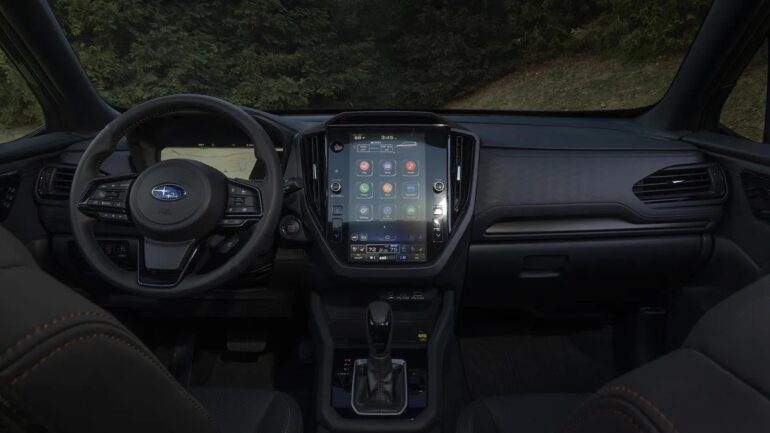

Subaru owners across North America are reporting pop-up advertisements appearing on their vehicle infotainment systems, triggering widespread criticism on Reddit and automotive forums. Several drivers claim the ads appear while the vehicle is in motion, creating distraction and frustration.
One Reddit user said a SiriusXM promotion appeared while driving at highway speed, adding that it was startling enough to nearly cause an accident. Other owners echoed similar experiences, describing sudden full screen messages that interrupt navigation or media displays.
Some users report that the ads only appear once or twice and can be dismissed permanently by selecting a “do not show again” option. Others claim the pop-ups return weekly, regardless of dismissal, and continue to disrupt their driving experience.
A recurring theme across posts is not the frequency alone, but the timing. Drivers argue that any unexpected visual interruption while driving introduces unnecessary risk.
Table of Contents
Subaru says it is unaware of the issue
When contacted by The Autopian, Subaru stated it was not aware of customer complaints related to infotainment advertising and claimed this was the first time the issue had been raised directly with the company.
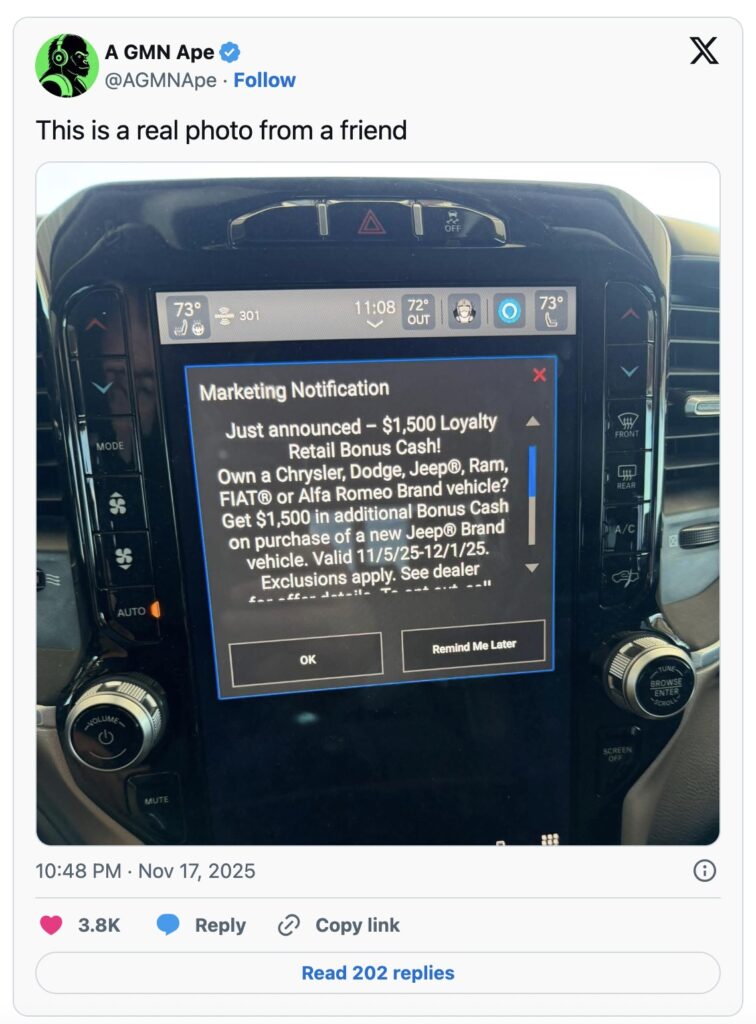
However, screenshots shared on social media platforms show infotainment displays fully obscured by promotional messages, including loyalty bonuses and subscription offers. Closing the ads reportedly requires tapping a small on screen icon, a task that many drivers say is unsafe while driving.
The lack of a clear public explanation from Subaru has added to owner frustration, particularly as similar issues have already played out across the industry.
In-car advertising is becoming more common
Subaru is not alone in facing criticism over infotainment ads. Stellantis, the parent company of Jeep, Chrysler, Ram, and Fiat, has repeatedly drawn backlash after drivers reported persistent pop-up ads on its Uconnect systems.
In several cases, Stellantis customers said there was no option to opt out. The company later described the behavior as a software glitch, though similar complaints continued to surface.
At the time, Stellantis described its in-vehicle messaging system as a way to maintain communication with owners during key moments of vehicle ownership, a justification that failed to convince many drivers.
Software defined vehicles change the revenue model
The shift toward software defined vehicles has opened new revenue opportunities for automakers. Over-the-air updates allow manufacturers to modify features, add services, and now promote subscriptions directly to drivers.
This approach turns the vehicle cabin into a controlled digital environment, where automakers can reach drivers without intermediaries. For manufacturers facing shrinking margins on vehicle sales, infotainment advertising offers an attractive recurring revenue stream.
However, consumer tolerance appears limited, especially when promotional content interrupts core driving functions or appears without explicit consent.
A familiar backlash from drivers
Other automakers have faced similar criticism. Tesla recently angered owners with a themed software update tied to a film release, which some felt crossed the line into unsolicited promotion.
Across brands, the core complaint remains consistent. Drivers do not want marketing content delivered in environments where attention and safety are critical. Many see infotainment ads as intrusive, unnecessary, and potentially dangerous.
As more manufacturers experiment with monetizing vehicle software, the backlash suggests that regulators and consumers may soon demand clearer limits on how far in-car advertising can go.