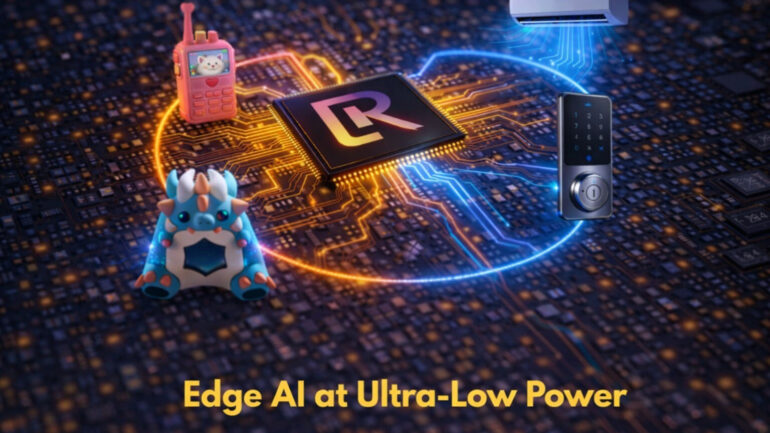

RiseLink has announced its new portfolio of semiconductor products at the CES 2026 trade show in Las Vegas. The product launch focuses on the RS3000 series and the RS5000 series which are System on Chip solutions engineered for the Internet of Things market. These chips address the increasing demand for devices that can process artificial intelligence tasks locally while maintaining minimal power consumption. By integrating both processing and wireless communication into a single silicon package RiseLink provides manufacturers with a method to reduce the physical size and complexity of smart hardware.
The RS3000 series serves as the foundational offering for low-power smart devices. It features an integrated Neural Processing Unit that allows for basic keyword spotting and sensor fusion without relying on cloud connectivity. This local processing improves user privacy because sensitive audio or motion data does not need to leave the device for analysis. The series utilizes a power management architecture that permits a device to remain in a deep sleep state while the low-power sensor hub remains active. This design is specifically targeted at battery-operated equipment such as smart locks and wearable fitness trackers where frequent charging is a primary consumer pain point.
For higher performance requirements RiseLink introduced the RS5000 series. This series incorporates more advanced Edge AI capabilities including real-time image recognition and noise suppression for voice communication. The RS5000 is equipped with Wi-Fi 6 connectivity which offers improved data throughput and better performance in environments with high device density. The implementation of Target Wake Time technology within the Wi-Fi 6 protocol further contributes to energy savings by allowing the chip to negotiate specific times for data transmission with a router. This prevents the radio from remaining active unnecessarily and extends the operating life of the hardware.
Security is a central component of the new RiseLink architecture. Both the RS3000 and RS5000 series include a hardware-based Secure Element that facilitates encrypted booting and secure key storage. This physical security layer protects against unauthorized firmware modifications and ensures that the identity of the device can be verified during network authentication. By embedding these security features directly into the hardware RiseLink aims to mitigate vulnerabilities commonly associated with low-cost IoT devices that lack robust software protection.
The technical specifications of the RS5000 series highlight its versatility for smart home applications. The chip supports Matter over Wi-Fi which is the emerging industry standard for device interoperability. This compatibility ensures that products using RiseLink silicon can communicate seamlessly with ecosystems from Google, Amazon and Apple. Furthermore the integrated AI engine is capable of performing over two trillion operations per second while consuming less than one watt of power. This efficiency makes it a viable candidate for smart cameras and intelligent appliances that require sophisticated vision or voice processing but must adhere to strict energy efficiency regulations.
RiseLink is demonstrating these chips in various reference designs at its booth during the CES exhibition. These demonstrations include a smart doorbell that identifies familiar faces entirely on-device and a smart thermostat that uses ultrasonic occupancy sensing to adjust temperatures. The company expects to begin mass production of both the RS3000 and RS5000 series in the second quarter of 2026. This timeline suggests that consumer products utilizing these new RiseLink SoCs will likely reach retail markets by late 2026 or early 2027.