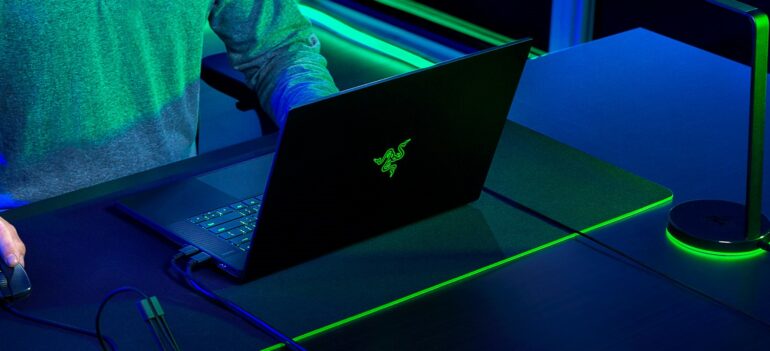

Razer is moving into the professional AI development market with two new hardware products revealed at CES 2026. The most significant is the Razer Forge AI Dev Workstation, a high-performance tower designed for researchers and developers who need to train or run large AI models locally. By keeping data on-premises, Razer is targeting users who want to avoid the high costs and privacy concerns associated with cloud-based AI services. The workstation supports high-end processors like AMD Ryzen Threadripper PRO or Intel Xeon W and can be configured with up to four professional GPUs, making it a powerhouse for complex simulations and model inference.
In addition to the desktop workstation, Razer is launching a compact external AI accelerator in collaboration with Tenstorrent. Tenstorrent is led by Jim Keller, the legendary chip architect known for his foundational work at AMD, Apple, and Tesla. This external device connects to a laptop or PC via Thunderbolt 4 or 5 and adds dedicated AI processing power to portable systems. It is based on Tenstorrent’s “Wormhole” architecture and is designed to run large language models and image generation tasks locally. Interestingly, the units are built to be daisy-chained, meaning a developer could connect up to four of them together to create a portable AI cluster.
The partnership between Razer and Tenstorrent is focused on making AI development more accessible at the “edge”—meaning on local devices rather than in massive data centers. While Razer provides the expertise in high-performance hardware and cooling, Tenstorrent provides the specialized silicon and an open-source software stack. This combination allows developers to experiment with AI models on their own terms without needing a massive server rack or a constant internet connection.
Razer has not yet shared final pricing or a specific release date for the external AI accelerator, but the Forge AI Dev Workstation is expected to be available for order later this year. These products signal a major shift for Razer as it looks to diversify its business beyond its traditional gaming audience. By catering to the growing community of AI engineers, Razer is positioning itself as a key hardware provider for the next wave of local AI innovation.