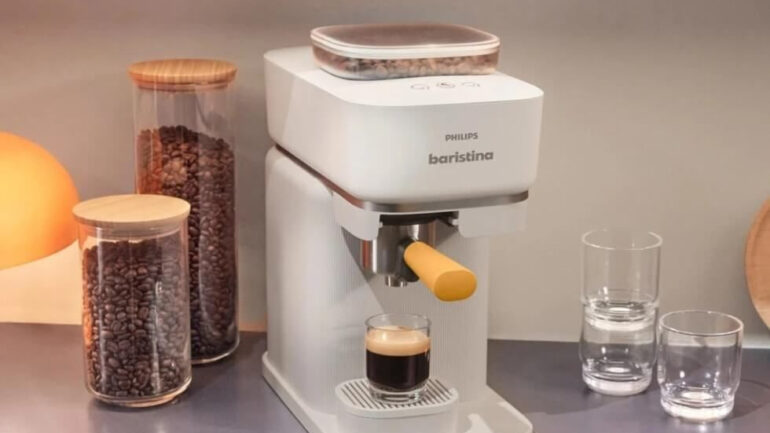

The Philips Baristina is a bit of a curveball in the world of home brewing. For years, coffee lovers have been divided into two camps. On one side, you have the pod enthusiasts who value speed and zero mess but often sacrifice the depth of flavor that only fresh beans can provide. On the other side, you have the aspiring baristas who own scales, grinders, and expensive semi-automatic machines that require a chemistry degree to operate correctly. Philips is trying to bridge that massive gap with a device that feels like a pod machine but acts like a high end grinder and brewer.
The core idea behind the Philips Baristina is to remove the friction. Usually, using a bean to cup coffee machine involves a lot of buttons, deep cleaning cycles, and a fair amount of counter space. This new contender is remarkably slim and focuses on a single physical interaction that makes the whole process feel tactile and satisfying rather than chore-like. If you have been sticking to capsules because you think grinding your own beans is too much of a headache, this might be the gadget that finally wins you over.
The magic of the one-swipe system
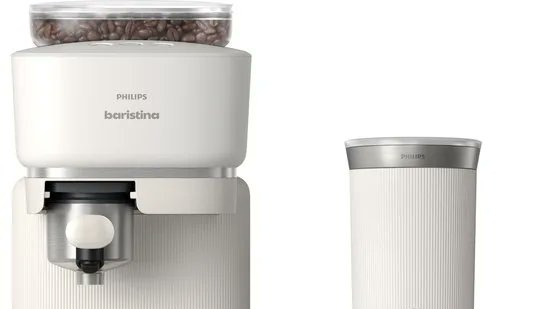
The standout feature of the Philips Baristina is undoubtedly the “swipe” mechanism. Instead of a touch screen or a series of complicated dials, the machine features a portafilter handle that sticks out from the front. If you have ever been to a specialty coffee shop, you have seen the barista lock one of these into a giant silver machine. In this case, the portafilter is the control center.
To start the process, you simply swipe the handle from one side to the other. This single motion triggers the internal burr grinder to dispense the perfect amount of coffee grounds directly into the basket. It then automatically tamps the coffee with the correct amount of pressure. You do not have to worry about whether you pushed down hard enough or if the grind size is right for the dose. The machine handles the physics of the puck, leaving you with nothing to do but wait for the water to flow. It is a brilliant bit of engineering that makes the Philips Baristina feel more like a tool and less like a computer.
Fresh beans without the mess
One of the biggest complaints people have about a traditional bean to cup coffee machine is the “coffee dust” that seems to get everywhere. When you grind beans manually, static electricity often causes grounds to fly onto the counter. Philips has managed to keep the Baristina incredibly clean because the entire grinding and tamping process happens inside a sealed environment before the water even hits the grounds.
Because the machine uses real, whole beans, you are getting the full spectrum of oils and aromatics that pods simply cannot match. Coffee starts to lose its flavor almost immediately after being ground, so the fact that this machine grinds on demand right before brewing means your morning cup will have a much more vibrant profile. Whether you prefer a dark, chocolatey roast or something light and fruity, the Philips Baristina respects the quality of the ingredients you put into the hopper at the top.
A design built for modern kitchens
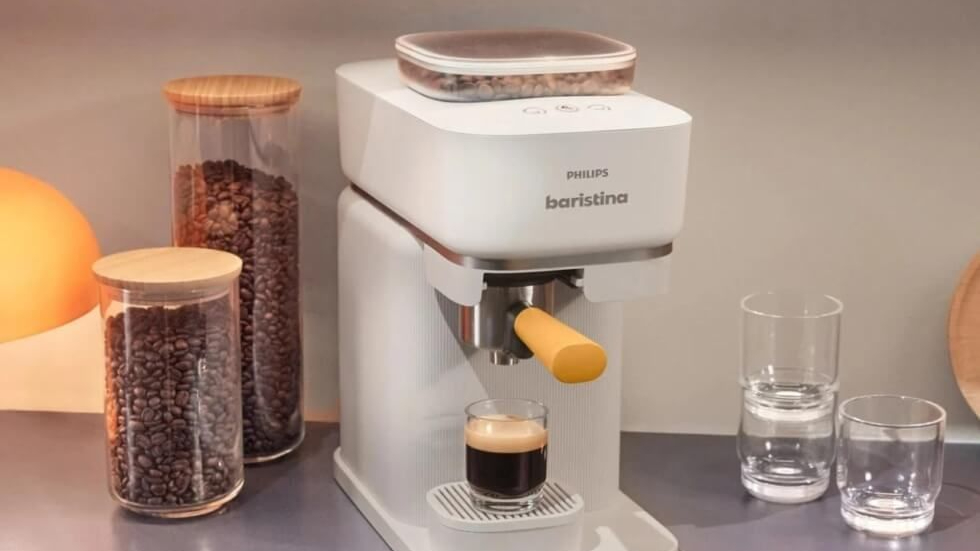
In terms of looks, the Philips Baristina is a departure from the boxy, industrial aesthetic that dominates the market. It is surprisingly narrow, which is a godsend for anyone with limited counter space. The water tank is tucked away neatly, and the overall silhouette is rounded and friendly. It does not look like a piece of lab equipment; it looks like a piece of furniture.
The choice of materials is also worth noting. It uses a lot of recycled plastics and has a matte finish that does not show fingerprints as easily as chrome or shiny black plastic. It is available in a few different colors, including a very sleek black and a crisp white, so it should fit into most kitchen decors without standing out for the wrong reasons. The simplicity of the exterior mirrors the simplicity of the internal mechanics, which is a design philosophy that we really appreciate in an era of over-engineered appliances.
Customizing your brew
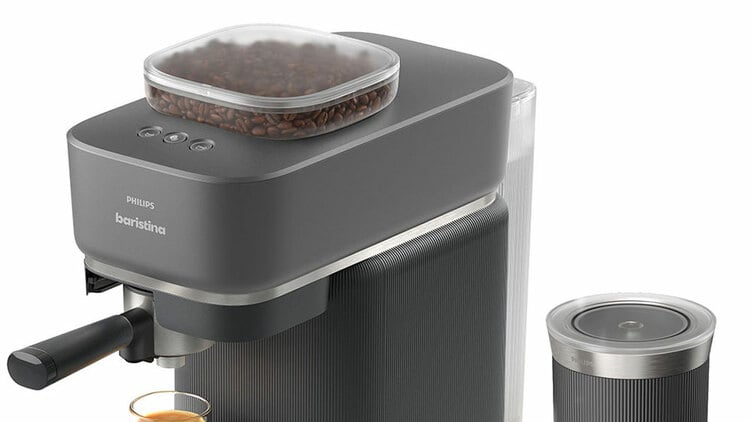
While the Philips Baristina is designed for simplicity, it does not lock you into a single type of drink. There are dedicated buttons on the top of the unit that allow you to choose between a standard espresso, a long coffee, or even an extra intense “lungo” style shot. You can also adjust the temperature of the water if you find that your specific beans taste better with a slightly hotter or cooler extraction.
For those who enjoy milk-based drinks like lattes or cappuccinos, there is a version of the machine that comes with a dedicated milk frother. It is not a steam wand like you would see on a pro-level machine, which again speaks to the goal of keeping things easy. You just pour your milk into the frother, hit a button, and you get creamy foam that you can pour over your freshly swiped espresso shot. It is the ultimate “no-thought-required” latte.
Sustainability and the end of the pod
Aside from the flavor benefits, switching to a machine like the Philips Baristina has a major environmental impact. Coffee pods are notoriously difficult to recycle, and even the compostable ones often end up in landfills. By using a bean to cup coffee machine, you are eliminating that waste entirely. The only byproduct is the used coffee grounds, which are perfect for your garden or compost bin.
Furthermore, buying whole beans is generally much more cost-effective in the long run than buying boxes of pods. While the upfront Philips Baristina price might be higher than a basic capsule machine, you will likely find that your weekly coffee budget goes a lot further. You can support local roasters, experiment with different origins, and know exactly what is going into your cup without any hidden preservatives or plastic packaging.
Maintenance made simple
Nobody likes cleaning their coffee machine. Philips has clearly listened to user feedback on this front. The Baristina has a very straightforward cleaning routine. The portafilter pops out easily for a quick rinse under the tap, and the internal brewing group is designed to be low maintenance. There is no complicated disassembly required every week.
The machine also features an automatic descaling indicator. Hard water is the enemy of any coffee maker, but the Baristina tracks how much water has passed through the system and lets you know when it is time to run a cleaning cycle. This keeps the internal heaters working efficiently and ensures that your coffee never starts to taste “off” due to mineral buildup. It is another example of how this machine takes the guesswork out of ownership.
Release dates and pricing
The Philips Baristina is starting to roll out across various regions throughout 2024 and 2026. In the United Kingdom and Europe, it has already made a splash with a very competitive entry point. The Philips Baristina price is generally positioned around 300 GBP or roughly 350 EUR. This puts it squarely in the middle of the market, making it more expensive than a basic pod machine but significantly cheaper than the high end Italian espresso makers.
For North American consumers, keep an eye on major retailers as the rollout expands. It is expected to land in the US market with a price tag of approximately 399 USD. Given the build quality and the sheer convenience of the one-swipe system, it is a very compelling package for anyone looking to upgrade their home coffee game without turning their kitchen into a construction site. It is rare to see a piece of tech that actually simplifies a ritual, but Philips seems to have nailed the balance here