
It was always a matter of when, not if. For years, we have enjoyed the relative purity of a conversation with an AI that didn’t try to sell us anything. But as of this week, that era is officially starting to wind down. OpenAI has confirmed that it is beginning to test ads in ChatGPT for a subset of users in the United States. It is a move that signals a massive transition for the company as it looks for sustainable ways to fuel its astronomical infrastructure costs.
Sam Altman has famously described advertising as a “last resort” in the past, but the reality of running a service with hundreds of millions of weekly active users is incredibly expensive. According to the company, these ads in ChatGPT are a way to keep the free version of the tool available to everyone while allowing for continued investment in more powerful models. If you have been using the free tier or the new lower cost “Go” plan, you are about to see your chat interface look a little more like the rest of the internet.
Table of Contents
How these ads actually look and work
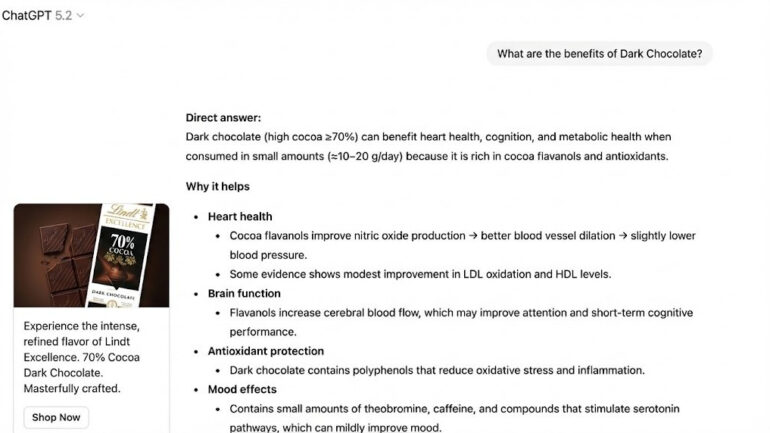
The big worry for many of us was that the AI would start slipping sales pitches into its actual sentences. Imagine asking for a recipe and having the AI say, “You should definitely use this specific brand of olive oil.” Fortunately, OpenAI seems to be avoiding that approach for now. During this initial test, ads in ChatGPT are being kept strictly separate from the AI’s actual responses.
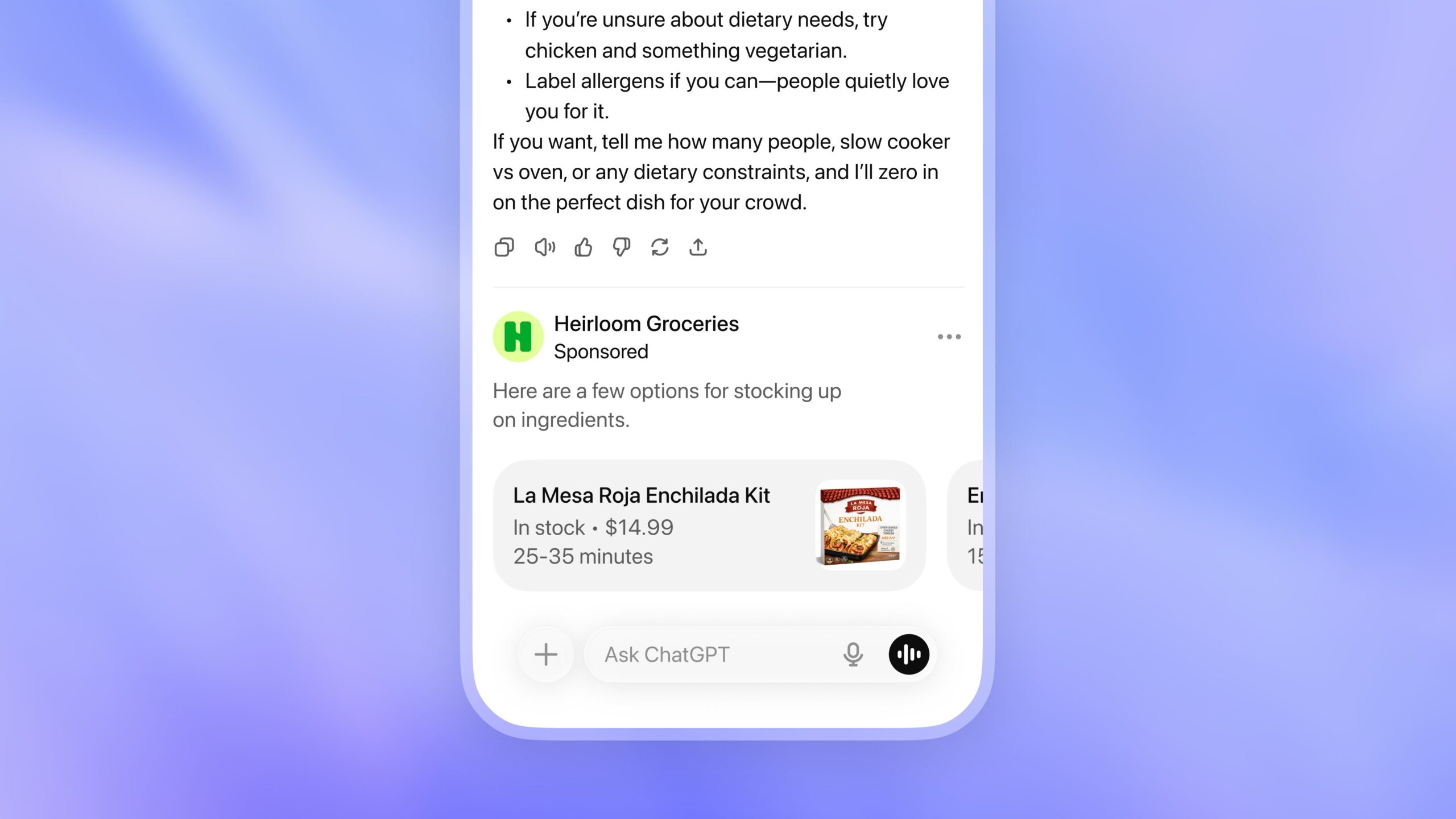
They appear as clearly labeled “Sponsored” modules at the very bottom of the chat window, well below the generated text. For example, if you are asking for advice on planning a trip to Tokyo, you might see a box at the bottom for a travel booking site or a specific airline. If you are researching meal prep, you might see a link for a grocery delivery service. The goal is to make them contextual and relevant to the conversation you are having without letting them pollute the “organic” advice the AI provides.
Protecting the integrity of the answer
One of the most important things OpenAI is stressing right now is that ads in ChatGPT do not influence the answers the model gives you. This is a crucial distinction. In traditional search engines, the “top result” is often a paid placement. OpenAI claims they are taking a different path. The AI model itself is not aware of which advertisers have paid for space; it generates its response based on what is objectively most helpful, and then a separate system matches a relevant ad to the topic of that conversation.
They are also being quite careful about where these ads show up. You won’t see any sponsored links if you are talking about “sensitive” or “regulated” topics. This includes health advice, mental wellbeing, and politics. It is a smart move to avoid the PR nightmare of an ad for a pharmacy popping up during a vulnerable conversation about health. Furthermore, users under the age of 18 are being excluded from the test entirely to comply with safety and privacy standards for minors.
The trade-off for free users
For those who really can’t stand the idea of ads in ChatGPT, OpenAI is offering a few choices. The most obvious one is to pay for a Plus, Pro, or Enterprise subscription, which remain entirely ad-free. But for the free tier users, there is an interesting new toggle. You can actually choose to opt out of seeing ads, but there is a catch: doing so will significantly reduce your daily message limits.
This effectively turns the “Free” experience into a choice between “Free with Ads” or “Limited Free without Ads.” It is a classic freemium model that we have seen on platforms like Spotify or YouTube. It also helps push people toward the new 8 dollar per month ChatGPT Go plan, which sits in the middle. The Go plan offers more features than the free version but still includes ads to keep the subscription price lower than the 20 dollar Plus tier.
Privacy and the advertiser relationship
Privacy is the elephant in the room whenever we talk about digital advertising. Many users were worried that their intimate conversations would be packaged up and sold to the highest bidder. OpenAI is being very firm on this point: they are not selling your data or your chat history to advertisers. Advertisers do not get to see what you are saying to the bot.
Instead, the system works on “aggregate performance.” An advertiser will know that their ad was shown 10,000 times and clicked 500 times, but they won’t know that you specifically were the one asking for help with your resume when you clicked it. You also have the ability to clear the data used for ad personalization or turn off personalization entirely, which would limit the ads to only the context of your current, active chat.