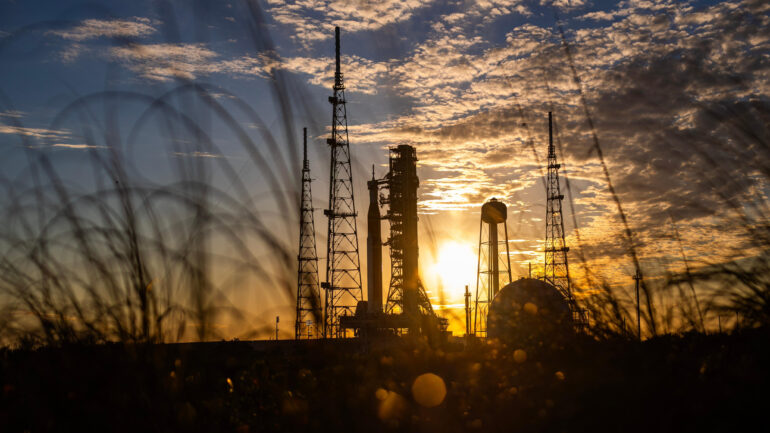

The NASA Artemis II launch now has a fresh date on the calendar, and yes, it is April Fools’ Day. NASA confirmed on Thursday that April 1 at 6:24 PM ET is the agency’s next target for getting the Orion spacecraft off the ground, with April 2 at 7:22 PM ET lined up as a backup if that does not work out. And in case neither of those opportunities pan out, NASA says it expects roughly four launch windows to be available between April 1 and April 6.
It is a significant moment for the program, which has been pushing through a string of technical problems since early this year. The agency is clearly being careful about its language here. There is optimism, but there is also a very deliberate “we are not making any guarantees” tone coming through from officials.
What the timeline looks like right now
NASA is planning to roll the rocket back out to Launch Pad 39B at Kennedy Space Center around March 19, just about a week from the time of the announcement. That step is a precondition for getting to a launch attempt, so it is an important milestone to watch.
At a press conference, Lori Glaze, NASA’s acting associate administrator, walked through the thinking. She said the six-day window between April 1 and 6 would not necessarily produce a daily launch opportunity. “Within those six days between the first and the sixth, we can’t always turn around every day for an attempt,” Glaze said. “We would anticipate about four opportunities within that six-day period.”
She also made a point of flagging that more work still needs to happen before anyone should feel confident about April 1 specifically. “While I am comfortable and the agency is comfortable with targeting April 1 as our first opportunity, just keep in mind we still have work to go,” she added. “There are still things that need to be done within the Vehicle Assembly Building and out at the pad. As always, we’ll be guided by what the hardware is telling us, and we will launch when we’re ready.”
It is a careful, measured message. NASA is not overselling this one after what has been a turbulent few months for the program.
LIVE: Following the conclusion of the Artemis II Flight Readiness Review, we’re sharing the latest updates on our upcoming crewed mission around the Moon. https://t.co/aWOpUspv85
— NASA (@NASA) March 12, 2026
Why the launch has been delayed so many times
This is the third time the NASA Artemis II launch has had to move. The mission was originally targeting early February this year. That date slipped after multiple issues surfaced during a wet dress rehearsal, which is a full simulation of the launch sequence that tests the rocket’s systems without actually lifting off. A hydrogen leak was among the problems flagged at that stage, pushing the date to March.
Then, 18 days later, another problem emerged. Engineers discovered a blockage in the helium flow within the rocket’s upper stage. That was enough to send the entire rocket back off the launch pad and into the Vehicle Assembly Building for repairs, effectively resetting the timeline again. NASA has been working through those repairs and replacing numerous flight batteries as part of getting the hardware back to launch-ready condition.
Each of these issues, taken individually, is the kind of problem that spaceflight engineers are trained to catch and fix. But the combination of delays, and the pattern of problems appearing close to launch attempts, has kept the Artemis II program under a lot of scrutiny.
What this mission actually is
If you have lost track of where Artemis II fits in the bigger picture, here is the short version. This is going to be the first crewed lunar mission since the Apollo 17 mission in December 1972. Four astronauts will fly aboard the Orion spacecraft, loop around the Moon, and return to Earth over the course of a 10-day mission. They will not land on the Moon on this flight. The point of Artemis II is to test the crewed Orion system in deep space before a landing attempt takes place.
That eventual Moon landing is now officially scheduled for 2028, after NASA Administrator Jared Isaacman announced a broader overhaul of the Artemis program that pushed the landing timeline back. The restructuring reflects a more cautious, phased approach to getting humans back on the lunar surface after several years of technical and budget challenges across the program.
The NASA Artemis II launch is, in that sense, a foundation piece. If the crewed Orion flight goes well, it builds the case for everything that follows. If it hits more problems, the 2028 landing goal starts to look increasingly optimistic.