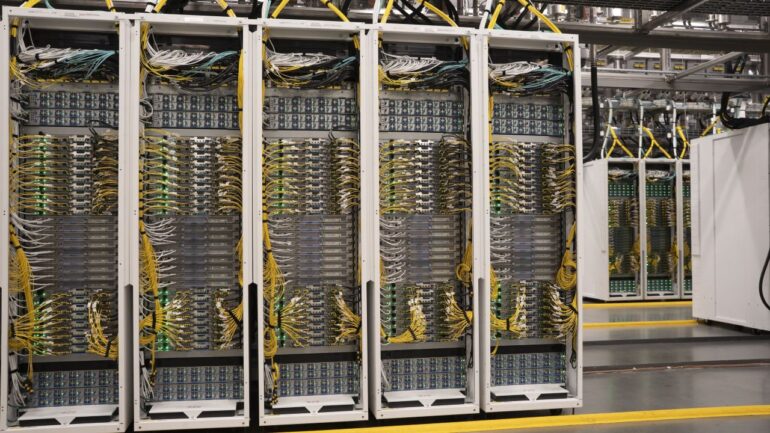

Large AI models need data, computing power, and constant back and forth of information between processors. Traditional cloud data centers were built to run many unrelated workloads at the same time. Each server runs tasks for different customers. AI workloads demand a different pattern. When training a large model, the system must pass gradients and parameters between processors quickly and consistently. If communication is slow, the training slows. If processors wait for data from others, the whole job stalls. These constraints force the networking design and physical layout of a purpose-built structure that Microsoft calls an AI superfactory.
When chips are far apart or connected through general purpose cloud networks, latency appears as delay in data reaching every computing unit. Microsoft addresses this by linking data centers in Wisconsin and Atlanta with a dedicated high-speed fiber network. The goal is to make physically distant facilities behave like a single, unified cluster. If data had to travel through public or shared networks, the time spent waiting for packets would break the tight synchronization that training large AI models requires. Connecting sites over a private fiber backbone keeps round trip times low and reduces the risk of bottlenecks that emerge when vast amounts of intermediate model data must be exchanged.
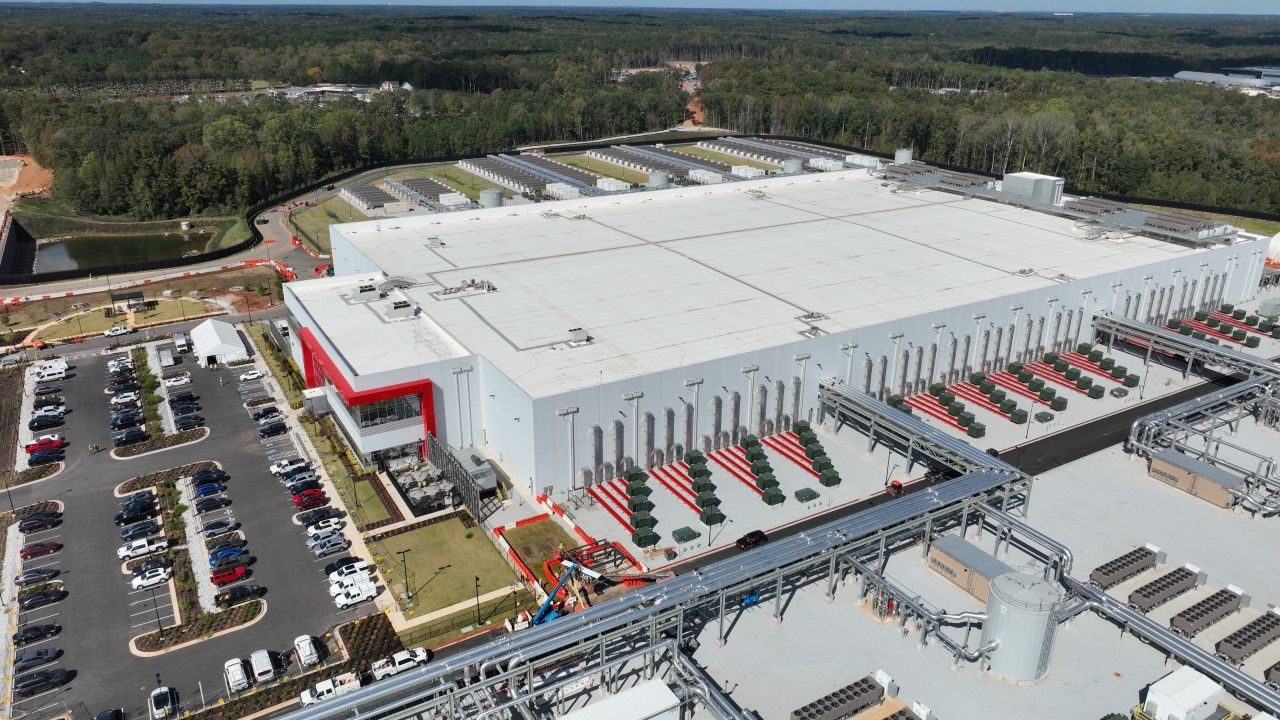
Networking also shapes how workloads are distributed. Machine learning training involves splitting tasks and then recombining results across many graphics processing units or accelerators. The strength of the network influences how finely or coarsely this split can occur. With low latency, the training algorithm can exchange partial results more often. With high latency, the training algorithm must compute larger chunks locally, which increases memory demands and slows convergence. By reducing effective distance between Wisconsin and Atlanta, Microsoft enables synchronous parameter updates across sites. This is not possible with standard cloud networking where paths vary and jitter increases unpredictably.
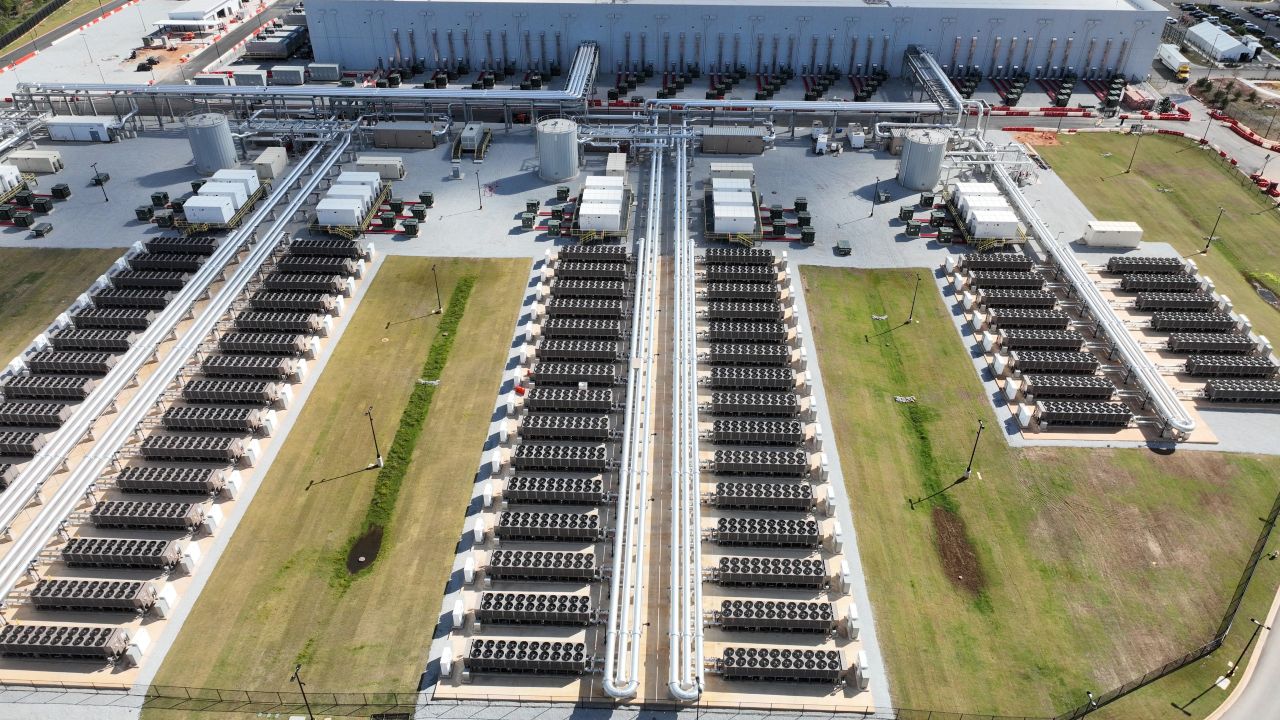
Once networking is fast enough to allow distributed training, physical organization of hardware becomes critical. Processors generate heat. In standard cloud servers, air cooling suffices up to a point. When thousands of high-end GPUs operate at full capacity, air cooling fails to cope with heat flux. Heat must be removed without throttling processors. Microsoft uses liquid cooling loops that circulate coolant close to chips to pick up heat efficiently. The choice of liquid over air reduces energy wasted on moving large volumes of air and eliminates the need for so many fans and blowers that would otherwise consume power and increase noise. Liquid cooling systems have to avoid large water consumption, so closed loop designs are used. These maintain coolant quality without losing vast amounts of water to evaporation.
Liquid cooling also affects how tightly hardware can be packed. Cooling limitations define how close servers can sit to each other without overheating. Tightly packed racks reduce the physical distance data must travel between processors. Shorter distances between servers means lower latency for local communication inside a site. When physical layout aligns with high-speed networking between sites, overall system performance improves. Without this arrangement, individual clusters would starve for data or heat up and throttle back, both of which increase training time and reduce throughput.
The architectures deployed use hundreds of thousands of Nvidia Blackwell GPUs. Each GPU executes matrix multiplications and other calculations that are core to neural network training. Every GPU has high computational throughput but also demands significant power and cooling. The physical design of the facility has two levels that help distribute heat and cables in a way that shortens internal paths. Keeping cables short minimizes electrical resistance and signal delay. These details matter because any extra delay compounds across thousands of connections, degrading performance in large parallel workloads.
Software design cannot compensate for physical limits. The system must maintain synchronization across thousands of processors. If one region of the infrastructure lags, the rest slow down. Training large models requires frequent gradient exchanges that depend on smooth, predictable communication patterns. When sites are linked into one logical system, as in Microsoft’s superfactory, the software scheduler can assign tasks without treating each site as an independent island. This allows workloads to move to where compute is available without breaking synchronization.
Extensive storage feeds data into training workloads. Models consume terabytes of information and output gradient checkpoints that must be stored and retrieved quickly. Because storage performance influences compute utilization, the system streams data from exabytes of storage in a way that keeps GPUs busy. If storage could not keep up, processors would idle while waiting for data, defeating the purpose of high-speed networking and dense hardware layouts.
The term superfactory signals a shift from isolated facilities toward a networked infrastructure where compute, storage, and networking are co-designed to support the most demanding AI tasks. It treats multiple data centers as one logical machine. To maintain this integration, Microsoft has adjusted network protocols for balanced traffic and congestion control that can handle sudden bursts of exchange during model training. Without these network controls, packet loss or queuing delays would degrade performance in ways that software alone cannot mitigate.
Power supply remains a constraint. High densities of GPUs demand consistent electrical throughput. Voltage fluctuations can cause hardware faults or reduce efficiency. Facilities must ensure stable power distribution and backup systems to avoid interruptions. Large electrical draw also imposes requirements on local grids and may require upgrades by utilities. These constraints shape where facilities can be built and how much capacity can be sustained. They are practical limitations that cannot be engineered away without affecting costs and timelines.