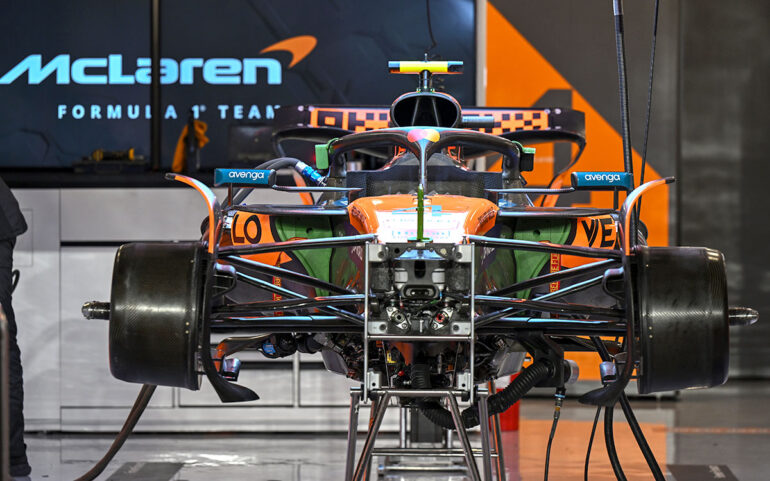

McLaren’s shock double disqualification in Las Vegas reversed what should have been a secure haul of points for Lando Norris and Oscar Piastri. Both cars were excluded after post-race checks revealed excessive plank wear. The assumption after the race was that McLaren had pushed the setup too aggressively, but the opposite was true. The team raised the car in an attempt to stay on the safe side, and that precaution created a chain of aerodynamic problems that proved more damaging than a lower ride height would have been.
Norris explained in Qatar that the main issue was porpoising rather than excessive lowering of the chassis. He said the car entered an unstable window where the airflow beneath the floor detached and reattached repeatedly. This returned a problem that had largely faded since the early stages of the 2022 regulation cycle. McLaren increased the ride height because limited dry running made it difficult to predict floor behaviour under parc ferme conditions. Once the race began, the car oscillated violently at high speed. Instead of protecting the plank, that instability caused repeated ground strikes.
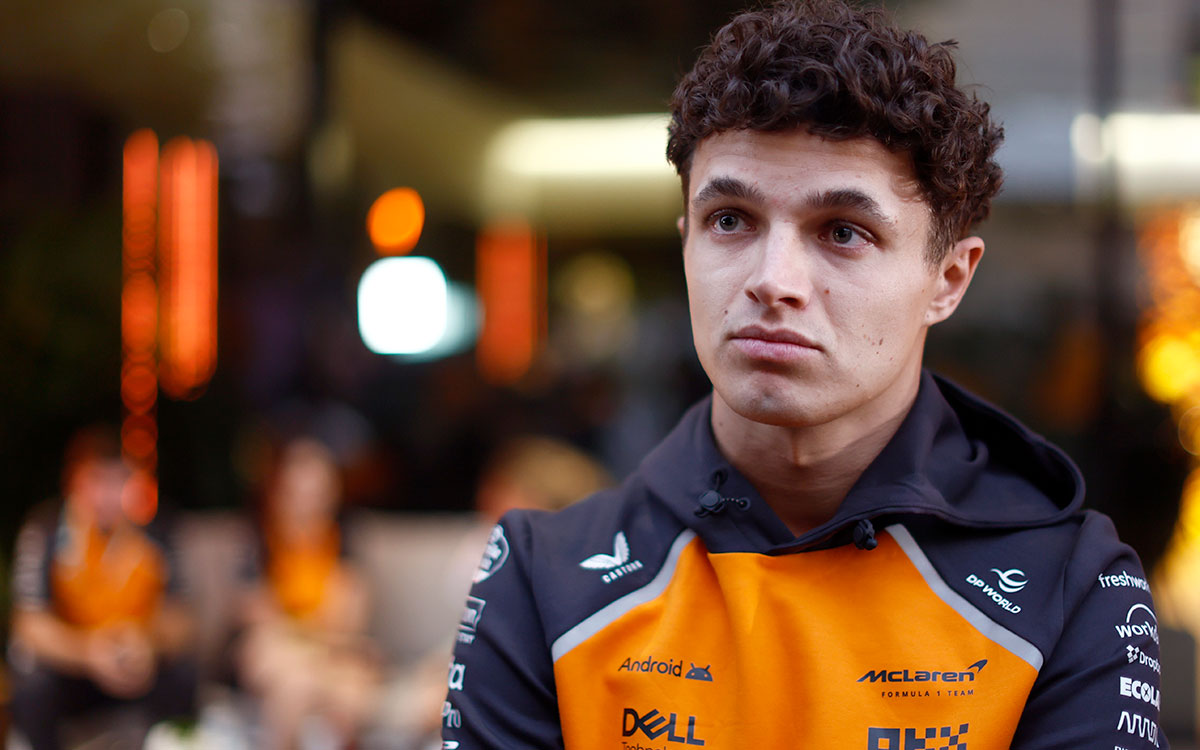
Piastri described the situation as a product of incomplete data. Friday’s red-flag interruptions meant the team lacked reliable information about how the car would behave once the track gripped up. He said the team chose a conservative approach rather than chasing performance, and the outcome surprised them. The sequence of bounces was consistent and severe enough to wear the underside beyond the legal limit.
The rear wing specification made the problem harder to control. McLaren selected a very low-drag configuration, which reduced rear downforce at speed. With less force pushing the floor towards the track, the car became more sensitive to shifts in airflow. As turbulence developed at high speed, the floor would load and unload rapidly. That cycle amplified the vertical movement and reduced the team’s ability to stabilise the chassis through standard adjustments.
Team principal Andrea Stella added that the drivers attempted to manage the situation by using lift-and-coast. Reducing throttle input is normally a tool to cool components and calm the car, but on this occasion it made the situation worse. Each time the driver lifted, the rear of the car rose slightly, increasing the ride height at precisely the moment the team needed more aero load. That motion pushed the car deeper into the porpoising range and accelerated the unwanted oscillations.
Norris summed up the complexity of the situation by saying the behaviour of modern cars is not linear. He noted that more downforce would have kept the floor stable and that playing it safe exposed them to a scenario that physics turned against them. The team now views the Las Vegas outcome as a reminder of how narrow the operating window is on current ground-effect cars.
McLaren is confident the behaviour was specific to Las Vegas. The combination of bumps, cold temperatures, low-drag wings, and limited practice running created a scenario that is unlikely to repeat elsewhere. The team has made it clear that the disqualification was not the result of excessive risk-taking, but rather the unintended consequence of a setup that was meant to protect the car.