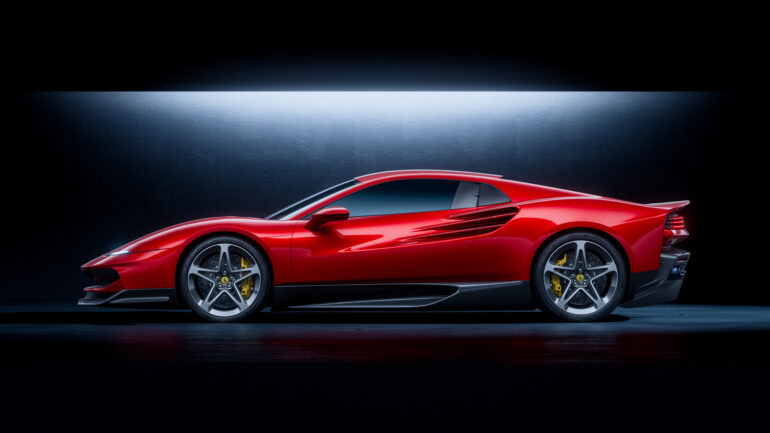

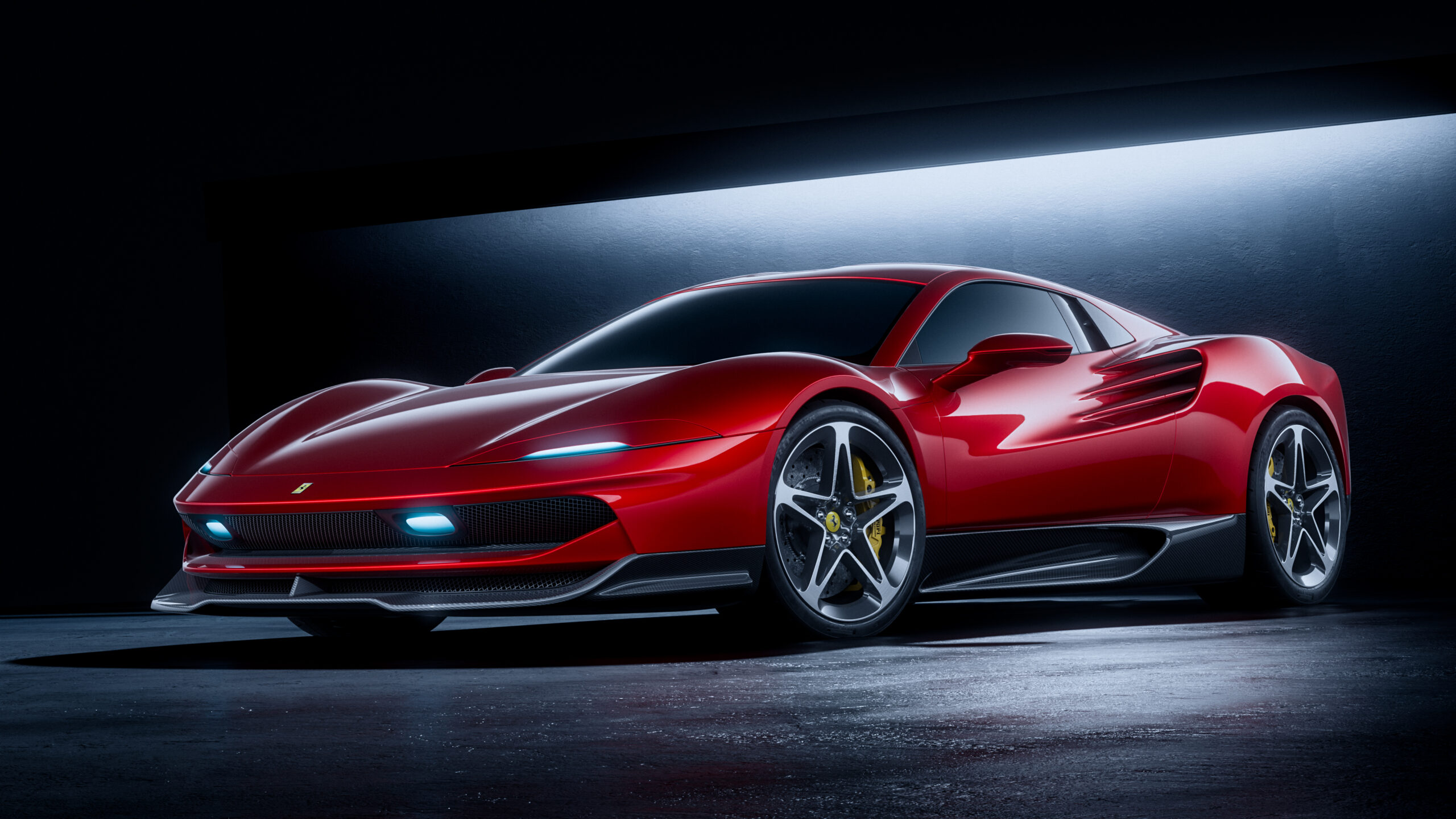
Italian visual artist and automotive designer Luca Serafini has published a series of renderings depicting his interpretation of a modern Ferrari Testarossa, presenting an alternative design approach compared to Ferrari’s official 849 Testarossa that was unveiled in Milan on September 8, 2025. The independent concept was developed as a collaborative passion project between Serafini, who handled the design and CGI imagery, and Aldo Russo, who executed the CAS modeling using Autodesk Alias software. The final renderings were completed in Blender and placed against a cinematic backdrop inspired by the aesthetic of the 1980s, the era when the original Testarossa debuted.
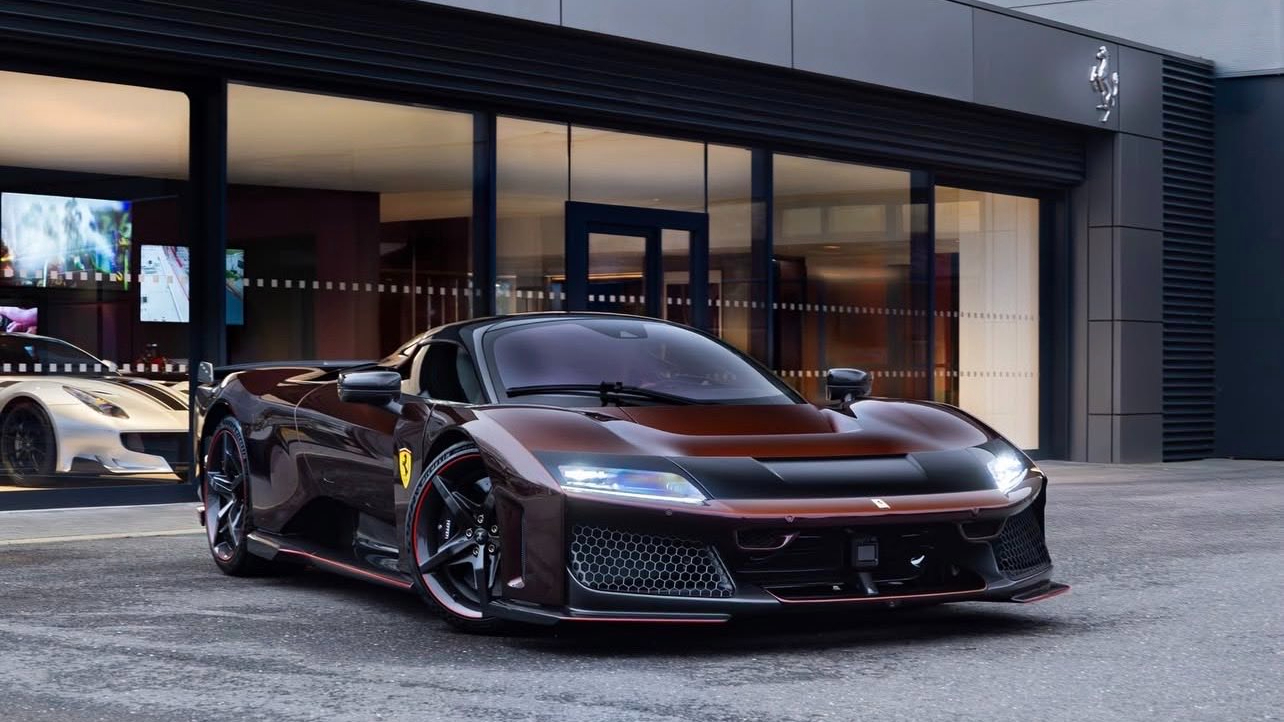 Ferrari’s official 849 Testarossa
The original Ferrari Testarossa was introduced at the Paris Motor Show in October 1984 as the successor to the 512 BBi, featuring design work by Pininfarina that departed from the sharp-nosed wedge profile of the Boxer series. The defining characteristic was the deeply straked door panels that accommodated air intakes for twin side-mounted water radiators, replacing the traditional front-mounted cooling system. These horizontal strakes grew progressively wider toward the rear of the door and became the most recognizable visual element of the vehicle, contributing to a rear track width that was 105 millimeters greater than its predecessor. The car housed a mid-mounted 4.9-liter flat-twelve engine producing 390 horsepower for European models, paired with a five-speed manual transmission.
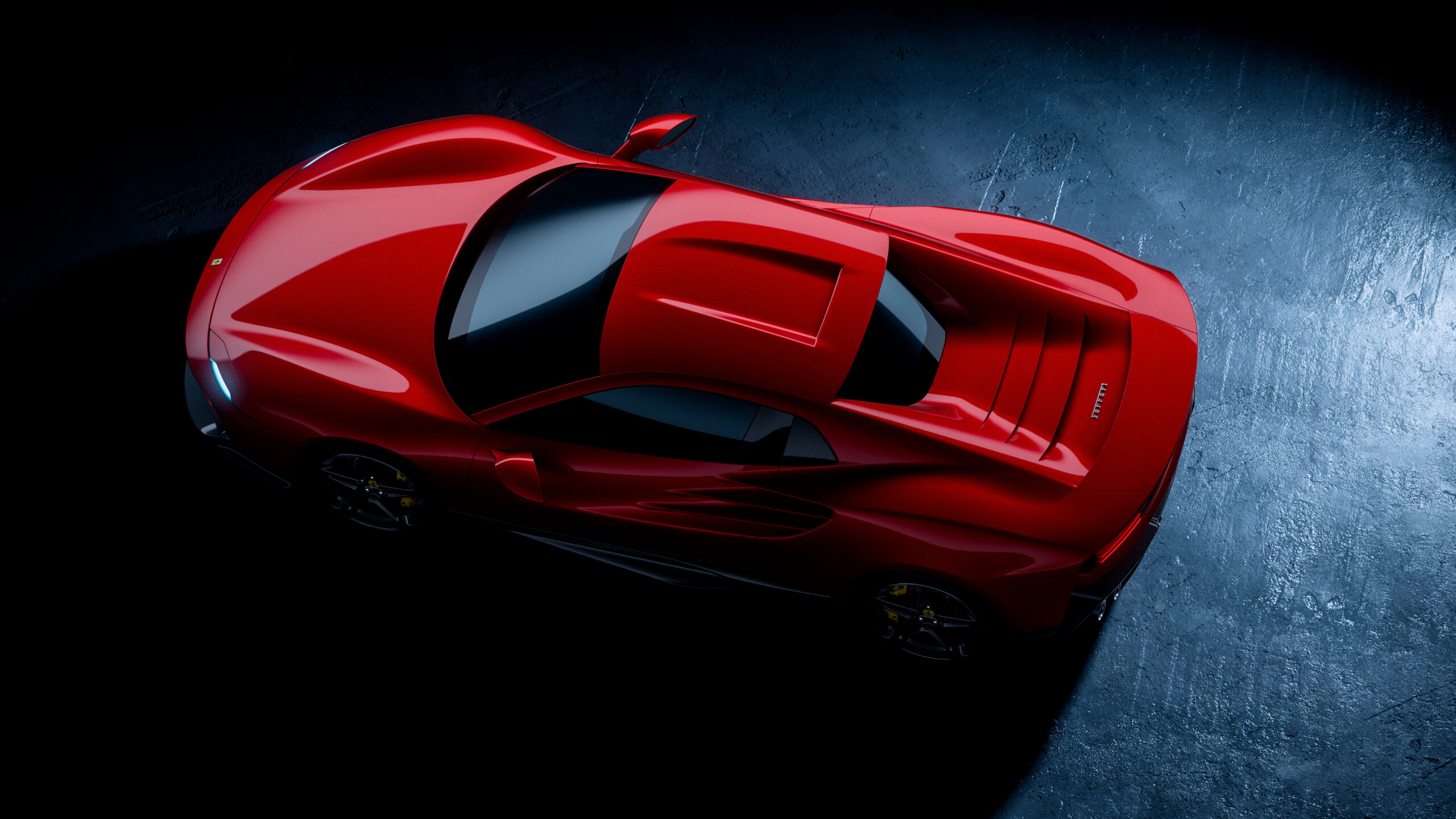 Serafini’s concept renders
Ferrari’s official 849 Testarossa takes a different design direction, drawing inspiration from 1970s sports prototypes rather than directly replicating the 1984 model’s aesthetic. The production vehicle replaces the SF90 Stradale in Ferrari’s lineup and features a plug-in hybrid powertrain combining a twin-turbocharged 4.0-liter V8 engine producing 830 horsepower with three electric motors that add approximately 220 horsepower, reaching a combined output of 1,050 horsepower. The exterior design incorporates carbon fiber body panels, reworked side intakes integrated into the doors that feed intercoolers adapted from the F80, and a split rear spoiler positioned on either edge of the body. Ferrari emphasized geometric lines and functional aerodynamics that generate 415 kilograms of downforce at 250 kilometers per hour, rather than recreating the straked side panels that defined the original model.
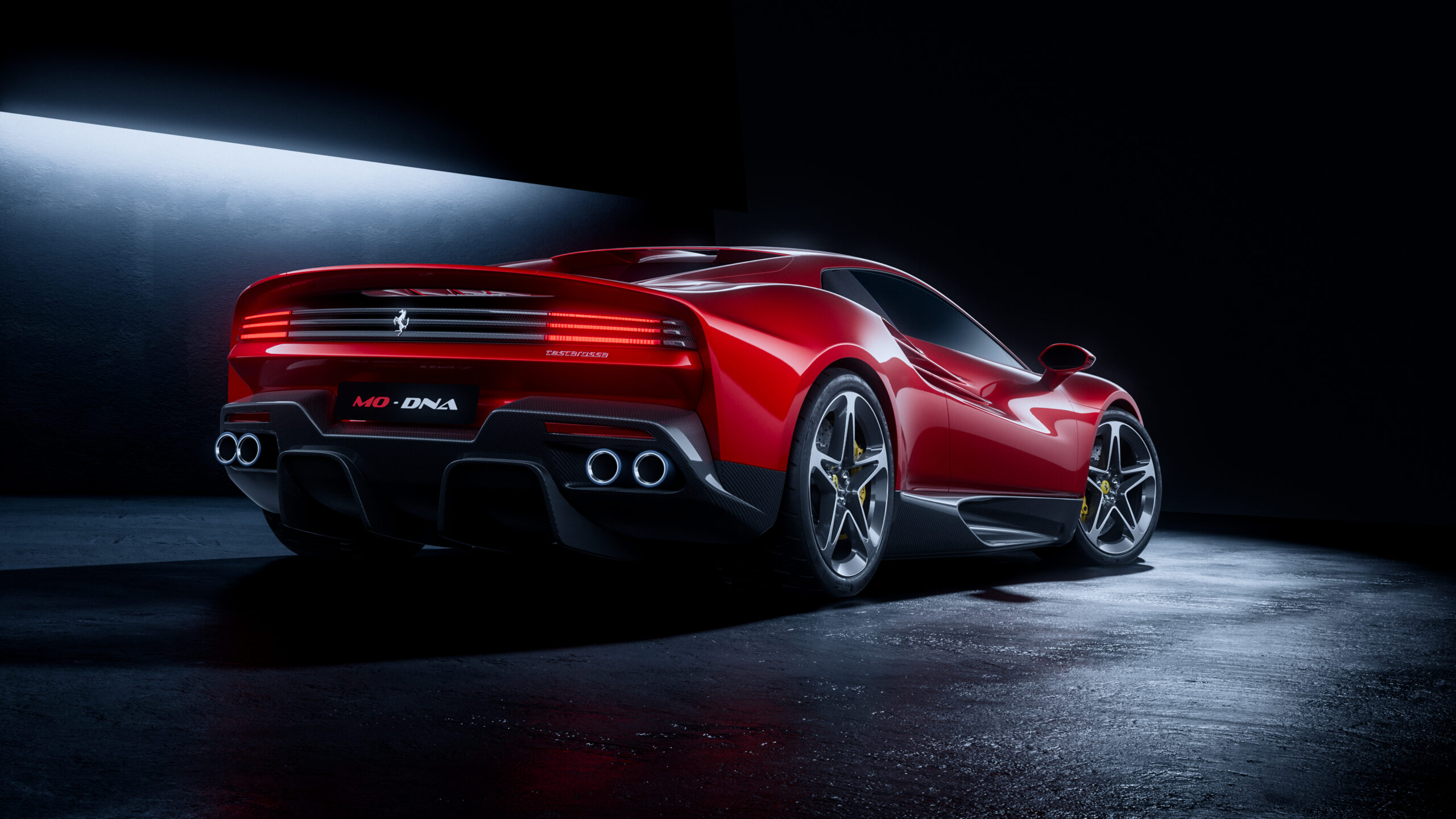
Serafini’s concept deliberately prioritizes visual heritage over the direction taken by Ferrari’s design team led by Flavio Manzoni. The renderings depict a vehicle that retains proportions closer to the 1984 Testarossa, including prominent side strakes and a wedge-influenced silhouette, while incorporating contemporary design elements such as modern lighting signatures and updated surface treatments. The project evolved from initial sketches into three-dimensional models, with Russo utilizing Alias Automotive software to develop the complex surface geometry before Serafini completed the visualization process. The work is presented as a purely hypothetical design study with no commercial intent, created to demonstrate the scope of design services across different automotive products and to showcase the creative potential achievable through collaboration between independent designers.
The concept has generated discussion within automotive design communities regarding the balance between honoring classic styling cues and pursuing forward-looking design language. Ferrari’s naming convention for the 849 Testarossa references both the engine configuration and displacement, with the 8 representing the eight-cylinder layout and 49 indicating the displacement of each cylinder in cubic centimeters, totaling 3,920 cubic centimeters. Production of the official 849 Testarossa is scheduled to begin in mid-2026, with coupe versions priced at 460,000 euros and Spider variants at 500,000 euros in European markets. The Assetto Fiorano track-focused variant adds approximately 53,000 euros and includes weight reduction measures totaling 30 kilograms through the use of titanium and carbon fiber components, along with Multimatic dampers and optional Michelin Cup R2 tires.