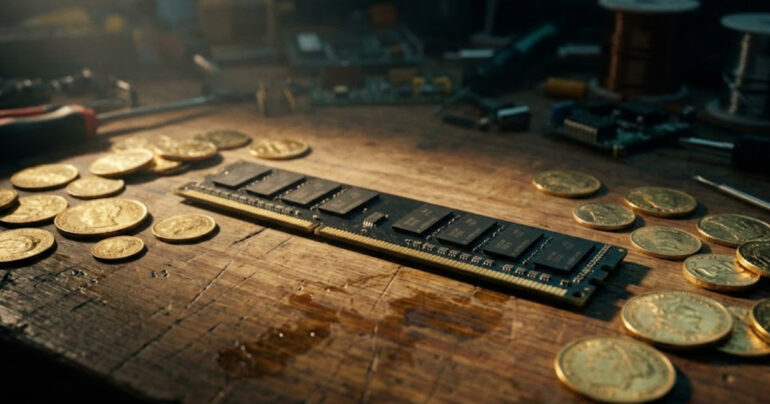

HP has put a number on just how bad things have gotten. The company has confirmed that memory now accounts for around 35% of the total bill of materials for its PCs, a figure that sat somewhere between 15% and 18% just one quarter ago. That kind of jump in a single quarter is not gradual creep. That is a supply chain getting rattled, and HP is saying plainly that it does not expect things to calm down any time soon.
The company is bracing for that percentage to climb further before it stabilizes or reverses, which means the cost pressure sitting on manufacturers right now is likely to flow toward consumers sooner or later.
Why AI is making your laptop more expensive
According to HP, this whole ‘situation’, is due to the demand for memory in AI data centers. High-bandwidth memory used in AI accelerators is pulling supply away from conventional DRAM, tightening availability and pushing up prices across the board. The consumer PC market is essentially caught in the crossfire of an infrastructure buildout it has no say in.
Omdia Senior Principal Analyst Lino Jeng flagged exactly this dynamic, noting that demand for conventional DRAM is surging alongside high-bandwidth memory as AI inference workloads scale up. That combination is driving what the analyst described as an exceptional short-term price rally, and there is no obvious near-term ceiling in sight.
So, what exactly is HP doing about it?
The company has locked in long-term supply agreements and brought on new suppliers to spread its sourcing risk. It is also using AI in its own supply chain planning, which is a somewhat ironic use of the very technology partly responsible for the crunch, to cut costs in areas like logistics and inventory management.
On the product side, HP is juggling a few levers simultaneously. That includes a combination of adjusting end prices and reconfiguring devices to absorb some of the cost increase without passing the full weight of the HP RAM crisis straight onto buyers. Whether that balance holds as costs continue rising is a question the company cannot fully answer yet.
HP Interim CEO Bruce Broussard flagged strong performance across Personal Systems during the quarter, with overall quarterly revenue up 6.9% year over year. Consumer Personal Systems revenue rose 16% and the commercial side grew 9%. AI PCs were specifically called out as a momentum driver. So even while input costs are punishing, demand is holding up, at least for now.
It is not just HP raising the alarms
HP is not alone in absorbing this. Lenovo has also flagged that it expects PC unit sales to face pressure, and analysts at Omdia are projecting continued supply-side pain and cost pass-through to customers after PC memory and storage costs rose between 40% and 70% throughout 2025.
The HP RAM crisis is really a symptom of a wider structural tension between AI infrastructure investment and the consumer hardware market. Memory manufacturers are prioritizing the customers paying the most, and right now that is hyperscalers building out AI capacity, not PC makers shipping mainstream laptops.
Prices that look steep today may look reasonable by comparison in six months, which is an uncomfortable place for the market to be sitting heading into the second half of 2026.