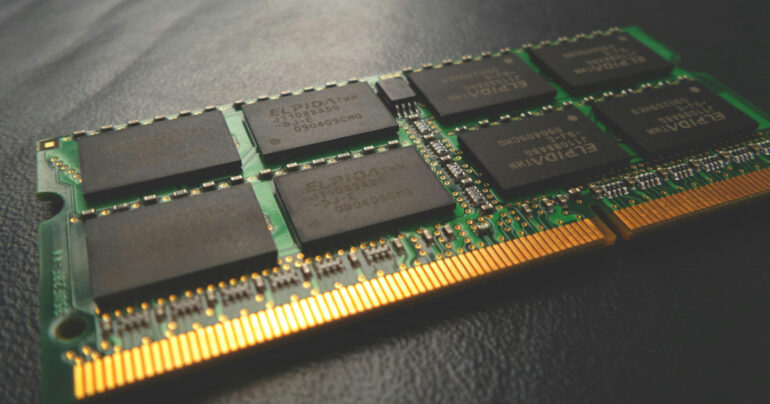

If you were planning on building a new PC or upgrading your server stacks this spring, I have some news that is going to sting. We have been watching the memory market fluctuate for years, but the current trajectory is looking particularly steep. According to the latest industry tracking, we are staring down the barrel of high DRAM prices that could effectively double by the time we hit March 2026. It is a frustrating situation for enthusiasts and enterprise buyers alike, but the culprit is exactly who you think it is.
The artificial intelligence gold rush has moved past the “exciting new trend” phase and into the “cannibalizing the supply chain” phase. Companies are so desperate to get their hands on high-performance silicon that the boring, reliable sticks of RAM we use in our everyday machines are being pushed to the back burner. It is a classic case of a high-margin product eating the lunch of everything else in the factory.
The HBM vacuum is sucking up everything
To understand why we are seeing high DRAM prices in the consumer and standard enterprise space, you have to look at High Bandwidth Memory, specifically HBM3E. This is the ultra-fast, stacked memory that sits on the high-end GPUs used to train large language models. The problem for the rest of us is that HBM is incredibly difficult and inefficient to make compared to standard DDR5.
The big three players in this space are Samsung, SK Hynix, and Micron. They only have so much “wafer” capacity in their factories. Because HBM requires more physical space on a silicon wafer and has a much lower “yield” (meaning more chips come out broken or unusable), these manufacturers have to dedicate a massive portion of their production lines just to hit their AI delivery targets. When the factories are busy making expensive AI chips, they aren’t making the 16GB sticks of RAM for your laptop. This creates a supply vacuum that naturally pushes costs up for whatever stock is left.
A market that forgot how to be cheap
It wasn’t that long ago that we were talking about a massive oversupply of memory. Back in late 2023, you could pick up high-capacity kits for pennies because the warehouses were full. That era is officially over. The shift happened fast, and now the manufacturers are enjoying the best profit margins they have seen in a decade.
There is very little incentive for these companies to flood the market with cheap RAM right now. They are pivoting their business models to satisfy the insatiable hunger of data center giants. We are seeing reports that some production lines are being converted entirely to HBM3E and the upcoming HBM4. This means the total output of standard DRAM is actually shrinking while the world’s need for memory is only going up. It is a perfect storm for high DRAM prices to settle in and stay a while.
Why March 2026 is the critical window
Analysts are circling March 2026 on the calendar because that is when the next major wave of AI infrastructure is expected to go live. Between now and then, we are going to see a series of quarterly price hikes. It is not going to be a single jump, but rather a slow, painful grind upward.
By the time we reach the end of the first quarter in 2026, the cumulative effect of these hikes could mean paying twice as much for the same capacity you bought a year ago. We are also seeing a push toward DDR5 as the absolute standard, which carries its own price premium over the aging DDR4. If you are sitting on an older system and thinking about waiting for “the right time” to upgrade, the data suggests that the right time might have been yesterday.
The ripple effect across the tech world
High DRAM prices don’t just affect the guy building a gaming rig in his basement. This impacts everything with a heartbeat and a motherboard. Think about smartphones, tablets, and even the smart features in your car. Every single one of these devices requires memory. When the cost of that component doubles, the manufacturers aren’t just going to eat that loss. They are going to pass it directly to you.
We are likely going to see “entry-level” laptops starting with less RAM than they should, or the price of a mid-tier phone creeping up by fifty or sixty dollars just to cover the bill for the internal memory. It is an invisible tax that the AI boom is levying on the general public. While the tech giants are seeing record-breaking stock prices, the average consumer is the one footing the bill at the checkout counter.