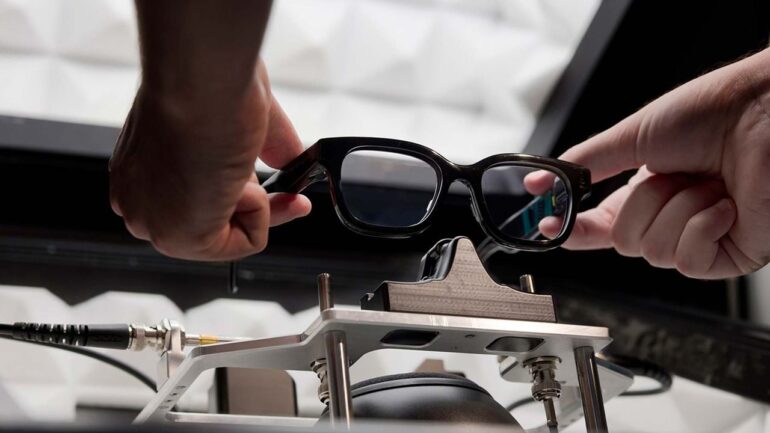

Translating a sign or conversation is simple when you have time, a steady camera, and slow movement. In daily use those conditions rarely hold. People walk, scenes shift, lighting changes, and speech overlaps. A translation system built for phones has room to buffer frames, request clearer images, or wait for the user to hold still. Smart glasses cannot assume any of that. The upgrade being rolled into Google Translate confronts these limitations with solutions that reduce user effort and improve accuracy in dynamic contexts.
The main challenge in wearable translation is uncertainty in visual input. A phone-held camera can be positioned deliberately. Smart glasses see whatever the wearer chooses to look at without deliberate framing. This means the system must identify relevant text within a broader scene that may contain clutter, motion blur, and partial occlusion. To solve this, the upgraded system uses a combination of text scanning that operates continuously and visual filtering to prioritize likely text regions. This reduces misreads when the wearer glances at objects or engages in movement.
Continuous scanning means the app must process frames quickly. Traditional translation pipelines offload processing to servers, which introduces delay. In smart glasses use a delay breaks the experience because the wearer expects near immediate translation as their gaze moves. The upgrade moves more processing onto the device itself so frame analysis can happen locally. This requires efficient models that trade minimal accuracy loss for significant speed gains. Models capable of on-device inference reduce dependency on network latency.
Translation of speech presents another layer of complexity. Conversations are fluid. Multiple speakers overlap. Background noise interferes with microphones. A phone can be moved closer to the speaker. Glasses cannot. To handle this, the upgraded system integrates more advanced audio separation and voice detection that identify speech patterns in noisy environments. This improves the signal that the recognition engine receives. Better recognition reduces errors before translation even begins.
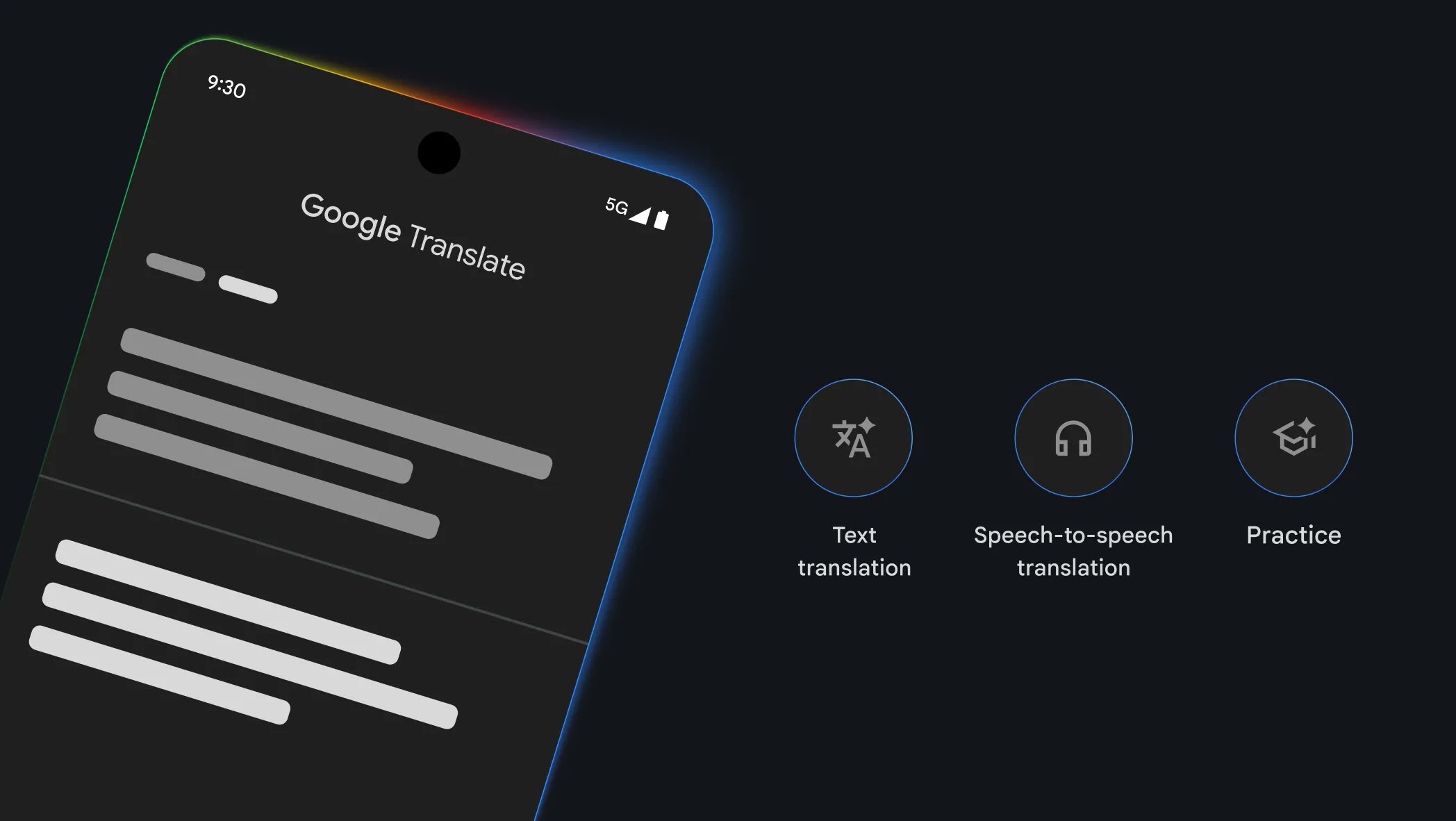
Context matters more than individual words. A direct translation of isolated words on a sign may be inaccurate if the phrase has idiomatic meaning. The improved system incorporates a context window that holds recent text and speech inputs. This allows a phrase to be translated with reference to what preceded it. For wearable use this is crucial because scenes and conversations evolve quickly. Without context tracking the translation would bounce between unrelated meanings.
In a practical setting this combination of real-time visual text capture, on-device processing, and context-aware translation reduces false positives in rendered output. False positives occur when the system interprets random visual patterns as text or mistranslates speech because noise was misclassified as a word. Both are particularly jarring when delivered in the wearer’s field of view. Reducing these errors improves trust in the system.
Smart glasses have limited display space. Presenting translation output in a way that is readable without obscuring the real world view is a user interface challenge. The upgrade likely includes emphasis on spatial anchoring so translated text appears near the original source and does not clutter the wearer’s vision. This solves a practical problem in spatial cognition because the wearer can link original and translated content without shifting attention drastically.
Localization of output also interacts with motion. When a wearer moves their head quickly, the system must keep the translated text stable relative to the physical world. Achieving this requires fast tracking of head orientation and scene geometry. The upgraded platform integrates improved pose estimation so virtual text remains tied to the original visual cue even as the glasses move. Without this tracking, translation text would float or jitter, leading to disorientation and increased cognitive load.
Translation accuracy depends on both visual clarity and linguistic coverage. Real-time environments often mix languages or present stylized fonts, low contrast, or unusual layouts. Addressing this requires a broader recognition model that tolerates font and script variability. By training on diverse text appearances, the upgraded system improves its ability to detect and interpret text that a simpler model would misread or skip.
Another constraint for wearable translation is power consumption. Continuous scanning, recognition, and rendering demand energy. Smart glasses have limited battery capacity due to size and weight constraints. To manage this, the upgraded algorithms are optimized to give priority to essential tasks and reduce redundant computation. For example, when the wearer is stationary and not viewing text, the system scales back scanning frequency. When motion or speech is detected it increases processing to match relevance.
Network independence matters in real environments where connectivity is variable. Off-device translation gives better accuracy in some conditions but fails entirely without a connection. On-device capability means the system can deliver translation anytime with consistent latency. Relying solely on cloud processing would force a design trade-off between accuracy and responsiveness. The hybrid model used in the upgrade mitigates this by performing baseline processing locally and augmenting it with server support when available.
Smart glasses use also exposes translation to environmental lighting variation. Overhead glare, shadows, and low light can degrade camera input. Visual preprocessing that adjusts for lighting conditions helps maintain text detection performance. These adjustments must work without overwhelming the processor so that frames can still be analyzed at speed.
All these solutions reflect choices made to solve real measurement and interaction problems. Wearable translation must deal with motion blur, overlapping speech, variable lighting, limited display area, and power constraints. The upgraded Google Translate system integrates improvements in continuous visual scanning, audio separation, context tracking, spatial anchoring of output, and efficient on-device processing so that translation feels immediate and relevant in active use.