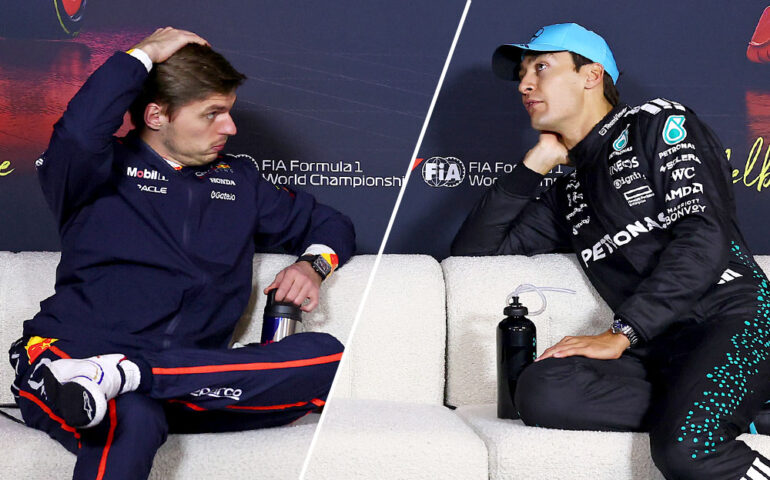

George Russell’s new Mercedes contract isn’t your typical F1 deal. While most drivers are locked into team-driven agreements that allow management to decide their future, Russell has managed to flip that script. His latest deal with Mercedes includes what insiders are calling a “self-defense clause” — a performance-based extension that effectively lets him decide whether he stays in 2027.
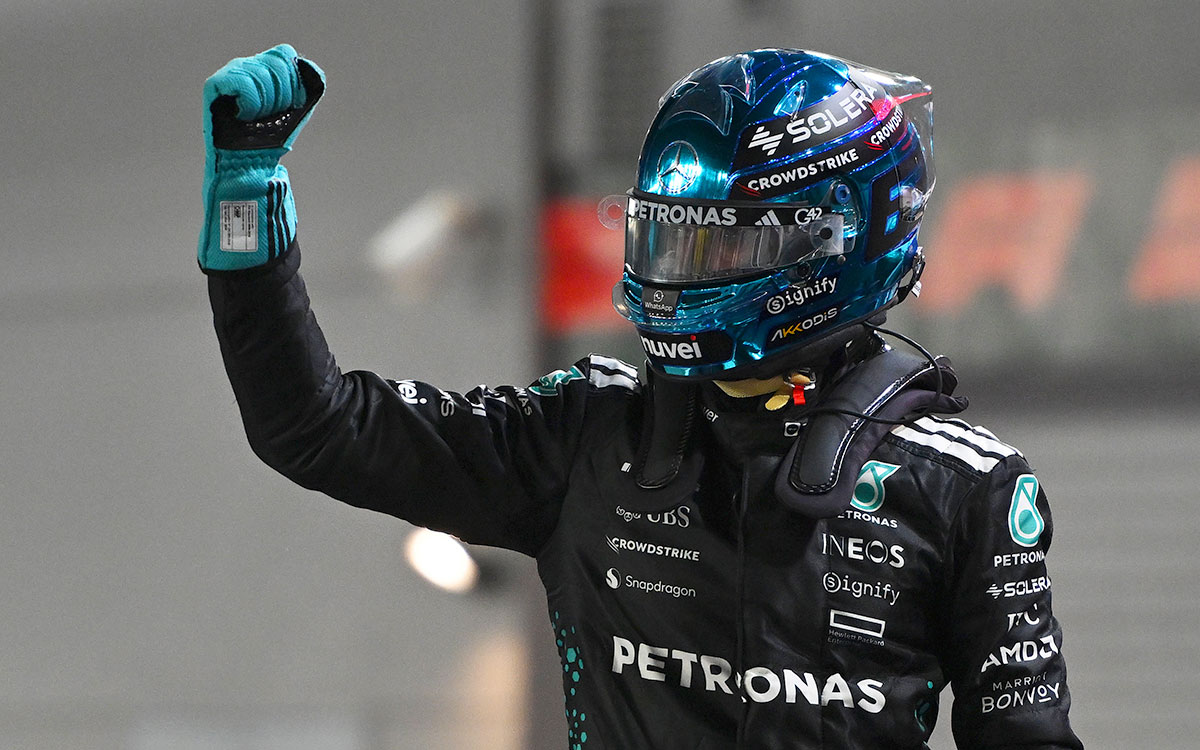
The structure is a “1+1” format. The first year, 2026, is the base contract. If Russell meets specific performance targets, his contract automatically extends into 2027, no matter what Mercedes wants. In other words, if he delivers on track, the seat is his — even if Max Verstappen comes knocking.
When Mercedes confirmed its 2026 lineup — Russell alongside rising star Andrea Kimi Antonelli — it left the contract details vague. But Russell later confirmed to The Telegraph that the deal includes this rare clause. “If I perform well and achieve certain benchmarks, my contract will be automatically extended until 2027,” he said. “So the 2027 seat is in my hands.”
That single statement reveals how much leverage Russell had during negotiations. Mercedes had been distracted chasing Verstappen all summer, with team principal Toto Wolff openly admitting his interest in bringing the Dutchman onboard for 2027. The longer Mercedes waited, the stronger Russell’s position became. When the team finally sat down to sign, Russell and his management reportedly offered to accept a one-year base deal on the condition that Mercedes include this driver-controlled clause. The team agreed.
It’s a clever move from a driver who’s learned how volatile the F1 market can be. Verstappen’s own Red Bull contract reportedly allows him to walk away if the car underperforms for a sustained period — the so-called “performance escape clause.” Russell’s version flips the logic. Instead of creating an exit ramp, he’s built himself a safety net. If Verstappen joins Mercedes and the team wants to reshuffle, Russell’s seat remains secure as long as he hits his performance metrics.
It’s a direct response to Mercedes’ public flirtation with Verstappen earlier this year. Wolff’s open pursuit put Russell’s talks on hold and left him hanging through much of the 2024 season. Ironically, that delay ended up strengthening his bargaining position. “I was hoping to get the deal done in October 2024,” Russell said. “But ultimately, this deal is a lot better than what I was offered then.”
The potential Verstappen move remains the wild card in all this. Red Bull’s first in-house power unit debuts next season, and while Verstappen remains committed for now, insiders believe he’s keeping an escape route open. If Red Bull’s engine struggles, Mercedes could make another aggressive push to sign him. Russell’s clause ensures that he won’t be collateral damage in that process.
The dynamic between Russell and Verstappen has never been warm. They’ve clashed both on and off the track, with a few verbal barbs exchanged in the media. But Russell is pragmatic. “I say hello, but I don’t say anything more than that,” he said recently. “Max is an incredible driver, there’s no denying that. Your teammate doesn’t have to be your best friend.”
Behind the contract politics lies Russell’s growing confidence in Mercedes’ technical direction. After joining the team in 2022 and enduring two difficult seasons under the new ground-effect regulations, he’s convinced that the 2026 power unit — designed under the next-generation hybrid rules — will return Mercedes to championship contention. “This is not just a marketing ploy,” Russell said after his Singapore Grand Prix win. “The only people who probably don’t want to change teams are the McLaren drivers.”
It’s a sign of quiet optimism inside Brackley. Mercedes has been channeling enormous resources into its 2026 engine, betting that the new hybrid formula will level the playing field and give them a fresh shot at dominance. If that happens, Russell’s clause becomes even more valuable.
For Mercedes, the risk is clear. They could find themselves locked into Russell for 2027 regardless of what Verstappen or Antonelli achieves. But for Russell, it’s a calculated act of self-preservation — a contract that protects his career in a sport where one bad season can end it.
The irony is that by preparing for Verstappen’s possible arrival, Russell may have made himself untouchable. The man once seen as Lewis Hamilton’s long-term successor has quietly secured his own future on his terms. And in F1, that’s rarer than pole position at Monaco.