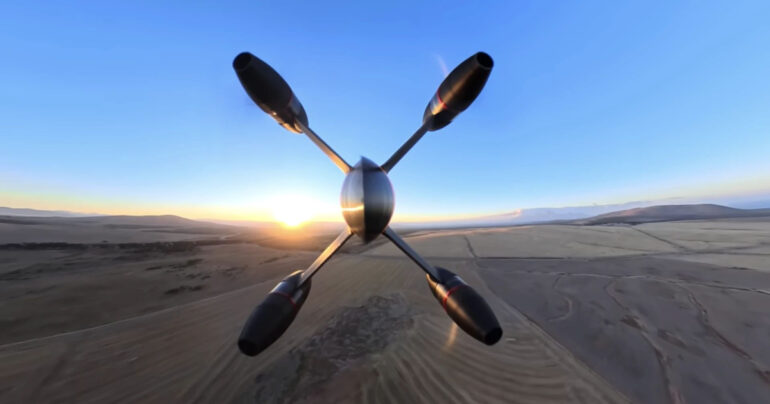

Just when you think we have hit a wall with what hobbyist hardware can do, a father-son duo from South Africa comes along and shatters the ceiling. If you follow the DIY aviation scene, you know the name Luke Maximo Bell. He and his father, Mike, have been in a high-speed game of tag with the Guinness World Record for the fastest quadcopter for a while now. After briefly losing their crown to Australian engineer Ben Biggs, they are back on top. The 3D printed drone they have dubbed the Peregreen V4 has officially clocked a verified average speed of 657 km/h, which is about 408mph for those of us still working in imperial.
To put that in perspective, this plastic and carbon fiber hobby project is now faster than a P-38 Lightning, the legendary World War II fighter that topped out around 414mph in some configurations but cruised much slower. While it still has a ways to go before it starts chasing down the 575mph Tu-95 Bear, the fact that a 3D printed drone is even in the same conversation as legendary military aircraft is nothing short of mental.
Engineering a needle in the sky
Building something that stays together at 400mph is a completely different beast than your standard backyard flyer. At those speeds, the air doesn’t just flow over the body; it hits it like a solid wall. The Bells spent over two years iterating on the design, moving through four major versions before landing on the V4.
The secret to this 3D printed drone is its mono-shell construction. Using a Bambu Lab H2D printer, they were able to print the entire chassis as one continuous piece. This eliminated the seams and bolts that usually create drag or, worse, act as failure points when the vibrations start to kick in at high RPMs. They used a mix of materials including PA6-CF (carbon fiber reinforced nylon) for the structural strength and TPU for the areas that needed to absorb a bit of shock. It is a masterclass in using consumer-grade tools to achieve professional-grade aerospace results.
The motor and prop puzzle
Finding a motor that doesn’t melt at these speeds is the biggest hurdle. The team evaluated several options before settling on the T-Motor 3120. They didn’t just take them out of the box and bolt them on, though. They modified the windings to jump from 800KV to 900KV, essentially overclocking the motors to get more rotational speed at the top end.
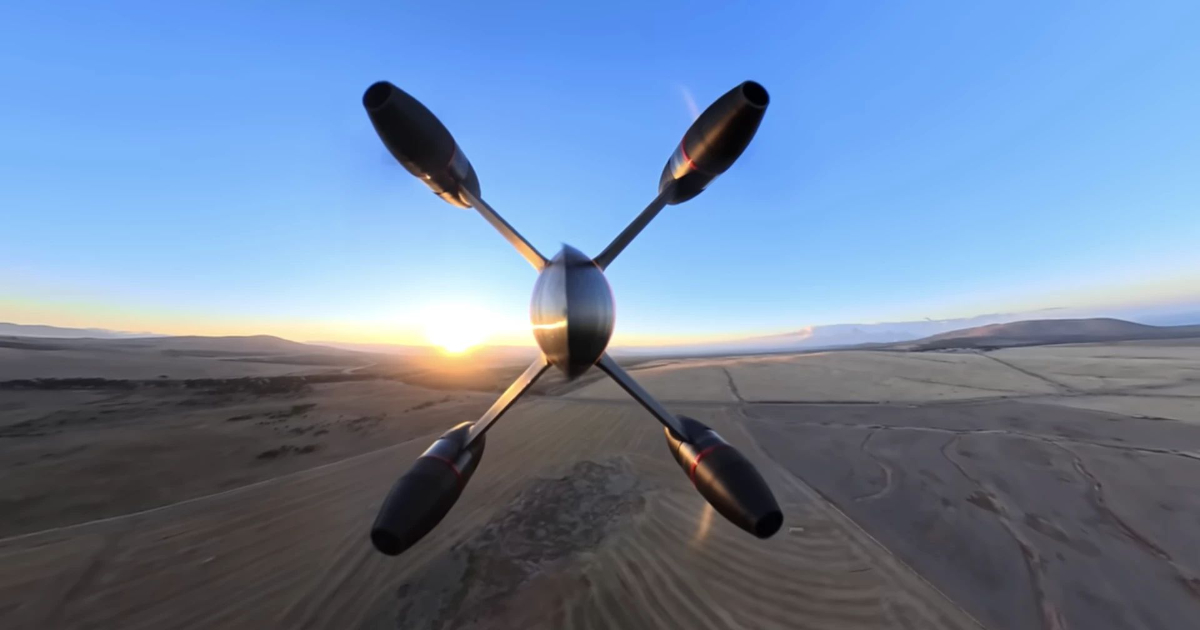
Then there are the propellers. Most people think bigger is better, but for a 3D printed drone trying to break records, size is the enemy of RPM. They took standard 7-inch props and trimmed them down to roughly 6 inches. This reduced the surface area and allowed the motors to spin much faster without hitting a torque wall. They also added aerodynamic “spinners” to the front of the motors to smooth out the airflow, a move that alone added about 18mph to their top speed.
Fighting the physics of drag
When you are moving at half the speed of sound, every tiny imperfection on the surface of the craft becomes a massive problem. The team used a 3D modeling platform called AirShaper to run computational fluid dynamics simulations. This allowed them to see exactly where the air was bunching up and causing drag before they ever hit the “print” button.
Once the 3D printed drone was off the bed, the work wasn’t done. They spent hours sanding and polishing the carbon-fiber composite body until it was as smooth as a glass marble. This attention to detail is why they were able to hit a peak downwind speed of 410mph. Even going upwind, the drone managed 372mph, which is faster than most high-end FPV drones can go with a tailwind.
Release and Price Details
The Peregreen V4 is a custom DIY project and is not available for retail purchase as a complete unit. However, the 3D files and build logs are often shared by the creators on their social platforms for those brave enough to attempt a build. To replicate this 3D printed drone, you would need a high-end consumer printer like the Bambu Lab H2D (roughly $1,400), T-Motor 3120 brushless motors ($80 each), and high-discharge LiPo batteries.
Total component costs for a single flight-ready airframe are estimated to be between $800 and $1,200, not including the cost of the printer or the multiple “crash replacements” inevitably required during testing.