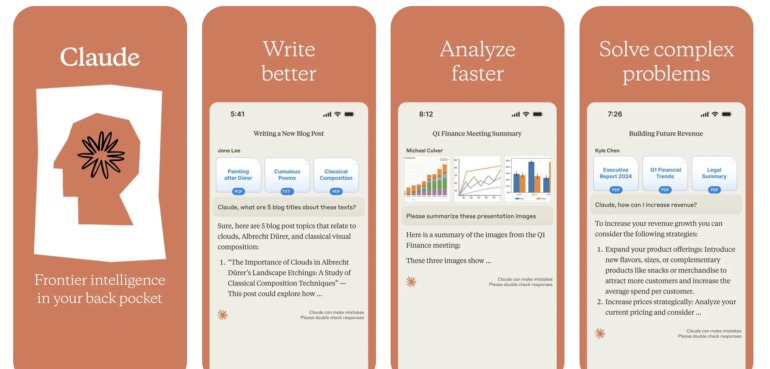

The AI race has always been a game of leapfrog. One week a company has the fastest model, the next, another has the best image generator. But recently, the battleground has shifted from raw intelligence to something much more human: memory. Anthropic is the latest to make a massive move here by enabling the Claude memory feature for every user, including those on the free tier.
For months, this was a luxury reserved for those paying the twenty dollar monthly subscription. By opening it up to everyone, Anthropic is signaling that they no longer view personalization as a premium add-on, but as a foundational requirement for a modern AI. If you have ever felt the frustration of explaining your coding style or your brand voice to a chatbot for the sixth time in a single day, you know exactly why this matters.
Table of Contents
Why persistence is the next frontier
On the surface, a memory feature sounds like a simple digital notepad, but in practice, it fundamentally changes how you interact with the software. Instead of every new chat being a first date where you have to reintroduce yourself, Claude can now hold onto the small details. It understands your ongoing projects, your specific preferences, and the context of your life.
This sense of continuity makes the tool feel less like a calculator and more like a collaborator. When the Claude memory feature is active, the AI builds on what you have said over time. Its responses become tailored and grounded in who you are. In an era where OpenAI and Google are looking for new ways to monetize, such as the rumored ChatGPT ads, Anthropic’s decision to give away these “deluxe” features for free is a very deliberate play for market share.
Catching up to the competition
It is no secret that ChatGPT and Gemini have been leaning heavily into memory and personalization as their primary selling points. For a while, Claude was seen as the “safe” or “academic” alternative that lacked some of the convenience features of its peers. By matching these capabilities on the free tier, Anthropic is telling the world that it wants to be seen as a direct peer, not a niche alternative.
This strategy seems to be paying off in a big way. We recently saw Claude surge to the top of the U.S. App Store free charts, a place usually owned by the tech giants with much larger marketing budgets. Offering the Claude memory feature without a paywall reinforces the appeal. It lets casual users experience the depth of the platform, making them much more likely to eventually consider the premium tiers for the extra processing power.
Managing your digital footprint
Of course, the idea of an AI “remembering” you brings up plenty of questions about privacy and control. Anthropic has been quite transparent about how this works. If you aren’t a fan of the AI holding onto your details, you can pause the memory function at any time. This keeps what Claude has already learned in a dormant state until you decide to turn it back on.
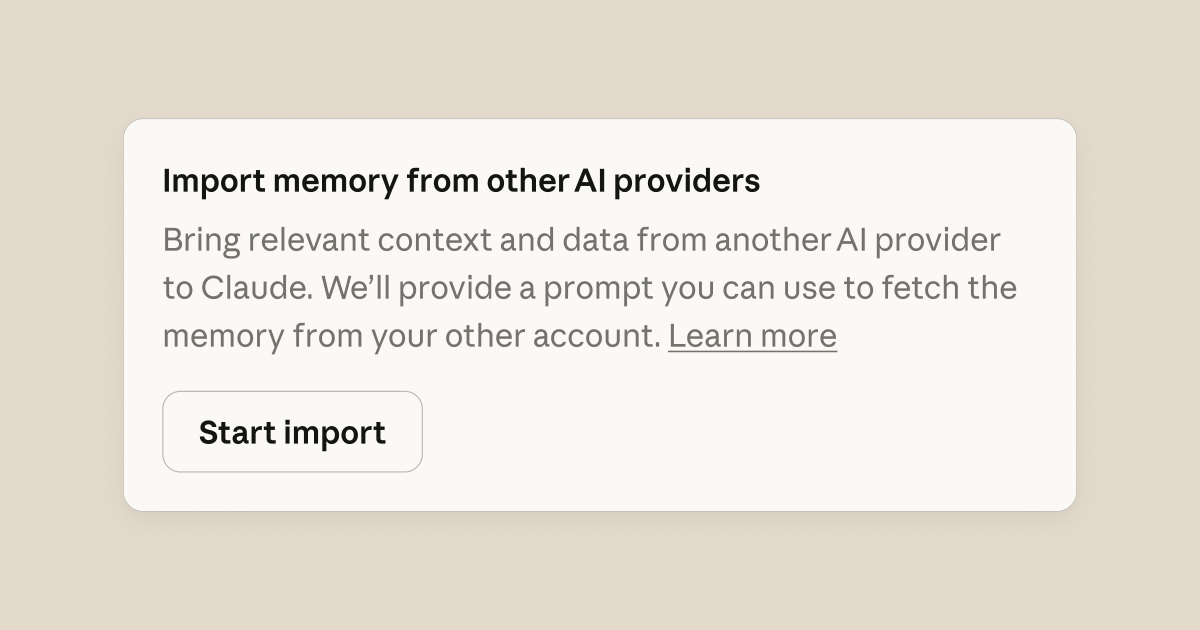
You also have the ability to delete memories entirely. This level of control is vital because, let’s be honest, our preferences change. A project you were obsessed with three months ago might be totally irrelevant now, and you don’t want the AI cluttering its context window with old data. This flexibility is part of a broader set of Anthropic free plan updates designed to make the transition from other chatbots as smooth as possible. They have even introduced tools to import conversation history from competing assistants, making it easier than ever to jump ship.
The Claude memory feature is essentially the glue that holds these other tools together. If Claude knows which files you usually work with or which Connectors you use for your business, the entire experience becomes frictionless. It is about deepening the relationship between the human and the machine. Anthropic clearly wants people to see Claude as an investment in their own productivity, rather than just another tab open in their browser.