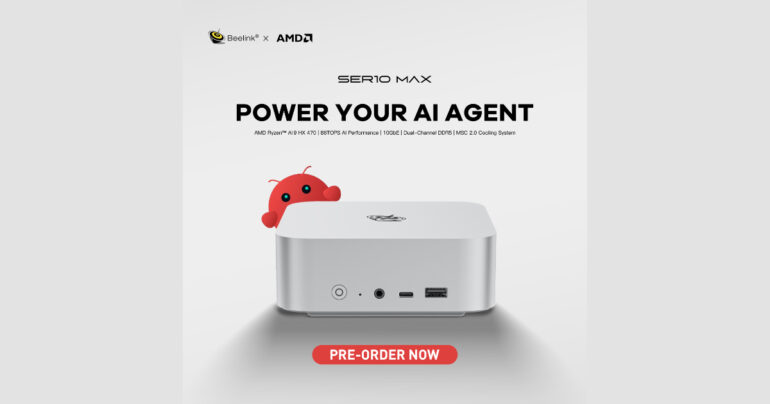

Beelink has announced two new additions to its SER lineup, the SER10 Pro and SER10 Max, and they are built around AMD’s Ryzen AI 9 HX 470, the Gorgon Point processor that brings a combined CPU, GPU, and NPU architecture under one chip. The Beelink SER10 Pro and Max are positioned as a step up for users who have been waiting for the mini PC category to take AI processing more seriously without ballooning in size or price.
Both machines share the same processor foundation, but the differences between them are deliberate and meaningful depending on what kind of user is picking one up.
What the Ryzen AI 9 HX 470 actually brings
The Gorgon Point chip inside these two machines does a lot of the heavy lifting. On the graphics side, the Radeon 890M GPU runs up to 16 RDNA 3.5 cores at 3.1GHz, which puts it in reasonable shape for 4K content creation, light gaming, and 3D rendering. These are not tasks you would have trusted a mini PC with confidently a couple of years ago, and the 890M makes a compelling case that the form factor has genuinely grown up.
The XDNA 2 NPU is where the AI credentials live. It delivers 55 TOPS, which is enough to handle on-device tasks like large language model inference and AI-assisted content generation without offloading everything to the cloud. For users running local AI workflows, that is a meaningful number. The Beelink SER10 Pro and Max are effectively positioning themselves as edge AI workstations that happen to fit on a desk without dominating it.
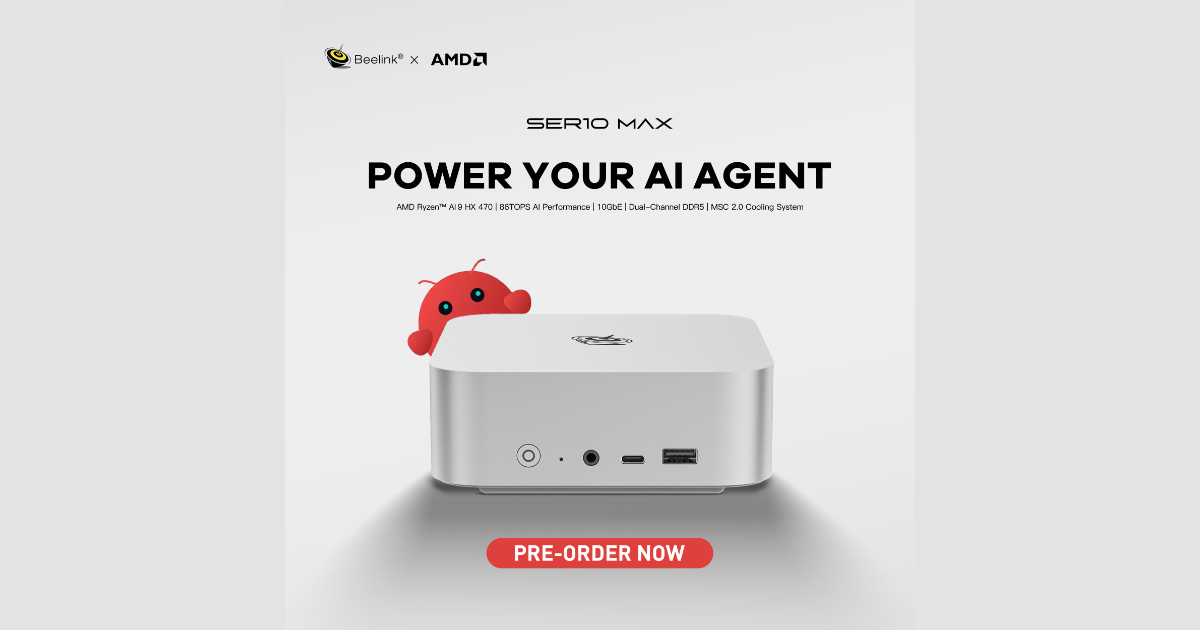
The 10Gbps Ethernet upgrade is a bigger deal than it sounds
One of the more quietly significant specs on both models is the jump to 10Gbps Ethernet. The previous SER9 series shipped with a 2.5Gbps port, and this upgrade represents more than a 300% increase in wired throughput. For anyone using these machines in a home lab, connecting to NAS storage, or running network-intensive workloads, that difference is not trivial. It is the kind of spec that rarely gets headline attention but ends up being the reason someone picks one device over another in a crowded market.
Both models support up to 64GB of memory and 1TB of storage in their launch configurations, with a 32GB/1TB option also available. The thermal design uses a vapor chamber cooling system that coordinates with the CPU to stay quiet under load, which matters when the machine is sitting on or near a desk rather than tucked away in a server rack.
How the Pro and Max actually differ
The practical split between the two models comes down to memory architecture. The SER10 Pro uses soldered LPDDR5X memory, which is faster but locked at whatever configuration you buy. The SER10 Max offers user-upgradable SODIMM slots for DDR5 memory, which means you can start with 32GB and expand later if your workload demands it. That flexibility tends to matter a lot to the kind of buyers who gravitate toward machines like these.
The Pro model also includes built-in microphones and speakers for voice interaction and video conferencing, making it a more self-contained solution for someone using it as a daily driver in a home office. The Max strips those out, presumably for the more infrastructure-focused buyer who already has a dedicated audio setup.
Color options reflect the same personality split. The SER10 Pro ships in Amber Orange, Emerald Green, Frost Silver, and Space Gray, while the Max sticks to Frost Silver and Space Gray. A nod toward the workstation crowd there.
Pricing is still a question mark
Beelink has not confirmed pricing or a release date for either model yet. The SER9 series sat around $678.99 on Amazon, and given that the SER10 generation brings meaningfully upgraded specs across the board including the faster networking and the more capable NPU, it would be reasonable to expect the new machines to land somewhere above that figure. Whether Beelink can keep the Beelink SER10 Pro and Max competitive against an increasingly crowded field of Ryzen-powered mini PCs will come down to where the pricing lands when availability is finally confirmed.