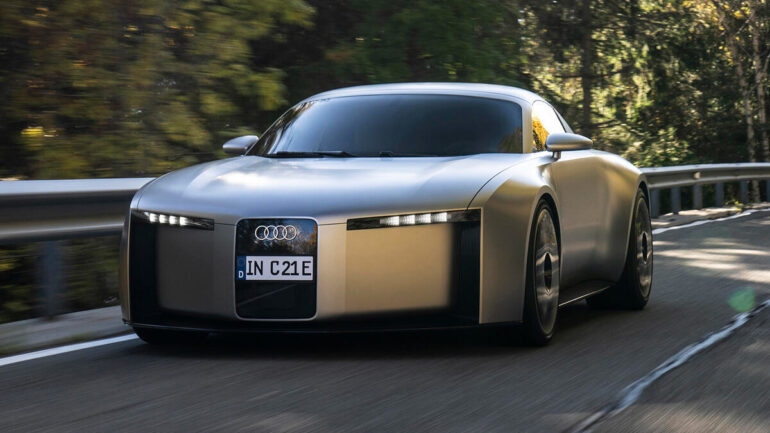

There is a moment every time you get into a modern car, somewhere between trying to turn down the fan speed and accidentally opening the panoramic roof, where you silently wish someone had just put a physical button there instead. Audi’s design boss Massimo Frascella apparently feels the same way, and he is not keeping quiet about it.
In a candid interview with Top Gear UK, Frascella, the man who came over from Land Rover in the summer of 2024 after leading the design of the hugely well-received Defender and more recent Range Rover iterations, has taken a clear stance against the growing trend of enormous touchscreens dominating car interiors. His argument is refreshingly direct: big screens are not the best experience, and filling a dashboard with wall-to-wall glass is “technology for the sake of technology.”
For anyone who has spent the past few years fumbling through nested menus while trying to adjust the heated seats on a motorway, that sentiment is going to land very well.
What Frascella actually said and why it matters
The Audi design chief did not mince his words. He told Top Gear that Audi’s philosophy is that “technology is there when you need it, not there when not needed.” He specifically called out the tactile quality that has historically defined Audi’s interior design, referencing things like physical metal components and what he described as “the Audi click,” that satisfying, precise feel of a well-made physical control. His view is that those qualities are what made Audi what it is, and that chasing touchscreen real estate at the expense of them is a step backward.
The phrase “big screens are not the best experience” is the kind of thing a lot of car buyers have been saying for years, but hearing it come from the design chief of a major premium manufacturer gives it a different kind of weight. It suggests that at least one brand is paying serious attention to what people actually want to use, rather than what looks impressive in a press render.
Frascella also made a point about electric vehicles more broadly. His view is that EVs do not need to look like EVs. “A car needs to be electric, and be efficient, but it needs to look premium in execution of proportions,” he said. This is a push against the prevailing idea that going electric requires a car to visually announce itself through futuristic, screen-heavy interiors that signal a break from everything that came before.
The Audi Concept C makes the philosophy tangible
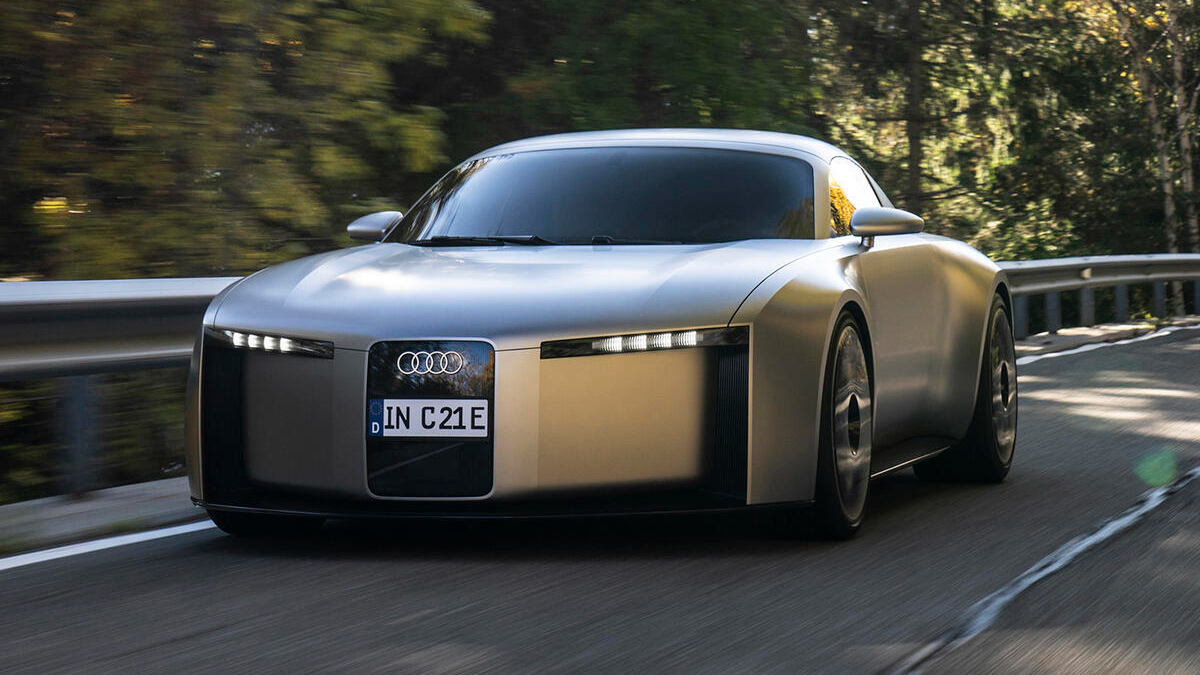
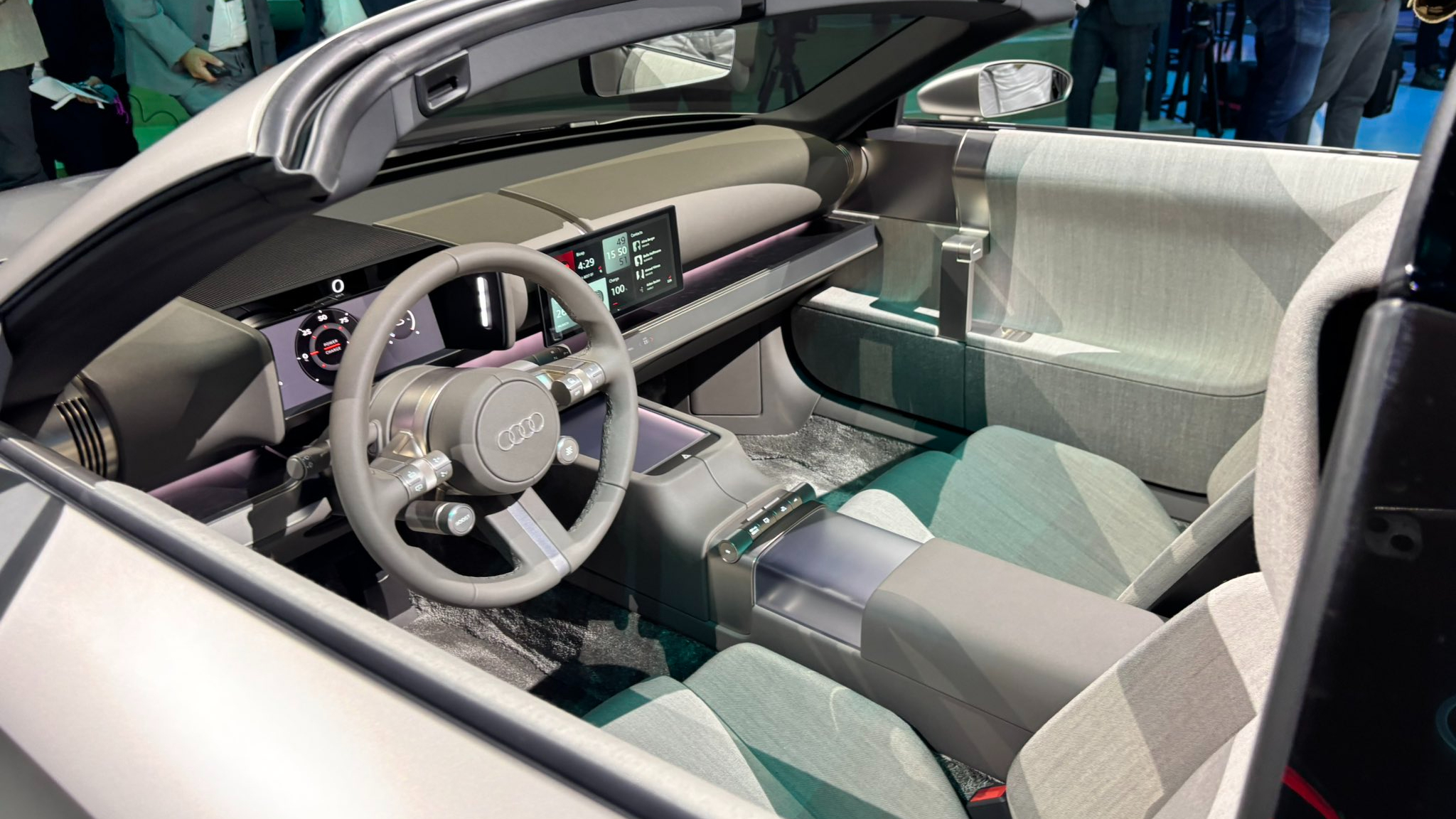
All of this is not just talk. The Audi Concept C, which previews an upcoming electric two-seater sports car, puts Frascella’s thinking on full display. The interior fuses physical controls made from anodized aluminum with a compact 10.4-inch foldable centre display that actually retreats and disappears when it is not in use.
That is the key idea behind what Audi is calling its “shy tech” approach. Rather than plastering the dashboard with glass and calling it sophisticated, the concept shows technology stepping back unless it is needed. The screens that are there are purposeful. The physical controls that remain are made with obvious care and craft. The anodized aluminum alone signals a commitment to material quality that a touchscreen, however large, simply cannot replicate by feel.
The Audi analog buttons philosophy is not a nostalgic rejection of technology. It is an argument that the best experience comes from using the right tool for each job, and that a physical dial for volume or a dedicated button for the heated seat is, in many cases, simply better than a submenu on a touchscreen.
The opposition is real and it comes from a big name
Not everyone in the industry is nodding along. Mercedes-Benz has been moving in exactly the opposite direction, loading its latest electric vehicles with what it calls Hyperscreen and Superscreen technology, essentially filling the entire dashboard width with display. The brand’s design boss Gorden Wagener, when asked about Audi’s Concept C, was notably unimpressed, telling Top Gear that the interior looked like it was designed in 1995 and that there was “too little tech” inside.
Wagener acknowledged being personally fond of analog things but held firm that going back to all switches would not work.
It is a genuinely interesting design debate, and both sides have a coherent point of view. Mercedes is betting that customers want immersive digital environments and that bigger, more capable screens are the future of in-car interaction. Audi, under Frascella, is betting that customers want premium tactility, quick physical access to key controls, and a dashboard that does not ask them to navigate software while driving.
The interesting thing is that the actual car-buying public and the wider internet seem to be considerably more sympathetic to the Audi position than the Mercedes one.
Safety bodies are starting to take sides too
This is not just about preference. There is a growing body of evidence and regulatory pressure suggesting that the all-touchscreen approach creates real problems behind the wheel. Touchscreens require eyes-on interaction in a way that a physical button does not. You can feel a knob without looking at it. You cannot feel a tap target on a flat glass surface.
Europe’s leading car safety assessment body, EuroNCAP, has said it will make its tests tougher specifically around this issue. Manufacturers will be rewarded for the clarity and ease of use of key car functions, and penalised for burying critical controls within complicated touchscreen interfaces. That is a significant signal from an organisation whose ratings directly influence purchasing decisions across the continent.
The concern about in-car touchscreen distraction has been building for a while. Studies have pointed to longer reaction time delays when drivers interact with touchscreens compared to physical controls, and the safety community has become increasingly vocal about it. When you add that context to Frascella’s comments, his position starts to look less like a design preference and more like a response to something the industry genuinely needs to reckon with.