The Nvidia Earth-2 digital twin is a revolutionary open platform that uses generative AI and high-resolution simulation to predict global weather patterns and extreme storms with unprecedented speed and accuracy.
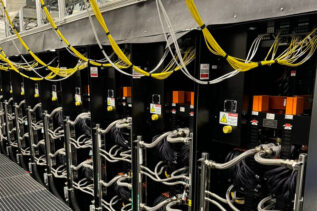
Tesla's chip game is reaching new heights as Elon Musk confirms the restart of their massive Dojo supercomputer project. This move signals a shift in how the company handles the massive amounts of data required for autonomous driving and artificial intelligence.
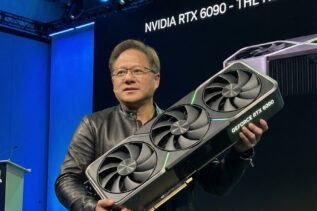
A reliable hardware leaker has suggested that Nvidia's next-generation RTX 60 series graphics cards, including the flagship RTX 6090, are on track for a launch in the second half of 2027. Despite concerns that an ongoing global memory price crisis could delay new hardware, current leaks indicate that Nvidia is maintaining its typical multi-year architecture cycle following the RTX 50 series release.
AMD has revealed its next-generation AI hardware roadmap, with the Instinct MI500 series set for 2027, potentially leaving a gap as Nvidia prepares its Vera-Rubin platform for 2026.
NVIDIA has expanded its professional workstation lineup with the RTX Pro 5000 Blackwell 72GB. This new model provides 50% more video memory than the original version, targeting complex AI and 3D rendering tasks. However, its high price tag makes it a significant investment for businesses.
A new ultra compact computer from China manages to fit a dedicated Nvidia graphics card into a chassis the size of a lunchbox, offering high end gaming in a portable form factor.
Chinese chipmaker Cambricon Technologies plans to triple AI accelerator output in 2026 as Nvidia retreats from the Chinese market. Strong demand and state backing support the move, but low yields, fabrication limits, and competition with Huawei raise questions about how far the expansion can go.
Amazon Web Services (AWS) has unveiled "AI Factories," a fully managed solution that deploys dedicated AI infrastructure directly within a customer's own data center. Developed in collaboration with Nvidia, this on-premises model allows enterprises and governments to run advanced AI workloads while maintaining strict control over data sovereignty and security.