Amazon Web Services (AWS) has unveiled "AI Factories," a fully managed solution that deploys dedicated AI infrastructure directly within a customer's own data center. Developed in collaboration with Nvidia, this on-premises model allows enterprises and governments to run advanced AI workloads while maintaining strict control over data sovereignty and security.
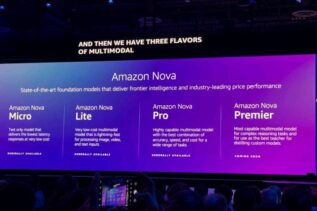
Amazon Web Services has introduced Nova Forge, a specialized platform that allows businesses to build and customize their own AI models using Amazon’s foundation models. By providing a streamlined workflow for training on proprietary data, AWS aims to make high-end AI development more accessible and affordable for enterprises that cannot build models from scratch.
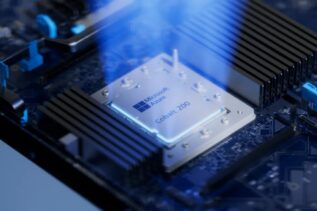
Microsoft has announced Cobalt 200, a new 3nm Arm-based CPU with a 132-core design, improved efficiency controls and workload-specific accelerators aimed at delivering up to fifty percent higher performance across Azure services.
Google has unveiled Private AI Compute, a new cloud system that delivers advanced AI capabilities while keeping personal data private. The platform mirrors Apple’s privacy-focused model but adds Google’s own promise of stronger, more scalable AI performance without compromising user confidentiality.
Microsoft secures access to 100,000 Nvidia GB300 chips by investing $33 billion in neocloud startups—transforming the scale and speed of its AI hardware ecosystem.
OpenAI and Samsung team up for floating data centers, energy-efficient memory, and enterprise AI services. Learn how this ambitious partnership could change cloud computing and digital infrastructure.
Huawei has introduced new AI SSDs with a huge 245TB capacity and smart software that can lighten the need for costly HBM memory. Here is a simple explanation of how this helps manage AI workloads and why it matters for the future.
China’s tech giant just dropped a bombshell. Alibaba’s C930 server processor – its first high-performance RISC-V chip – is gearing...