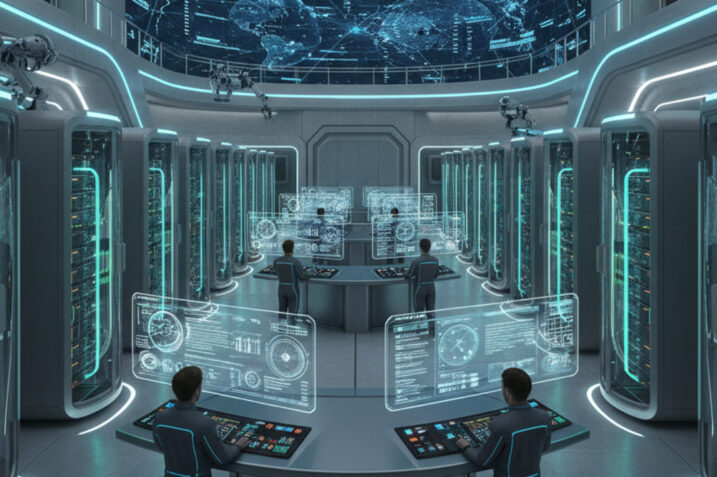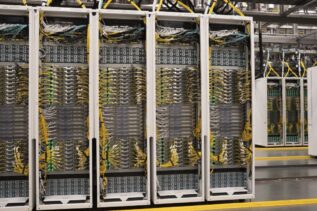
Microsoft’s AI superfactory is not a conventional data center. It is a distributed computing structure where connected facilities work as one machine to handle massive artificial intelligence training and inference tasks. The design confronts limits in networking speed, heat, power, and hardware utilization that arise when scaling AI. The choices in network design, cooling, and physical layout reveal how large AI workloads force a different approach to infrastructure.

Google has outlined Project Suncatcher, a plan to deploy compact AI data centers in low Earth orbit. The system would rely on near-continuous solar exposure, high-bandwidth optical networking, and radiation-tolerant TPUs. Its success now depends on real-world testing, cost trends, and long-term reliability.
At GTC 2025, Nvidia didn’t just unveil new gear—it laid down a vision. One where massive data centers, brimming with...
Sivers Semiconductors partners with Ayar Labs to scale optical I/O solutions, enabling high-bandwidth and energy-efficient AI data centers, marking a breakthrough in photonics and AI infrastructure development.