Infrastructure giant Vertiv is snapping up Italian heat rejection specialist ThermoKey to bolster its thermal management offerings amid surging AI-driven demand.
Infrastructure giant Vertiv is expanding its thermal management portfolio with the acquisition of Italian heat exchanger specialist ThermoKey.
Infrastructure giant Vertiv is snapping up Italian heat rejection specialist ThermoKey as demand for AI-ready data center cooling solutions intensifies.
The DeepSeek memory technology breakthrough aims to replace High Bandwidth Memory with affordable DDR5, potentially slashing the massive costs currently associated with AI hardware.
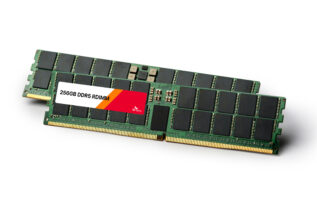
SK hynix announced that its 256GB DDR5 RDIMM memory module built on 32Gb fifth-generation 10nm-class DRAM has completed Intel Data Center certification for the Intel Xeon 6 platform. This validation confirms performance, compatibility, and quality standards required for high-capacity server environments. SK hynix said the module delivers higher inference performance and lower power use compared with earlier designs.

Intel has reversed course on plans to divest its Networking and Communications business. Following an internal assessment, the company will keep the unit in-house to support integrated development across AI, data center and edge platforms.

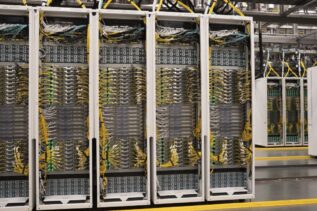
Microsoft’s AI superfactory is not a conventional data center. It is a distributed computing structure where connected facilities work as one machine to handle massive artificial intelligence training and inference tasks. The design confronts limits in networking speed, heat, power, and hardware utilization that arise when scaling AI. The choices in network design, cooling, and physical layout reveal how large AI workloads force a different approach to infrastructure.
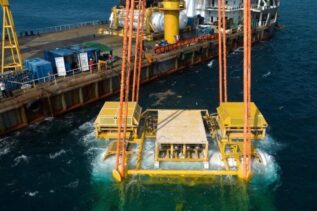
China has launched what it calls the first commercial underwater data center, a 226 million dollar project in Shanghai that combines deep sea cooling with offshore wind power. Developers claim it will reach 24 megawatts of capacity and could guide the future of large scale AI infrastructure if long term results hold.