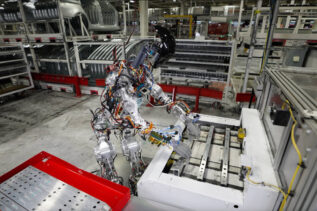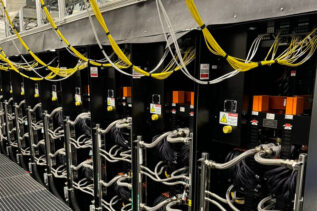
Tesla's chip game is reaching new heights as Elon Musk confirms the restart of their massive Dojo supercomputer project. This move signals a shift in how the company handles the massive amounts of data required for autonomous driving and artificial intelligence.
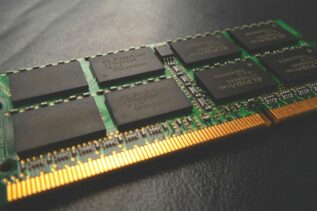
Chinese chipmaker Cambricon Technologies plans to triple AI accelerator output in 2026 as Nvidia retreats from the Chinese market. Strong demand and state backing support the move, but low yields, fabrication limits, and competition with Huawei raise questions about how far the expansion can go.
Nvidia's Q3 2026 revenue hit 35.1 billion dollars, with data center sales at 30.8 billion dollars. The company forecasts Q4 revenue of 32.5 billion dollars amid strong AI demand.
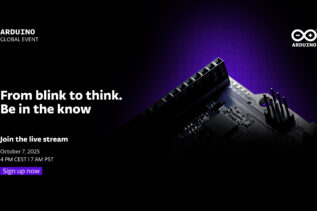
Qualcomm has announced its plan to buy Arduino, the open source hardware company known for its DIY boards. The move strengthens Qualcomm’s AI and edge computing lineup and gives it a direct line into the global developer community.
Nvidia launched the RTX6000D for China, but Chinese tech giants are holding back. Find out why major players are slow to adopt this chip and what it means for the global chip race.
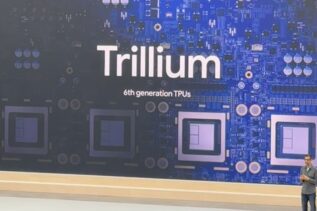
Google partners with MediaTek to develop components for its next-gen TPUs, aiming for energy-efficient AI chips and reducing reliance on others.
Nvidia enters the ASIC market, focusing on chips optimized for AI inference tasks like large language models. Discover its strategy to remain at the forefront of semiconductor innovation.
Nvidia is set to launch its Jetson Thor compact computers for humanoid robots in 2025, marking a significant push into robotics. The move comes as AI technology advances and major companies like Amazon and Google develop their own AI chips.